TailVille
At a glance
Rough ranges for supplies, food and electricity in Korea (USD is approximate). Purchase or adoption fees are not included.
Single people and adult households who want a dog that stays close and forms an intense bond.
Not for homes with young children, households where play with large dogs cannot be supervised, or owners without time for socialisation.
1. Overview
The Chihuahua is generally considered the smallest dog breed in the world. Adults usually weigh about 1.5 to 3 kg and have a rounded apple-shaped head, big eyes and large upright ears. There are two coat varieties, smooth and long. For all their size they are alert and proud, and many attach themselves intensely to one person, giving the breed its reputation as a one-person dog.
Their size makes them seem ideal for small homes, but in practice they feel the cold, are easily hurt in falls, can be touchy with strangers and children, and tend to bark a lot. Toy-breed health issues such as an open fontanelle, hydrocephalus and slipping kneecaps also need to be understood. General dog care is covered in the main Dog article; this one focuses on what is specific to the Chihuahua.
2. Name and origin
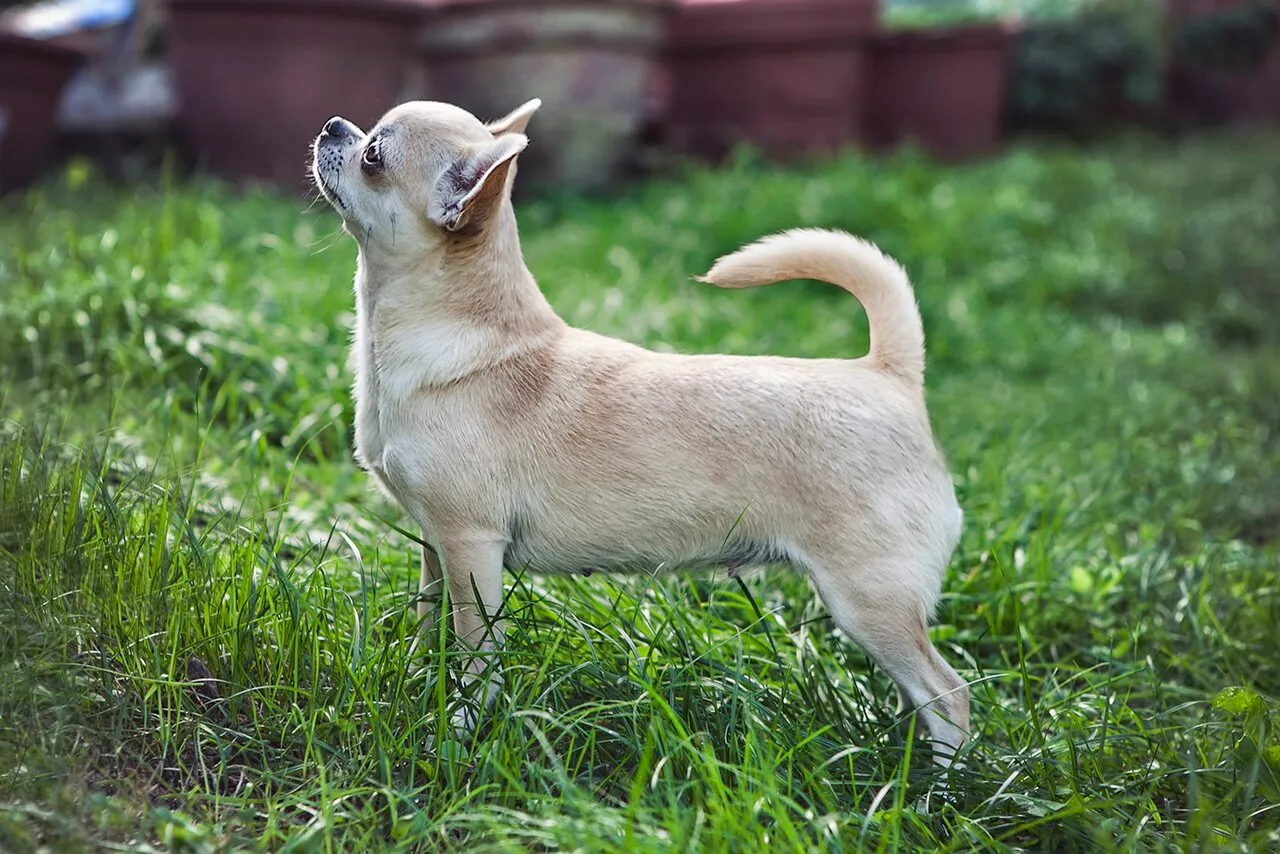
Caterinarufo · Public domain
The breed takes its name from the state of Chihuahua in northern Mexico. In the mid to late nineteenth century, tiny dogs bought there by Americans became known simply as dogs from Chihuahua.
The best-known theory of deeper origins points to the Techichi, a small dog kept by the Toltec and later Aztec cultures of ancient Mexico. Carvings and pottery depicting such dogs have been found, and some interpret them as animals with a ritual role. Many experts think the Techichi was larger than today's Chihuahua, and some propose crosses with small European or Asian dogs after the Spanish conquest, so the exact lineage remains uncertain. Genetic studies have reported that the Chihuahua retains some ancestry from pre-colonial American dogs.
The American Kennel Club recognised the breed in 1904 in the Toy Group, and the FCI lists Mexico as responsible for the standard in Group 9, Companion and Toy Dogs. Smooth and long coats are treated as two varieties of the same breed.
3. History and popularity in Korea
The Chihuahua became widely known in Korea during the toy-dog boom of the 1990s and 2000s. Images of foreign celebrities carrying Chihuahuas in handbags, along with frequent appearances in films and adverts, built its image as the world's smallest dog. Easy portability and tiny food bills added to the appeal.
Today it is less common than the Maltese, Poodle or Pomeranian but still has a steady following. Smooth coats are more common in Korea than long coats. The breed also carries a reputation for being highly strung and nippy, which often reflects a mix of breed traits, poor socialisation and overprotective handling. As with other toy breeds, breeding for extreme smallness and teacup marketing remain a concern.
4. Appearance and breed standard
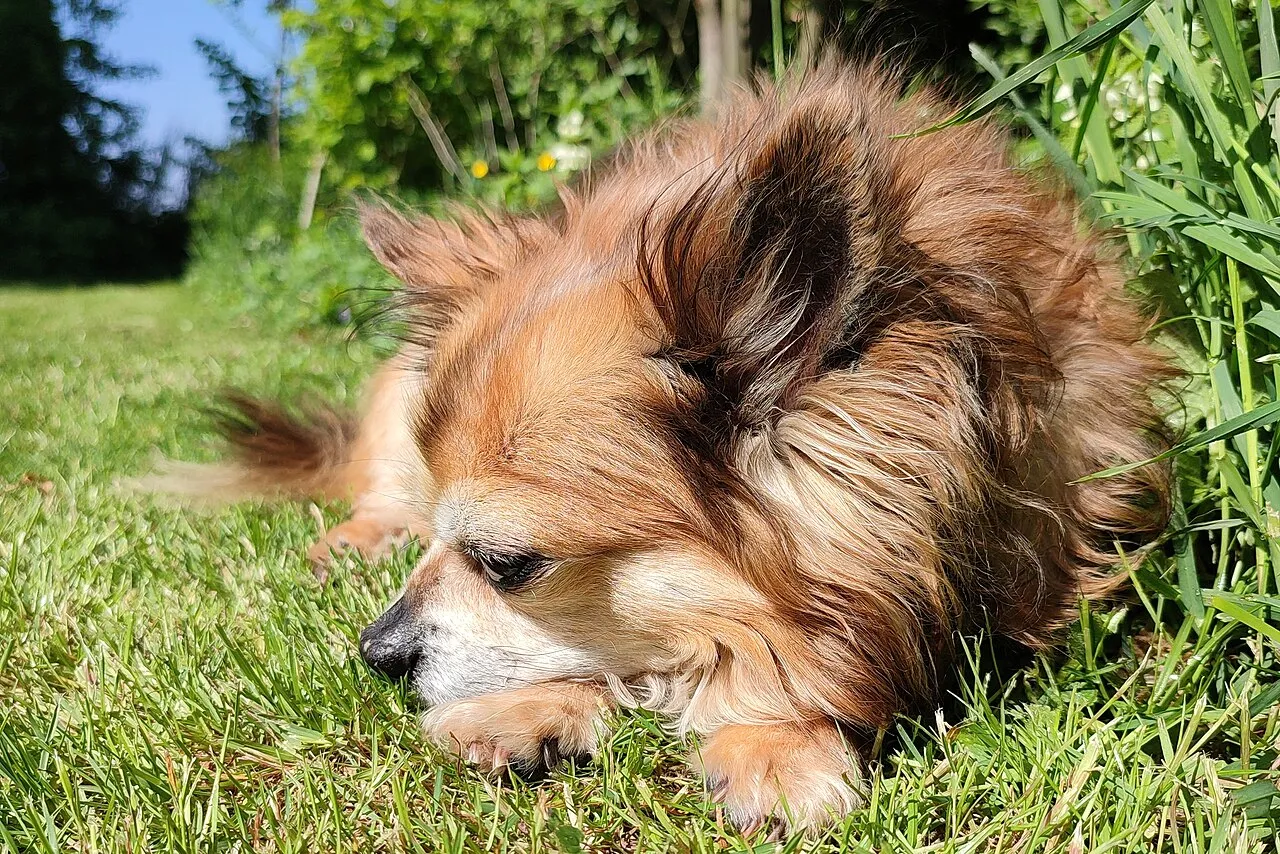
JackyM59 · CC BY-SA 4.0
Weight and head shape are the heart of the Chihuahua standard. The head should be a rounded apple head with a well-defined stop and a short, slightly pointed muzzle. The ears are large and erect, and the eyes large and round but not bulging excessively.
| Item | FCI standard (approx.) | AKC standard (approx.) | Notes |
|---|---|---|---|
| Weight | ideal 1.5-3 kg, 0.5-1.5 kg accepted | not over 6 lb | over 3 kg is disqualifying under FCI |
| Height | not specified | not specified | pets usually 15-23 cm |
| Coat | smooth: short, glossy / long: fine, soft | smooth and long | long coats have fringed ears and plumed tail |
| Colour | any except merle | any (check registry rules on merle) | cream, fawn, black and tan, chocolate and more |
Deer-head Chihuahuas, with longer heads and muzzles, are common too. They are not favoured by the standard, but they make perfectly healthy pets and are sometimes said to have fewer head-related problems. Colours vary enormously; merle is not accepted by the FCI because of its links to hearing and eye defects. Dogs under 1 kg may fall within the accepted range but carry much higher health risks.
5. Temperament
The Chihuahua packs a strong sense of self and plenty of courage into a tiny body. It bonds deeply with its family, often with one main carer above all, and wants to be at that person's side constantly. Chihuahuas love warm, snug places such as laps and duvets and are famous for burrowing under blankets to sleep.
They are highly alert and often bark sharply at strangers, unfamiliar dogs and sudden noises. Some will square up to dogs dozens of times their size, so walks require real vigilance. Much of this is defensive: a small, frightened dog that cannot escape tries to scare the threat away first. Owners who always scoop the dog up to avoid every situation can deprive it of the chance to adapt, making it even more reactive. Careful, positive socialisation from puppyhood matters more for this breed than almost any other.
Chihuahuas are bright and learn quickly but can be stubborn, so house training needs consistency. Many dislike going out in cold or wet weather, and lots of owners combine outdoor toileting with an indoor pad.
6. Who it suits and who it doesn't
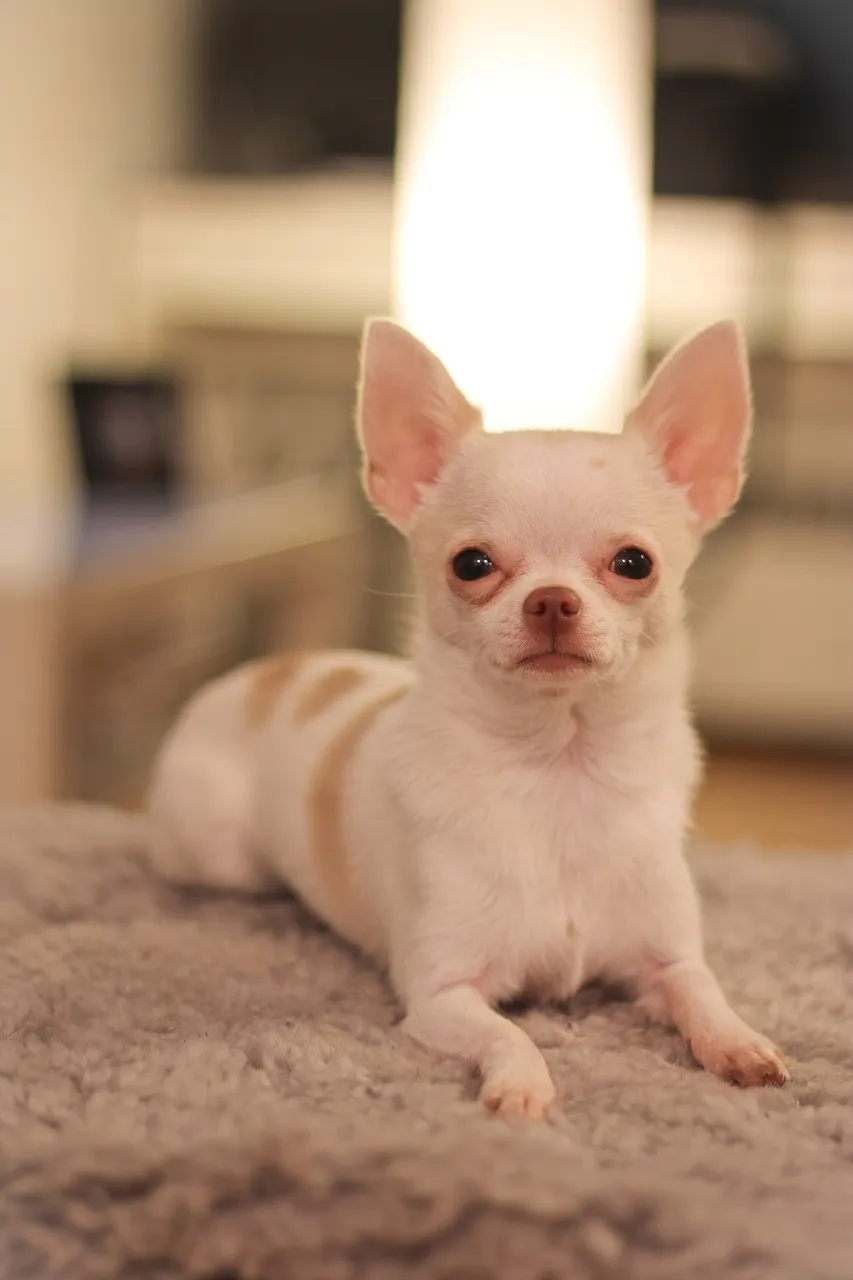
Carlos.ferreira.rejas · CC BY-SA 3.0
- Good fit: single people or adult households who want a close, intense bond with a dog that stays by their side
- Good fit: those who cannot handle a high-energy dog but can offer short daily walks and play
- Good fit: owners willing to invest in socialisation and reward-based training
- Poor fit: homes with young children, where a tiny dog may get hurt or bite out of fear
- Poor fit: households with large dogs where play cannot be supervised
- Poor fit: anyone who wants to carry the dog in a bag like an accessory and rarely let it walk on the ground
Chihuahuas place few physical demands on their owners, but their emotional needs and safety require plenty of attention.
7. Exercise and play
Two walks of 15 to 20 minutes plus indoor play are enough for most Chihuahuas. Running around the flat gives a tiny dog a fair amount of exercise, but outdoor walks with new smells and sights are essential for reducing nervousness. They enjoy chasing small balls and soft toys and hunting for hidden treats.
Safety is a big deal. Their bones are so fine that a fall from a sofa, bed or someone's arms can cause a fracture. Getting caught in doors or stepped on are common accidents too, so get in the habit of knowing where your dog is at all times. Many have fragile windpipes, so a well-fitted harness is better than a collar, and in open spaces watch out for large dogs and even birds of prey.
Chihuahuas feel the cold badly. Keep the home warm in winter and put a coat on for walks. They often shiver, which can mean cold but also excitement, nerves or low blood sugar.
8. Coat and hygiene
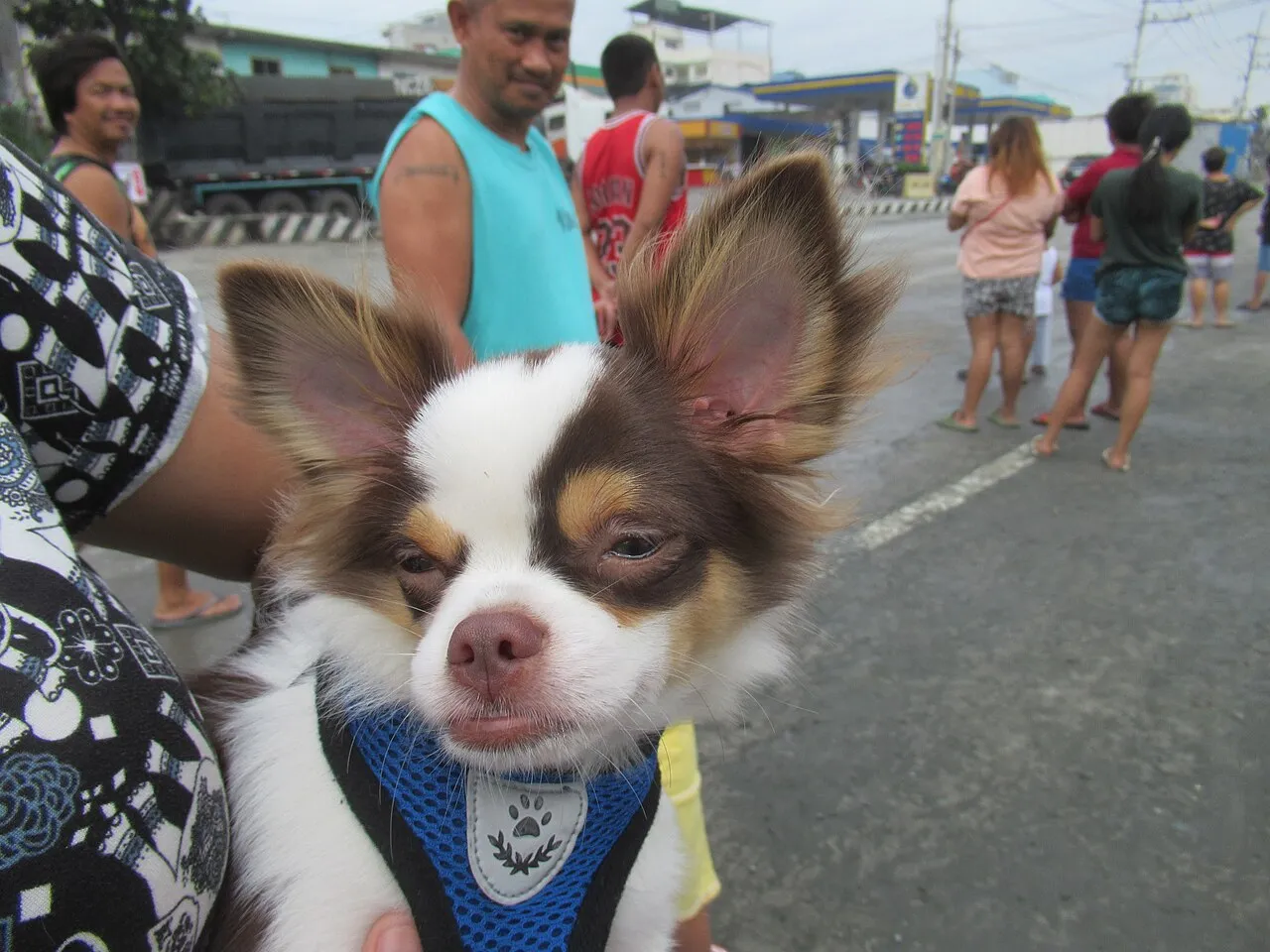
Zarate123 · CC BY-SA 4.0
Smooth Chihuahuas are easy to groom: a weekly or twice-weekly once-over with a rubber or soft brush is enough. Short hair does not mean no shedding, though, and seasonal moults can be surprisingly heavy. Long coats need brushing two or three times a week, paying attention to the feathering behind the ears and on the legs. Even long coats have little undercoat, so frequent salon visits are not necessary; just trim the paw pads and the area around the bottom. A bath every three to four weeks is plenty, and because such a small body chills quickly, dry the dog promptly afterwards.
The real priority is teeth. A full set of 42 teeth is squeezed into a tiny jaw, so tartar builds very fast, and retained baby teeth are common. Check for retained teeth at around six to seven months; they are often removed during neutering. Without daily brushing, some Chihuahuas lose teeth to periodontal disease at a young age.
The large eyes catch dust and are easily injured, so wipe away discharge daily, and check inside the big upright ears about once a week. Indoor dogs do not wear their nails down, so trim them every two to three weeks.
9. Diet and weight
A Chihuahua needs remarkably little food. A 2 kg adult needs roughly 150 kcal a day, less than half a cup of kibble, so a few treats can easily tip it into overeating. A single scrap of human food can be close to a whole meal's worth of calories for this breed. Even a 200 to 300 g gain is significant, so weigh meals on a kitchen scale and weigh the dog regularly.
Undereating is just as dangerous. Chihuahuas are highly prone to hypoglycaemia, and puppies under four months or adults under 1.5 kg can become weak, shaky and even seize after only a few hours without food. Feed puppies four or more times a day and adults two or three times. If a Chihuahua becomes picky, rule out dental pain before switching foods; dogs with sore teeth often refuse hard kibble.
10. Inherited conditions and health
Chihuahuas are long-lived, but their extreme smallness and domed heads bring specific risks. Knowing them helps you react quickly in an emergency.
10.1. Molera and hydrocephalus
Many Chihuahuas have a molera, a soft spot on top of the skull where the bones have not fully joined. It is present in many puppies and usually shrinks or closes with age, but some adults keep it. A molera is not necessarily a disease, but it leaves the brain more vulnerable to knocks.
Hydrocephalus is a build-up of cerebrospinal fluid in the brain. Signs can include an abnormally large, domed head, eyes that point down and outwards, slow growth, circling and seizures. A large molera does not automatically mean hydrocephalus, but these signs call for ultrasound or MRI.
10.2. Kneecaps and windpipe
Patellar luxation is very common in Chihuahuas; repeated hopping on one hind leg is the cue for a vet visit. Tracheal collapse is also frequent in toy breeds and shows as a honking cough when excited or when the lead pulls. Weight control and a harness are the basic precautions for both.
10.3. Other conditions
- Mitral valve disease: a common heart valve problem in older Chihuahuas, appearing as a murmur, coughing or faster breathing.
- Hypoglycaemia: especially dangerous in puppies and very small dogs. If your dog goes limp or trembles, rub a little honey or syrup on the gums and call a vet at once.
- Dental disease and retained baby teeth: one of the most common problems; in severe cases the lower jaw can weaken enough to fracture.
- Eye problems: large, prominent eyes are prone to corneal injury and dry eye.
- Chiari-like malformation and syringomyelia: neurological conditions linked to skull shape that are reported in some toy breeds; scratching at the neck or signs of pain can raise suspicion.
11. Life stages and lifespan
Chihuahuas are among the longest-lived dogs, commonly reaching about 12 to 18 years, with occasional reports of dogs approaching 20.
| Stage | Age | Key points |
|---|---|---|
| Puppy | 0-12 months | watch blood sugar, socialisation is critical, check molera and baby teeth |
| Young adult | 1-3 years | alarm barking and attachment patterns set in |
| Adult | 3-9 years | teeth, weight and knees, yearly check-up |
| Senior | 10+ years | heart, teeth and eyes, check-ups twice a year, extra warmth |
Many older Chihuahuas lose enough teeth that the tongue hangs out, and keeping warm gets harder. If your dog has heart disease, logging its sleeping breathing rate is extremely useful to your vet.
12. Costs
Rough 2026 Korean figures; purchase price excluded.
| Item | Approx. cost (KRW) | Notes |
|---|---|---|
| Initial supplies | 250,000-500,000 | crate, burrow-style bed, harness, winter coat, pet steps |
| First vet visits, vaccines, registration | 200,000-500,000 | core shots, rabies, microchip |
| Food and treats | 20,000-50,000 per month | very small portions |
| Grooming and baths | 20,000-50,000 per session | smooth coats can be done at home |
| Parasite prevention | 10,000-20,000 per month | heartworm, fleas and ticks |
| Dental cleaning and extractions | 300,000-1 million or more | includes pre-anaesthetic tests; may recur in old age |
| Kneecap or fracture surgery | 1.5-4 million or more | varies with case and clinic |
Day-to-day costs are low, but dental work and accidents such as fractures can bring large one-off bills.
13. Before you get one
Parts of the Chihuahua market sell dogs of barely 1 kg at premium prices as teacup or micro. Very small dogs face higher risks of hypoglycaemia, hydrocephalus, fractures and, in females, birthing problems that may need a caesarean, so for a healthy companion choose an ordinary size within the standard.
- Meet the parents, especially the mother, and check weight, health and temperament; timidity is shaped partly by genes and early environment
- Look at the puppy's molera size, head shape, gait and energy
- Get knee checks, vaccine and deworming records and a contract
- With a merle puppy, make sure both parents were not merle
- Avoid sellers offering puppies under two months or hiding auction origins
Chihuahuas and Chihuahua mixes come into shelters steadily. A shy adult may take time to open up, but once it trusts you it often forms the deepest of bonds. Register your dog once it is home.
14. The Chihuahua in culture
The Chihuahua became a pop culture icon in the late 1990s as the mascot of an American fast-food chain's advertising. Bruiser, the Chihuahua carried everywhere by the heroine of Legally Blonde in the early 2000s, is just as famous, and in 2008 Disney released Beverly Hills Chihuahua with a Chihuahua lead. Around the same time, celebrities photographed with Chihuahuas peeking out of designer handbags cemented the handbag dog image.
The craze drove up demand, and impulse purchases later surrendered to shelters were flagged as a real problem in the United States. In Mexico the breed is something of a national symbol, and the painter Frida Kahlo is known for photographs and paintings with her small native Mexican dogs.
15. Trivia
- Chihuahuas have held the Guinness World Record for smallest dog several times, including dogs only about 10 cm tall, though dogs that tiny are very hard to keep healthy.
- Chihuahuas shiver from cold, excitement, anxiety or low blood sugar. Their high metabolism and large surface area relative to body size mean they lose heat quickly.
- Burrowing under blankets is explained as an instinct to find a warm, safe den. Be careful not to sit on a dog hidden in the bedding.
- Many owners say Chihuahuas get along best with other Chihuahuas, perhaps because similar size makes play safer.
- Smooth and long coats can appear in the same litter. The long-coat gene is recessive, so two smooth parents can still produce a long-coated puppy.
Health notes are general information. If something seems wrong, contact a vet who treats this species.
🍽️ Can my dog or cat eat this? →
FAQ
Why does my Chihuahua shiver so much?
Small bodies lose heat fast, so cold is the usual cause, but excitement, nerves or low blood sugar can also be behind it. If shivering persists when warm or the dog seems weak, see a vet.
There is a soft spot on my Chihuahua's head. Is that normal?
That is a molera, common in the breed. It often shrinks with age but can persist. Protect the head from knocks and see a vet if head size or behaviour seems abnormal.
Are Chihuahuas really snappy?
Fearful dogs that cannot escape may bite defensively. With thorough early socialisation and respect for the dog's warning signals, most grow into affectionate, settled adults.
Photo credits
Photos are freely licensed images from Wikimedia Commons. Authors and licenses are listed below.
- Chihuahua-Dog.JPG — Florinux · CC BY-SA 3.0
- Standard razza chihuahua.jpg — Caterinarufo · Public domain
- Chihuahua qui profite du soleil.jpg — JackyM59 · CC BY-SA 4.0
- Blubble Head English Chihuahua - Warhol.jpg — Carlos.ferreira.rejas · CC BY-SA 3.0
- Chihuahua (dog) 07.jpg — Zarate123 · CC BY-SA 4.0