TailVille
At a glance
Rough ranges for supplies, food and electricity in Korea (USD is approximate). Purchase or adoption fees are not included.
Owners who enjoy training and brain games, want minimal shedding and can afford regular professional grooming.
Not for anyone planning to skip grooming or treat the dog as an accessory without daily walks and play.
1. Overview
The Poodle is famous for its dense curly coat and its brains. Unusually, a single breed covers several sizes, from the Standard Poodle, which can stand close to 60 cm at the shoulder, down to the Toy Poodle at around 3 kg. In Korean homes the Toy is by far the most common, followed by the Miniature, while Standards remain rare because of the space and exercise they need, though their numbers are growing.
Poodles barely shed, but their hair keeps growing, so regular grooming is not optional, and a clever dog with nothing to do will find its own projects. This article centres on the Toy Poodle as kept in Korea and brings in the Miniature and Standard wherever size changes the picture. General dog care is covered in the main Dog article.
2. Name and origin
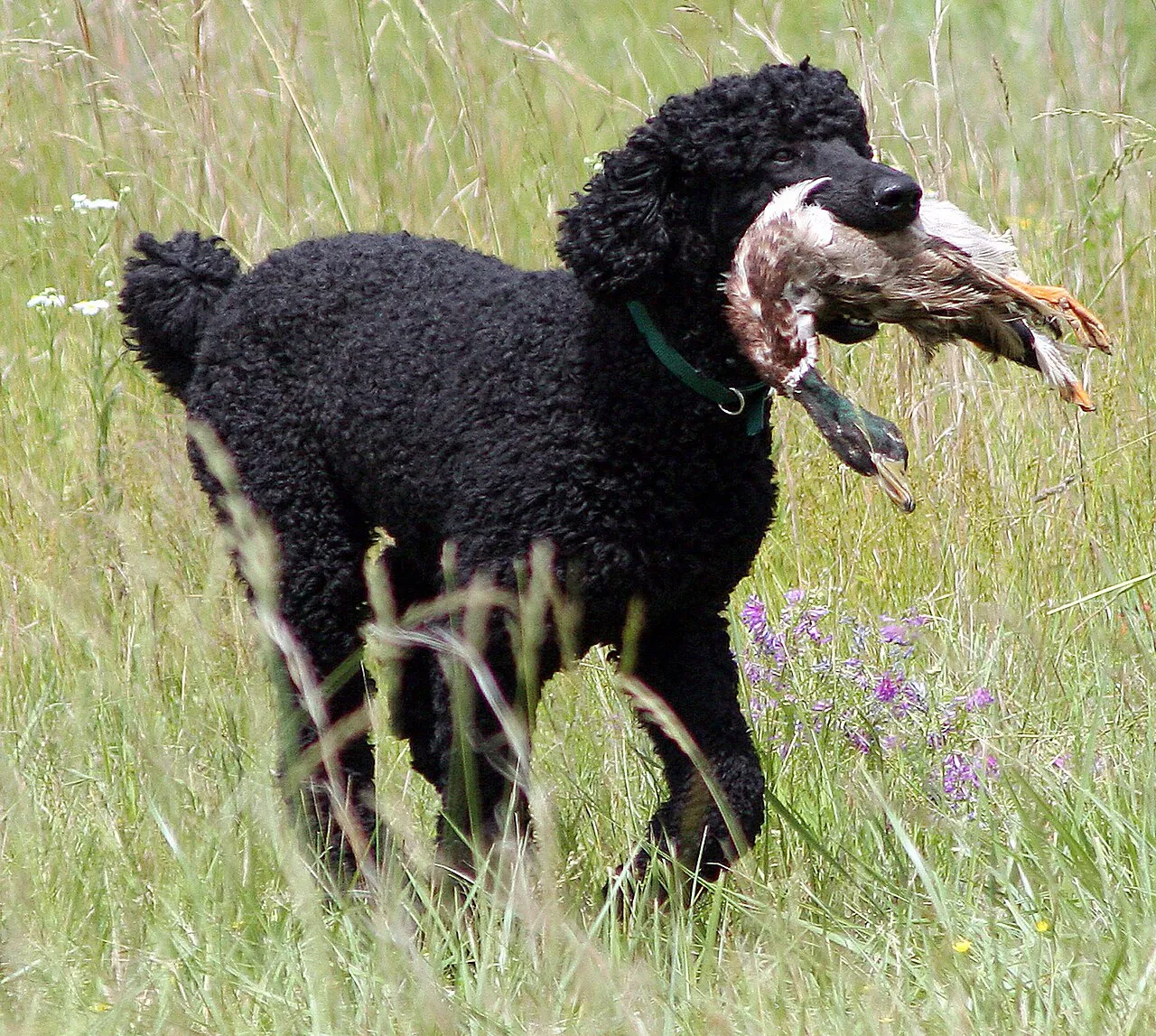
Sally Eller (Picture) Tome Reese (Handled) · Public domain
The name is widely traced to an old German word for splashing in water, Pudel or pudeln. The Poodle began as a water retriever, fetching ducks and other waterfowl for hunters, which is why many still love to swim. In France the breed is called the Caniche, roughly duck dog.
Germany is the most commonly cited origin, but the breed was developed and adored in France, and the FCI lists France as responsible for the standard, placing it in Group 9, Companion and Toy Dogs. The FCI recognises four sizes, Standard, Medium, Miniature and Toy. The American Kennel Club has no Medium and splits the breed into Standard, Miniature and Toy, with the Toy in the Toy Group and the other two in the Non-Sporting Group.
Smaller Poodles are thought to have been refined over centuries as favourites of aristocrats, circus troupes and street performers, who valued how quickly they learned tricks.
3. History and popularity in Korea
Alongside the Maltese, the Poodle has been part of Korean indoor dog culture from the start. Until the 1990s many were groomed in traditional styles with pompons on the ears and legs, but from the 2000s the rounded teddy bear cut swept the country and gave the breed a plush-toy image that revived its popularity.
In recent Korean registration figures and surveys the Poodle regularly trades first and second place with the Maltese. Its low shedding has drawn households worried about allergies as well as busy couples. Popularity has also fuelled commercial breeding of extremely small teacup or micro Poodles, with the health problems and inflated prices that follow. Poodle crosses such as the Maltipoo and the Poochon, a Bichon cross, have become common too.
4. Appearance and breed standard
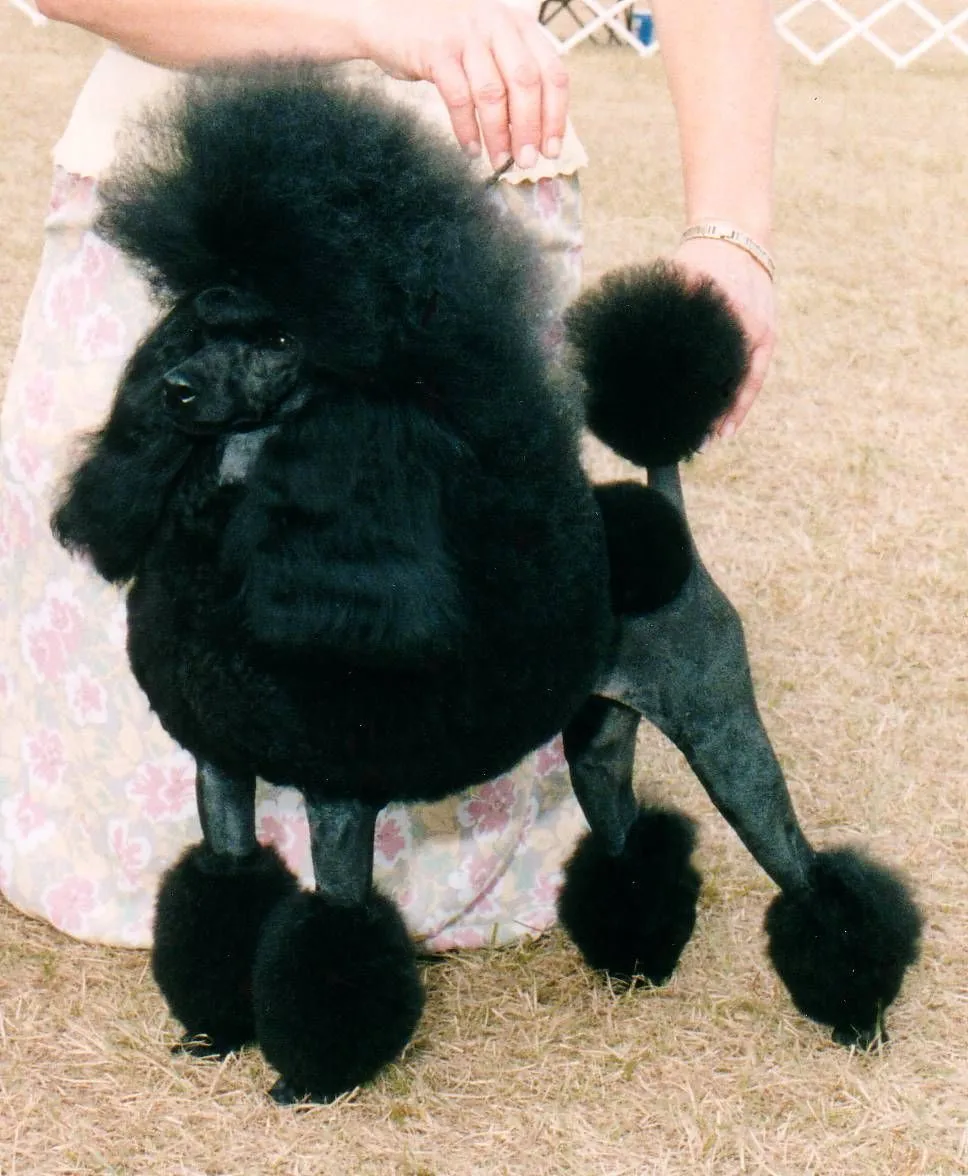
The core principle of the standard is that all sizes share the same proportions. The body is close to square, the legs are long and straight, and the head is carried high in a proud, elegant outline.
| Size | FCI height (approx.) | AKC height (approx.) | Adult weight (approx.) |
|---|---|---|---|
| Standard | 45-60 cm | over 15 in | around 20-30 kg |
| Medium | 35-45 cm | not used | around 10-15 kg |
| Miniature | 28-35 cm | 10-15 in | around 5-8 kg |
| Toy | 24-28 cm | 10 in or under | around 2-4 kg |
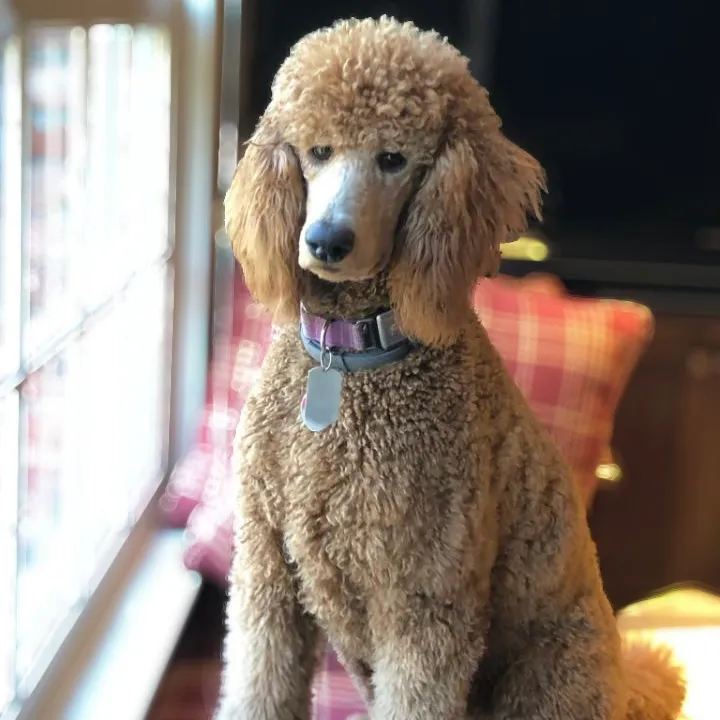
Most Poodles have a tightly curled coat, and a corded coat of long rope-like strands is also allowed. Accepted colours are solids such as black, white, brown, grey, apricot and red; in Korea red and apricot Toys are especially fashionable, though reds often fade with age. Parti-coloured Poodles are accepted by some clubs, while the FCI standard calls for a solid colour. Teacup Poodles far below the Toy range are not an official size.
5. Temperament
Stanley Coren's well-known ranking of breed intelligence put the Poodle second, right behind the Border Collie, and the breed has been shorthand for a clever dog ever since. Poodles learn commands quickly, but they also read faces and routines, memorising when walks happen and which cupboard holds the treats. They are people-loving and playful and enjoy games with the whole family.
That intelligence cuts both ways. A Poodle spots inconsistent rules immediately and learns fast that whining or barking gets results. Toys are sensitive and quick to react to sounds, so alarm barking is common, and their strong attachment makes separation anxiety a frequent issue. Miniatures are lively clowns, while Standards are calmer and steadier but still need plenty of activity. All sizes respond beautifully to reward-based training and can shut down under harsh correction.
6. Who it suits and who it doesn't
- Good fit: people who enjoy training and brain games and like learning new things together with their dog
- Good fit: those who want minimal shedding and can budget for regular professional grooming
- Good fit: active owners looking for a medium-to-large companion may find the Standard ideal
- Poor fit: anyone planning to skip brushing or put off grooming for months
- Poor fit: owners who see the dog as an accessory to carry rather than a companion to walk and play with
- Poor fit: homes with toddlers considering a 2 kg Toy, given the risk of falls and fractures
Poodles are often recommended for allergy sufferers because they shed so little. Allergens are also found in dander and saliva, though, and reactions vary from person to person, so spend time with Poodles before committing.
7. Exercise and play
Toy Poodles have more energy than their size suggests. Two walks of around 30 minutes plus indoor fetch or tug games are a good baseline. Miniatures happily walk or run for 40 minutes or more at a stretch, and Standards often need an hour or more of exercise a day, including running and swimming. Many Poodles still love water thanks to their retrieving roots, but introduce it slowly in shallow water with a life vest.
Mental work matters even more than physical work for this breed. Snuffle mats, puzzle feeders and learning new tricks satisfy a Poodle in a short time, and the breed shines in agility, obedience and trick dog sports. Without enough stimulation, the result is usually chewing or constant attention-seeking. Some vets also advise against encouraging Toy Poodles to walk or dance on their hind legs too often, as it loads their delicate rear joints.
8. Coat and hygiene
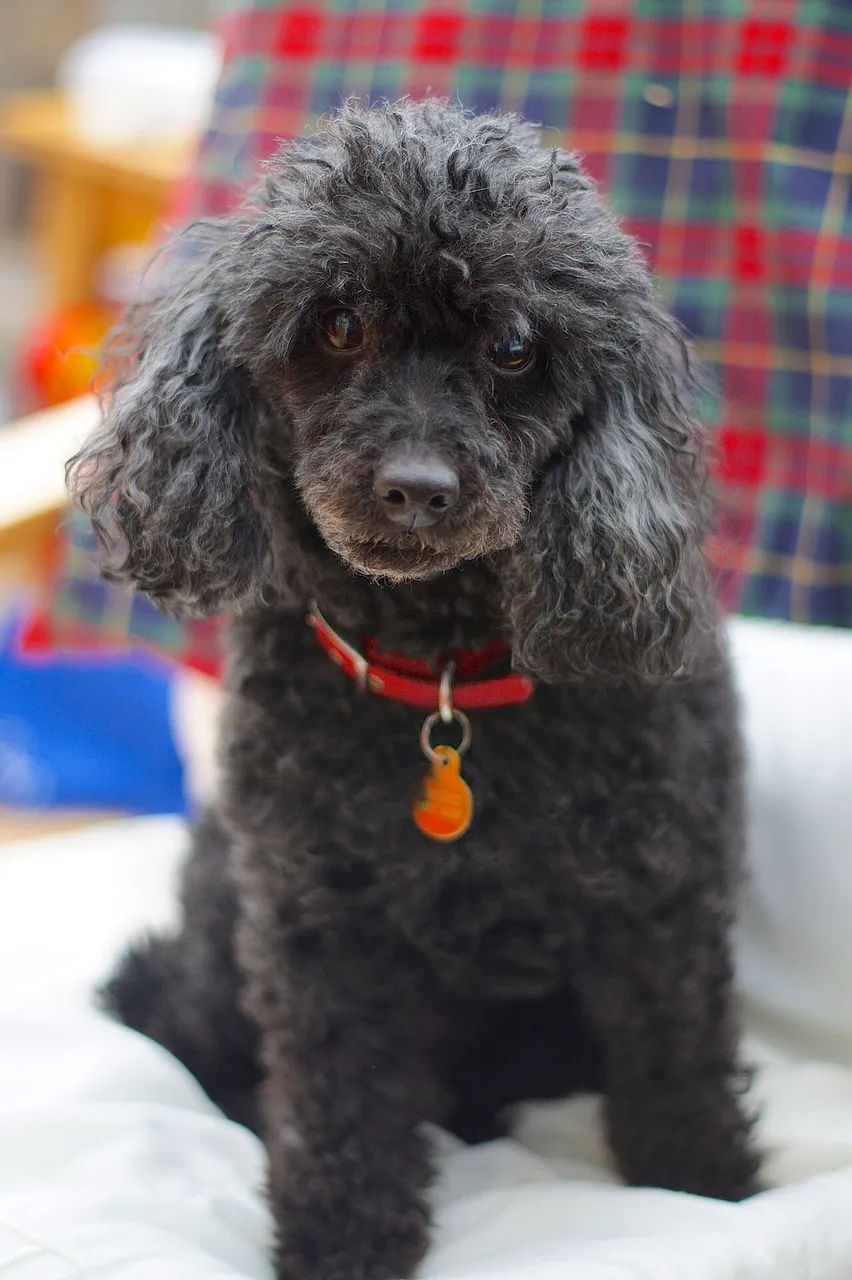
Poodle hair grows continuously instead of shedding, and the hair that does come loose gets caught in the curls and mats fast. Brush daily, or at least three or four times a week, with a slicker brush and a metal comb, working right down to the skin. Brushing only the surface leaves felted mats underneath that pull on the skin, cause pain and dermatitis, and often end with a full shave-down.
Professional grooming every four to six weeks is the usual rhythm. The teddy bear cuts popular in Korea leave a fair amount of coat, so home brushing matters even more. A quick tidy of face, feet and bottom between full grooms helps.
The ears hang down and grow hair inside the canal, which limits airflow, and ear infections are common. Check the ears weekly and see a vet for odour, brown discharge or frequent head shaking. Whether ear hair should be plucked depends on the individual dog, so ask your vet. Toys also get tear stains and tartar readily, so make eye wiping and daily tooth brushing routine.
9. Diet and weight
Portion sizes depend heavily on size: a 3 kg Toy and a 25 kg Standard need very different amounts, so always calculate from actual weight and body condition. Toys and Miniatures usually do well on small-breed formulas and Standards on medium or large-breed foods.
Toy puppies are at risk of low blood sugar and should get three or four meals a day until around four months. Poodles respond well to food rewards, but training treats add up quickly; use part of the daily kibble ration or tiny pieces of treat. Standards have deep chests and are at risk of gastric dilatation-volvulus, or bloat, so split food into at least two meals and avoid vigorous exercise straight after eating. Poor coat, itchy skin or recurrent ear infections can point to food allergy, which your vet can investigate with an elimination diet.
10. Inherited conditions and health
Poodles are generally healthy and long-lived, but the common problems differ by size. Several conditions can be screened for with DNA tests, and responsible breeders share their dogs' results.
10.1. Common in Toys and Miniatures
- Patellar luxation: the kneecap slips out of place, often seen as hopping on one hind leg. Mild cases are managed with weight control and strengthening; severe ones may need surgery.
- Legg-Calve-Perthes disease: reduced blood supply makes the head of the thigh bone die back, usually showing as hind-leg lameness between four and twelve months. It is diagnosed on X-ray and often needs surgery.
- Progressive retinal atrophy: the retina degenerates, night vision fails first and blindness follows. The prcd-PRA DNA test is widely used in Poodles.
- Tracheal collapse and mitral valve disease: typical small-dog airway and heart problems, noticed as a honking cough or a murmur in later life.
- Idiopathic epilepsy: recurrent seizures with no identifiable cause, reported relatively often in Poodles.
10.2. Common in Standards
- Addison's disease (hypoadrenocorticism): low adrenal hormones cause vague, waxing and waning lethargy, vomiting and diarrhoea that can escalate into a life-threatening crisis. It is easy to miss.
- Sebaceous adenitis: inflammation destroys the oil glands of the skin, leading to hair loss and scaling. It is reported especially often in Standards and is diagnosed by skin biopsy.
- Gastric dilatation-volvulus: the stomach bloats and twists. A swollen belly, unproductive retching and restlessness mean an immediate trip to an emergency vet.
- Hip dysplasia: common in larger dogs; ask to see hip X-ray scores for the parents.
11. Life stages and lifespan
Poodles are a long-lived breed. Toys and Miniatures commonly reach about 14 to 17 years and Standards about 12 to 15, with smaller dogs tending to live longer.
| Stage | Age (Toy) | Key points |
|---|---|---|
| Puppy | 0-12 months | socialisation, vaccines, getting used to grooming, watch blood sugar |
| Young adult | 1-3 years | brains and energy at their peak; training pays off most |
| Adult | 3-8 years | ears, teeth and weight, yearly check-up |
| Senior | 9+ years | heart, eyes and joints, check-ups twice a year, shorter grooming sessions |
Standing on a grooming table for a long time can be hard work for an old Poodle. Switch to a shorter, simpler cut and look for a groomer experienced with seniors.
12. Costs
Rough 2026 Korean figures for a Toy Poodle. Food and grooming for a Standard can easily cost twice as much or more. Purchase price is excluded.
| Item | Approx. cost (KRW) | Notes |
|---|---|---|
| Initial supplies | 300,000-600,000 | crate, bed, harness, slicker brush, comb, toys |
| First vet visits, vaccines, registration | 200,000-500,000 | core shots, rabies, microchip |
| Food and treats | 30,000-80,000 per month | Toy size |
| Grooming | 50,000-100,000 per session | every 4-6 weeks; styled cuts cost more |
| Parasite prevention | 10,000-30,000 per month | heartworm, fleas and ticks |
| Annual check-up | 150,000-400,000 | more in old age |
| Knee or hip surgery | 1.5-4 million or more | varies with condition and clinic |
Grooming is a lifelong fixed cost for this breed. Some owners learn to groom at home, but scissors and clippers take practice and it is easy to nick the skin.
13. Before you get one
Toy Poodles fetch some of the highest prices of any small breed in Korea, which makes them a prime target for commercial breeding. Sales pitches built around teacup or micro size are often linked to overbred mothers, puppies sold too young, and higher risks of hypoglycaemia, hydrocephalus and fractures.
- Meet the parents and check their size, temperament and health
- Ask for DNA results such as prcd-PRA and for knee checks
- Confirm the breeder is licensed and provides a contract and vaccine and deworming records
- Be wary of puppies under two months, suspiciously low prices, or rare colour marketing at inflated prices
- Understand that crosses such as Maltipoos or Poochons are hard to predict in adult size and coat type
Shelters and rescues also take in many Poodles and Poodle crosses. A dog rescued in a badly matted state often looks like a different animal after its first groom. Consider adoption first, and register your dog once it is home.
14. The Poodle in culture
Show Poodles are known for the continental clip, with the hindquarters shaved and puffs left on the chest, ankles and tail. The usual explanation is that it began as a practical working trim, cutting back coat that would drag in the water while keeping the chest and joints warm.
In France the Poodle is so loved that it is almost a national dog, and in the mid-twentieth century it held the top spot in American popularity rankings for many years. Films and cartoons cast it either as the pampered companion of a glamorous lady or as an unexpectedly clever sidekick. In German literature, Goethe's Faust famously has Mephistopheles first appear in the form of a black poodle. In Korea, teddy-cut Toy Poodles are the go-to image of a plush-toy puppy on social media and TV.
15. Trivia
- The Labradoodle is often said to have been first bred to combine a Poodle's coat with a Labrador's temperament for a guide dog candidate, launching the whole doodle craze.
- Puppies from the same litter can end up anywhere between Toy and Miniature size, which is why stories of a Toy puppy growing past 5 kg are common.
- Apricot and red coats usually fade with age, and black coats can silver to grey.
- Because the coat never stops growing, a neglected Poodle can carry a surprising weight of matted hair; rescues shaved free of several kilograms of mats regularly make the news.
- Some Standard Poodles have enough stamina that a team even competed in a long-distance sled dog race.
Health notes are general information. If something seems wrong, contact a vet who treats this species.
🍽️ Can my dog or cat eat this? →
FAQ
How do Toy and Miniature Poodles differ?
By height: under the FCI standard Toys are about 24-28 cm and Miniatures 28-35 cm. Puppies are hard to judge, so the parents' size is the best guide.
How often does a Poodle need grooming?
Every four to six weeks is typical, with thorough brushing several times a week in between. Seniors do better with short, quick cuts.
Do Poodles really not shed?
They shed very little, and what comes loose gets caught in the curls instead of falling on the floor, which is why it must be brushed out.
Photo credits
Photos are freely licensed images from Wikimedia Commons. Authors and licenses are listed below.
- Full attention (8067543690).jpg — Tim Wilson from Blaine, MN, USA · CC BY 2.0
- Bo the poodle retrieving a duck.jpg — Sally Eller (Picture) Tome Reese (Handled) · Public domain
- CH Renaissance Hopeful Impulse.jpg — Belinda Hankins Miller · CC BY 2.0
- Cafe-au-lait standard poodle.jpg — Unknown · CC BY 4.0
- Freddie (8467901543).jpg — Ian Kirk from Broadstone, Dorset, UK · CC BY 2.0