TailVille
At a glance
Rough ranges for supplies, food and electricity in Korea (USD is approximate). Purchase or adoption fees are not included.
Aquarium hobbyists, or people keen to learn water chemistry, who enjoy observing a unique animal rather than handling it.
Homes that can't keep water cool through summer, or families whose children want a pet they can pick up.
1. Overview
The axolotl, Ambystoma mexicanum, is a salamander found naturally only in the lakes and canals on the southern edge of Mexico City. Most salamanders lose their gills and leave the water after a larval stage. Axolotls do not: they mature and breed while keeping their feathery external gills and the fin running down their back, spending their whole lives underwater. Reaching adulthood in larval form is called neoteny.
With a wide mouth that seems permanently smiling, tiny bead-like eyes and fringed pink gills, the axolotl has become an icon of cuteness, appearing in games, toys and endless merchandise. In Japan and Korea it is also known by a playful nickname, wooper looper. Scientists know it for something else entirely: an ability to regrow lost limbs, tail tissue and even parts of the spinal cord that has made it a research animal for more than a century.
That sweet face belongs to a fairly demanding pet. Axolotls need cool water around 16–20°C, which in hot-summer climates means cooling equipment, and their skin and gills are too delicate for handling. This is an animal you enjoy through the glass. The sections below cover classification, history, anatomy and colour morphs, housing, diet, health, breeding, costs and legal issues.
2. Name and classification
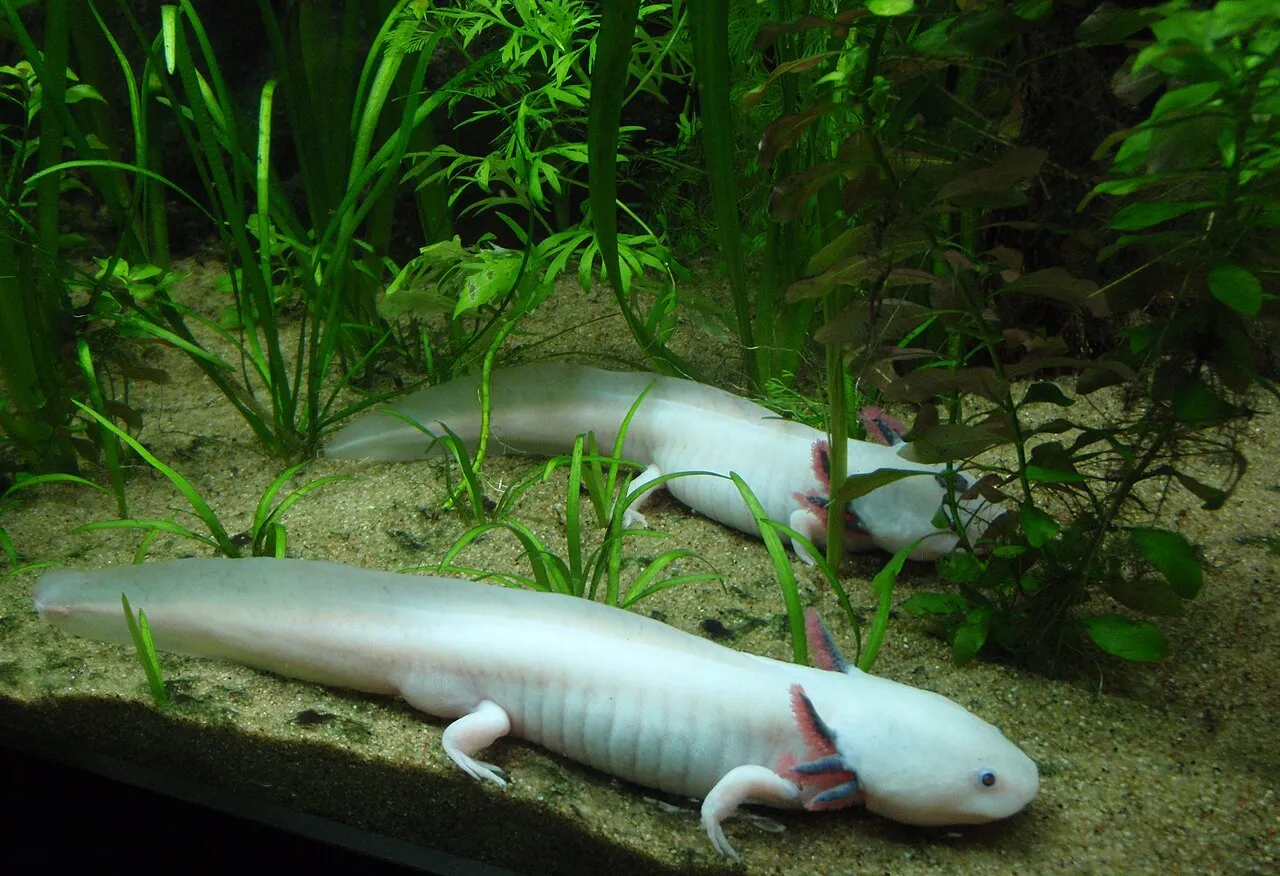
ZeWrestler · CC BY 3.0
2.1. Scientific name and relatives
The axolotl is an amphibian in the order Caudata, family Ambystomatidae, genus Ambystoma. Members of the family are called mole salamanders because most species spend much of their adult lives in burrows. Mexicanum simply means of Mexico.
Its closest familiar relative is the tiger salamander, Ambystoma tigrinum, widespread across North America. Tiger salamanders usually metamorphose and move onto land, but some populations also breed in larval form. The Mexican highlands hold several other closely related Ambystoma species, many of them threatened by habitat loss.
2.2. Axolotl, wooper looper and other names
The word axolotl comes from Nahuatl, the language of the Aztecs. It is usually explained as combining the word for water with the name of Xolotl, a god in Aztec mythology, and is often translated loosely as water dog or water monster. In Mexican Spanish it is commonly pronounced roughly ah-show-LOH-teh, while English speakers usually say ACK-suh-lot-ul.
In Japan the animal became famous in the mid-1980s after starring in a television food advertisement under the invented name wooper looper, and the nickname spread to Korea, where it is still widely used. In English it is sometimes called the Mexican walking fish, though it is not a fish at all.
3. History
3.1. Xochimilco and the Aztecs
The axolotl’s original home was a pair of lakes in the Valley of Mexico, Xochimilco and Chalco. In the days of the Aztec capital Tenochtitlan, these waters were surrounded by wetlands and chinampas, artificial farming islands built up from lake mud. Axolotls were a valued food, sold in markets and used in traditional medicine.
An Aztec myth tells how the god Xolotl, trying to escape being sacrificed, transformed himself into one creature after another and finally slipped into the water as an axolotl. The animal has carried associations with transformation, renewal and cheating death ever since.
3.2. Into European laboratories
During the French intervention in Mexico in the 1860s, a few dozen axolotls were shipped to the natural history museum in Paris. They bred in captivity and were soon distributed to laboratories across Europe. When some of them lost their gills and turned into land-dwelling salamanders, naturalists were astonished to find that one animal could live in two quite different forms.
In the twentieth century researchers showed that thyroid hormone drives metamorphosis, and the axolotl became a model organism for embryology, regeneration and genetics. Most pet axolotls today descend from those long-running laboratory and breeding colonies. In 2018 scientists published the axolotl genome, roughly ten times the size of the human genome, opening new avenues in regeneration research.
3.3. Crisis in the wild, popularity at home
In the wild the situation is grim. Lake Chalco was drained long ago, and Xochimilco has shrunk under urban expansion, sewage and pollution. Tilapia and carp introduced for fish farming eat axolotl eggs and young and compete for food. Survey figures vary with method and year, but densities reported in the 2010s were a small fraction of those recorded in the late 1990s. The species is listed as Critically Endangered by the IUCN, and local projects are cleaning chinampa canals to create refuges where wild axolotls can recover.
The pet trade, by contrast, has flourished. Axolotls are now bred in large numbers worldwide, and their popularity in East Asia grew first in Japan and later in Korea, where interest in unusual pets rose sharply from the 2010s onward. Almost all animals sold today are captive-bred.
4. Body
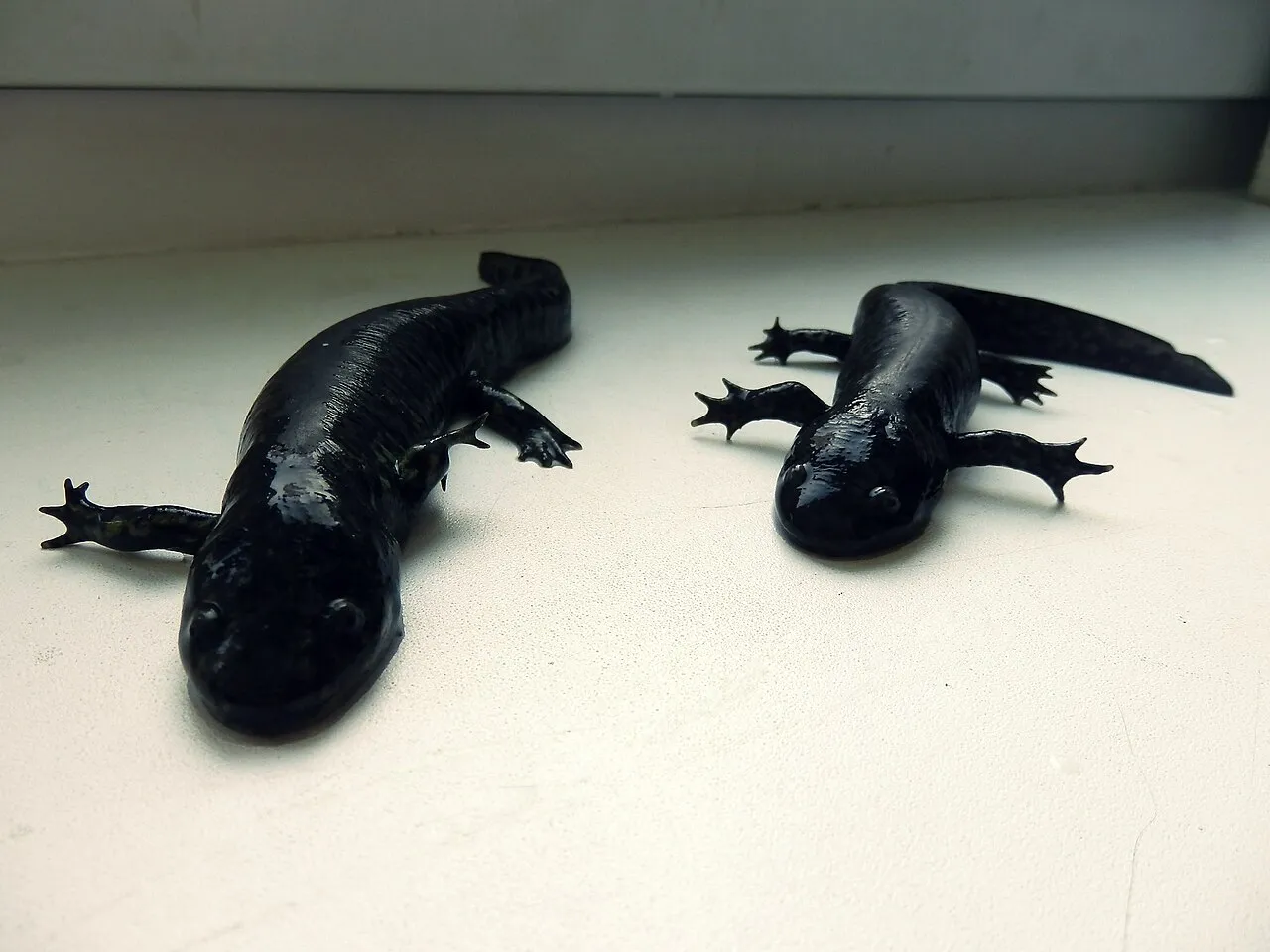
Regina Kolyanovska · CC BY-SA 3.0
4.1. Size and appearance
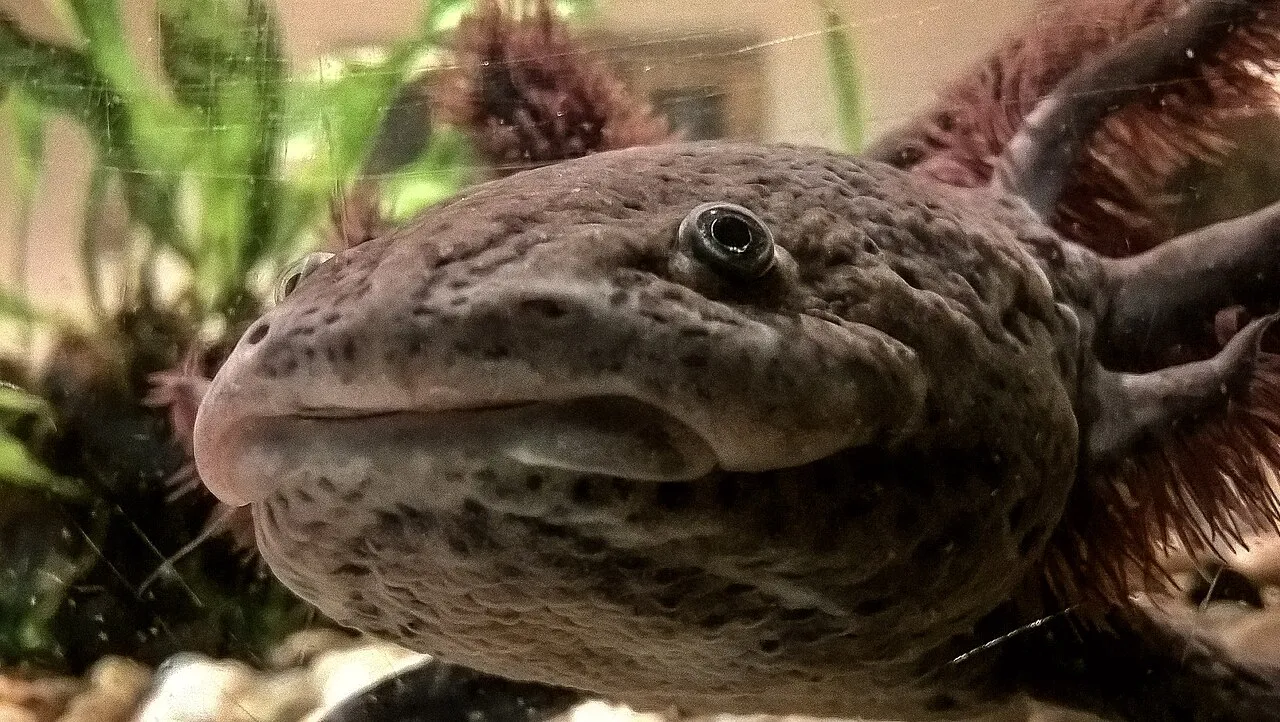
Adults measure about 20–30 cm including the tail and weigh 60–150 g, with the occasional giant exceeding 30 cm. The head is broad and flat, and the wide mouth curves into that famous smile. Costal grooves, the vertical folds between the ribs, line each flank, and the short legs carry four toes in front and five behind.
A fin runs from the back of the head to the tip of the tail and along the underside of the tail. Axolotls usually stroll slowly along the bottom, but when startled a powerful sweep of the tail sends them darting away.
4.2. Gills, breathing and senses
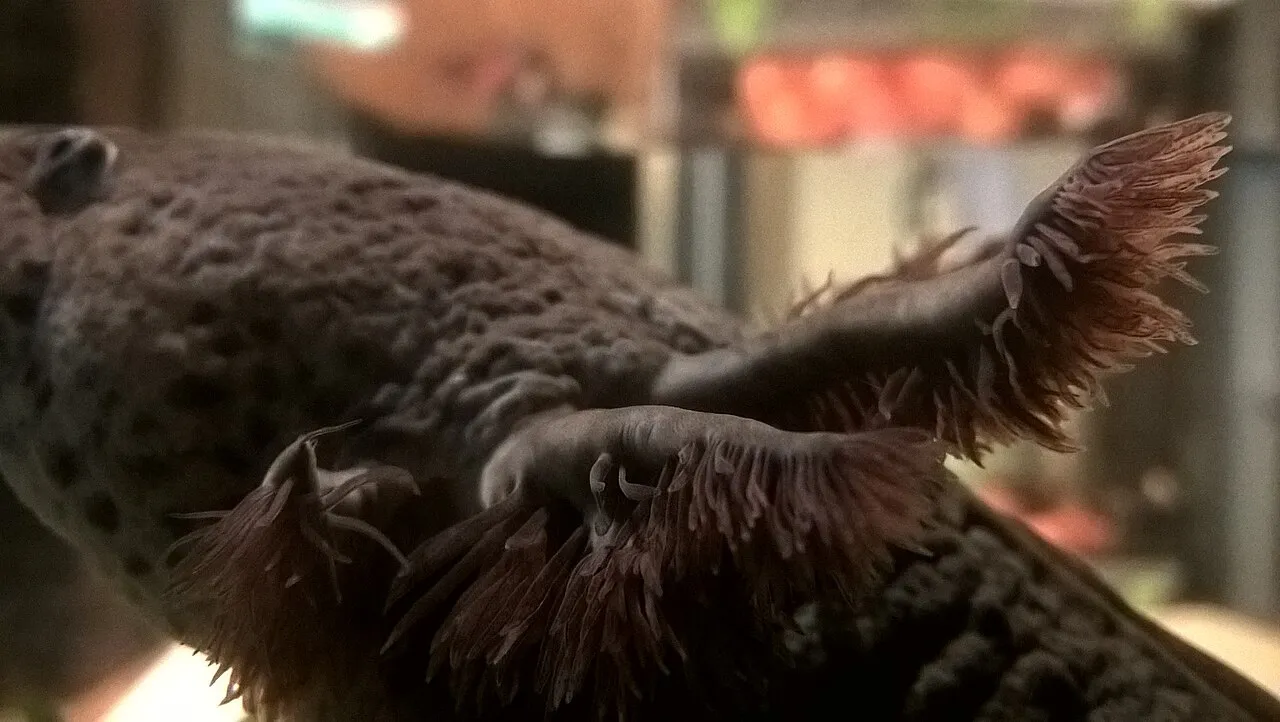
The trademark gills grow as three stalks on each side of the head. Each stalk is fringed with fine filaments full of blood vessels that absorb oxygen from the water. Full, red gills are a good health sign, and axolotls kept in poorly oxygenated water may grow larger, bushier gills to compensate.
Axolotls also breathe through their skin and with simple lungs. A trip to the surface to gulp air is normal behaviour. The eyes are small and lidless, and vision is poor; instead they rely on lateral line organs on the head and body to sense movement in the water, and on smell to find food. When prey comes close, the mouth flies open and sucks it in with a rush of water. Their teeth are tiny and serve to grip, not chew.
4.3. Regeneration
Among vertebrates, the axolotl is the regeneration champion. When it loses a limb, cells gather at the wound to form a blastema, and over weeks to months a complete new limb grows back with bone, muscle, nerves and skin. Research has shown regeneration of the tail, gills, parts of the spinal cord, and tissue in the heart, eyes and brain. Remarkably, most of this happens without scarring.
Regeneration has limits. Repeated injury to the same spot, old age and poor water can slow regrowth or produce malformed limbs, sometimes with extra toes. If a pet axolotl is injured, do not simply count on regrowth: keep the water immaculate and watch for infection.
4.4. Telling males from females
Axolotls can usually be sexed only at around 12–18 months, once they reach 15–20 cm. Males develop a noticeably swollen cloaca, a rounded bulge just behind the hind legs, and tend to be slimmer with slightly longer tails. Females have a small, flat cloaca and a broader, rounder body when viewed from above, especially when carrying eggs.
Sellers cannot reliably sex juveniles, so if you plan to keep two or more axolotls and do not want eggs, choose confirmed adults of the same sex.
5. Colour morphs
Different combinations of pigment cells give axolotls a range of colour forms, known in the hobby as morphs.
| Morph | Description |
|---|---|
| Wild type | Mix of brown, olive, black mottling and gold flecks |
| Leucistic | Pinkish-white body, dark eyes, red gills; the classic pet axolotl |
| White albino | White body with pink or red eyes and no pigment |
| Golden albino | Yellow to gold body, pale eyes, shimmering flecks |
| Melanoid | Lacks reflective pigment; solid black or dark grey without gold flecks |
| Copper | Coppery brown body with reddish eyes |
| Mosaic and chimera | Patches of different colours on different parts of the body; very rare |
| Piebald | White base with dark patches, a leucistic variant |
| GFP | Carries a fluorescent protein gene and glows green under UV light |
Pale leucistic and albino animals are often said to be more light-sensitive, so dim lighting and plenty of hides are sensible. GFP axolotls carry a gene introduced in laboratories and may be regulated as genetically modified organisms in some countries; see the Laws section.
The common albino trait is generally traced to mid-twentieth-century laboratory crosses with tiger salamanders, which means many pet axolotls carry a small amount of tiger salamander ancestry.
6. Behaviour
6.1. Life in the wild
Wild axolotls live on the beds of lakes and canals more than 2,000 m above sea level, where the water is relatively cool. They hide among plants and soft mud and are mostly active at night, eating almost any animal that fits in the mouth: small fish, insect larvae, crustaceans, snails and worms.
They are ambush predators that sit still until prey drifts close, then inhale it in an instant. They are not social animals and live solitary lives outside the breeding season.
6.2. Behaviour at home and reading the signals
In a tank, axolotls spend most of the time resting on the bottom or ambling slowly about. Hours of stillness are normal, and they become livelier in the evening once the lights are off. Once they learn the routine, many swim to the front glass or lift their heads when their keeper approaches at feeding time.
Axolotls show stress quite clearly. These signs are worth learning.
- Gills curled forward towards the face: a classic sign of poor water, high temperature or too much current.
- Tail tip curled into a hook: accumulated stress; check water quality and temperature first.
- Gill filaments shrinking, gills looking bare: poor water or nipping by a tankmate.
- Floating and unable to sink: too much swallowed air, constipation or impaction.
- Refusing food for days: often water above 22°C or poor water quality.
- Frantic swimming around the tank: strong flow or a water problem.
- Thin white skin peeling off: can be normal shedding, but frequent shedding warrants a water test.
7. Life stages
Axolotls usually live ten to fifteen years, and some individuals in good care are reported to live longer. Warm water speeds up metabolism and tends to shorten life.
| Stage | Age | What happens |
|---|---|---|
| Egg | About 2 weeks after laying | Wrapped in jelly and attached to plants; at 18–20°C |
| Larva | 0–3 months after hatching | Starts just over 1 cm; front legs appear first, then hind legs; needs small live food |
| Juvenile | 3–6 months | 10–15 cm, looks like a small adult, grows fast |
| Subadult | 6–12 months | 15–20 cm, growth slows |
| Adult | From 12–18 months | Sexually mature, sexes distinguishable |
| Senior | Roughly 10 years on | Less active, smaller appetite, colour changes |
Newly hatched larvae have no legs and look rather like fish fry. As in most salamanders, the front legs grow first and the hind legs follow some weeks later. Larvae readily bite each other’s limbs and gills, mistaking them for food, so siblings are best sorted by size.
Older axolotls eat less, move more slowly and may have less luxuriant gills. They cope less well with temperature and water changes, so keep water changes regular and adjust feeding to body condition.
8. Housing
8.1. Tank size and placement
One adult needs at least a tank of about 60 × 45 × 30 cm, around 80 litres. Floor area matters more than depth, so a long, wide tank beats a tall one. Two adults need a tank 90 cm long or more, and only axolotls of similar size should share.
Place the tank out of direct sunlight in the coolest part of the home, away from windows, fridges and heat-producing appliances. A filled 80-litre tank plus stand can weigh close to 100 kg, so check that the floor and stand can bear it. A lid or mesh cover prevents the occasional leap out of the water.
8.2. Keeping the water cool
Temperature is the single most important factor in axolotl care. Aim for 16–20°C, start cooling measures once the water passes 22°C, and treat prolonged temperatures of 24°C or more as dangerous: appetite falls and fungal and bacterial infections become far more likely. Axolotls tolerate cold much better, coping with water around 10°C, though they eat less. A tropical heater is almost never needed.
Where indoor summer temperatures reach 28–30°C, use these measures in increasing order of reliability.
- Aquarium cooling fans blow across the surface and use evaporation to lower the water by roughly 2–4°C; top up the evaporated water regularly.
- Keeping the tank in an air-conditioned room is often the simplest dependable solution.
- An aquarium chiller sized to the tank holds a set temperature whatever the room does. It is expensive but the most stable option.
- Frozen bottles of dechlorinated water are an emergency stopgap only; avoid sudden drops and never add tap-water ice cubes.
In summer, check the thermometer morning and evening, and have a plan for power cuts and equipment failures before you go away.
8.3. Water quality, filtration and substrate
Axolotls produce a lot of waste for what they eat, so filtration and cycling are essential. Target zero ammonia and nitrite, nitrate under 20 ppm, pH 6.5–8.0 and water that is not too soft. Cycle a new tank for at least four to six weeks before adding an axolotl, confirming the numbers with a test kit.
Axolotls dislike current. A sponge filter is the easy choice; with canister or hang-on filters, use a spray bar or a sponge over the outlet to spread and soften the flow. Gills swept constantly forward mean the current is too strong.
Substrate is a safety issue. Axolotls swallow whatever is under their food, and gravel smaller than the head can cause fatal impaction. Go bare-bottom, use very fine sand with grains under about 1 mm, or use smooth stones much larger than the head. Bare glass is easy to clean but slippery underfoot, which is why many keepers use a thin layer of fine sand.
8.4. Lighting, decor and equipment
Axolotls have no eyelids and avoid bright light. Unless you are growing plants, little or no lighting is needed, and any light should be dim and on for limited hours. Provide at least two shaded hides large enough for the whole body: caves, a flowerpot on its side, a large piece of wood. Low-light, cool-tolerant plants such as anubias, Java fern and mosses suit the setup, and floating plants add surface shade.
Avoid decor with sharp edges, which can injure the delicate skin.
- A tank of 80 litres or more with a lid and a sturdy stand
- A sponge filter or a filter with baffled flow
- A thermometer, cooling fan and, if needed, a chiller
- Water conditioner that treats chlorine and chloramine
- A liquid test kit for ammonia, nitrite, nitrate and pH
- Fine sand under 1 mm, or a bare bottom
- Two or more hides and low-light plants
- A turkey baster, siphon and dedicated bucket
- A soft net and a transport container
- A separate container for quarantine and emergencies
8.5. Tankmates
Keep axolotls alone or with other axolotls of similar size. Fish often nip at the gills, while fish and shrimp small enough to swallow become food, sometimes lodging fins or spines in the throat and bringing parasites and disease with them.
Goldfish are frequently suggested because they like similar temperatures, but they pick at gills and foul the water heavily, so the pairing is a poor one. Axolotls of very different sizes can injure each other too, with the larger one biting limbs or gills.
9. Diet
Axolotls are carnivores. A nutritionally complete, easily digested staple, varied with other foods, works best.
| Type | Examples | Notes |
|---|---|---|
| Staple | Earthworms (red wigglers, nightcrawlers) | Best all-round food; cut into pieces for adults |
| Staple | Sinking axolotl or carnivore pellets | Use alongside worms |
| Juveniles | Frozen bloodworm, daphnia, brine shrimp | Too lean as an adult staple |
| Treats | Frozen prawn, small pieces of salmon or white fish | Oily foods only occasionally |
| Avoid | Live feeder fish, raw mammal or bird meat | Parasites and poor digestion |
Feeding frequency depends on size: daily for juveniles under about 10 cm, every other day up to about 15 cm, and two or three times a week for adults. Feed until the belly is about as wide as the head, and cut back if an adult looks plump. Wiggling food in front of the mouth with long tweezers helps a poor-sighted axolotl find it.
Digestion depends on temperature. In water above 22°C axolotls may refuse food or regurgitate it, so cool the tank rather than forcing meals. Remove leftovers with a baster within about 30 minutes. Buy worms bred as bait or feeders, or collect them only from pesticide-free ground, since garden worms can carry parasites and chemicals.
10. Health
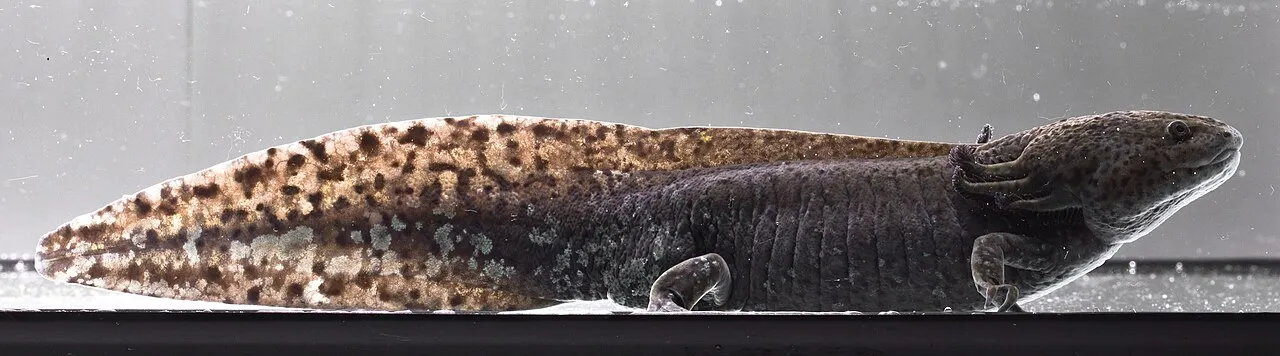
Mariblubb · CC BY-SA 4.0
Most axolotl illness starts with warm water and poor water quality. Before reaching for any treatment, check the temperature and test ammonia, nitrite and nitrate.
| Problem | Cause | Signs | Prevention and response |
|---|---|---|---|
| Fungal infection | Water moulds such as Saprolegnia | Cotton-wool growths on skin or gills | Lower temperature, improve water, consult a vet |
| Bacterial infection | Aeromonas and others | Red, inflamed legs, belly or tail; ulcers | See a vet promptly, improve water |
| Impaction | Swallowed gravel or objects | Off food, bloated, no droppings | Fine sand or bare bottom |
| Buoyancy problems | Swallowed air, constipation, gas | Floating and unable to sink | Adjust diet; see a vet if it persists |
| Ammonia burn | Uncycled tank, overcrowding, leftovers | Reddened skin, excess slime, gill damage | Proper cycling and regular water changes |
| Heat stress | Water at 24°C or more | Curled gills, refusing food, hooked tail | Cooling equipment, cooler location |
| Gill loss | Water quality, nipping tankmates | Shrinking gill filaments | Remove the cause and allow regrowth |
Amphibian diseases such as chytrid fungus and ranavirus also exist. Axolotls are thought to be relatively resistant but can carry infection, so quarantine newcomers and never share water or equipment with other amphibians.
Keepers often talk about salt baths, black tea baths or short-term refrigeration as home remedies, but the wrong concentration or duration can do real harm. Talk to an exotic vet experienced with amphibians first. Seek veterinary care promptly in the following situations.
- Refusing food for more than a week
- Fluffy white growths spreading on the skin
- Red, inflamed legs or belly, or ulcers
- A swollen belly with no droppings
- Shrinking gills with weight loss or changing skin colour
- The rare signs of metamorphosis: gills shrinking, eyes bulging, the fin receding
11. Breeding
Axolotls mature at around 12–18 months, and a drop in water temperature followed by a rise, or a change in day length, often triggers breeding. The male courts with a tail-waving dance around the female, then deposits several spermatophores, small jelly-based sperm packets, on the bottom. The female walks over them and picks one up with her cloaca, and fertilisation happens internally.
Within a day or two she lays eggs one at a time on plants and decor, typically hundreds per spawning and sometimes more than a thousand. At 18–20°C the eggs hatch in about two weeks; move the egg-laden plants elsewhere, because adults may eat them. Hatchlings live on their yolk for a day or two and then need small live foods such as baby brine shrimp or daphnia. As they grow they bite one another, so breeders sort them by size, which can mean managing dozens or hundreds of containers.
Home breeding is a serious undertaking. A single spawn can produce hundreds of young that need food, space and water changes, and finding responsible homes for them all is very difficult. Because the axolotl is internationally protected, selling or giving away offspring may also involve legal paperwork. If you do not want to breed, keep a single animal or a same-sex pair. Females sometimes lay infertile eggs with no male present, which is normal.
12. Costs
With axolotls, the tank and cooling equipment cost far more than the animal. The figures below assume one adult in an 80–100 litre tank and are rough examples in Korean won; prices vary widely by morph, seller and equipment brand.
| Item | Approximate cost (KRW) | Notes |
|---|---|---|
| One axolotl | 30,000–150,000+ | Common morphs are cheaper; rare morphs cost much more |
| Tank, lid and stand | 100,000–250,000 | 80–100 L |
| Filter | 20,000–80,000 | Sponge or flow-adjustable filter |
| Cooling fan | 20,000–50,000 | Essential in summer |
| Aquarium chiller | 200,000–500,000+ | Effectively required in hot homes |
| Substrate, hides, plants | 20,000–50,000 | |
| Test kit, conditioner, baster and so on | 30,000–50,000 | |
| Start-up total | About 400,000–1,000,000 | Depends heavily on whether a chiller is needed |
| Monthly food | 10,000–20,000 | Worms, pellets, frozen foods |
| Monthly electricity | 10,000–40,000 | Much higher with a chiller or air conditioning in summer |
| Monthly consumables | 10,000 | Conditioner, filter media |
| Monthly total | About 30,000–70,000 | |
| Yearly | About 400,000–800,000 | Excluding equipment replacement |
Exotic vets who see amphibians are few, so access and prices vary by region. A single visit with tests and medication can run from tens of thousands to well over a hundred thousand won, so set aside a separate medical reserve. Chillers and filters may also need repair or replacement every few years.
13. Before you get one
Check the following carefully before bringing an axolotl home.
- Do you have a way, and the budget, to keep water below about 22°C all summer? This is the biggest hurdle in axolotl keeping.
- Can you commit for ten years or more, including through moves and family changes?
- Is there room for a tank of 80 litres or more, and a stand that can carry it?
- Can you wait four to six weeks while the tank cycles?
- Have you located a vet nearby who treats amphibians?
- If there are children in the home, does everyone understand that this is a pet you do not pick up?
A healthy axolotl has full, well-coloured gills and no wounds, red patches or fluffy white growths. Check that the belly is neither sunken nor swollen and that legs and toes are intact. Clean, cool water in the seller’s tanks is another good sign.
Ask whether the animal is captive-bred and legally imported or sold, and keep any paperwork. In summer, protect it from overheating on the way home, for example with a towel-wrapped ice pack in an insulated bag.
14. Laws
The axolotl is listed in Appendix II of CITES, the Convention on International Trade in Endangered Species. Appendix II species can be traded internationally, but only with export permits, and many importing countries require their own paperwork as well. In Korea, for example, axolotls are managed as an internationally endangered species, and import requires a permit under national wildlife law. Depending on the country, keeping, transferring or breeding them may also involve registration or notification.
Some jurisdictions go further. California, for example, prohibits keeping axolotls as pets because of concerns about their impact on native salamanders if released, and several other US states and some Canadian provinces have restrictions or permit requirements. Rules change, so check current regulations with your national or local wildlife authority before buying.
GFP axolotls carry an introduced gene and may be regulated as genetically modified organisms, which can restrict their import, sale or keeping in some countries.
Keep records of where your axolotl came from, including any CITES documentation, and never release one into the wild.
15. Axolotls in culture
In Mexico the axolotl has become a national emblem. Linked to the myth of Xolotl, it symbolises transformation and survival, and in 2021 the Bank of Mexico put an axolotl and the canals of Xochimilco on the back of its new 50-peso banknote. Mexico City has an axolotl museum and several conservation groups devoted to the species.
In literature, the Argentine writer Julio Cortázar’s short story Axolotl follows a man who visits the axolotl tank in a Paris garden every day, staring so intently that he finds himself looking out from behind the glass as one of them.
Games and merchandise have made the animal a global favourite. Minecraft added colourful axolotls in 2021, introducing them to millions of children, and the Pokémon Wooper is widely recognised as axolotl-inspired. Japan’s 1980s advertising boom produced plush toys and stationery by the thousand, and today the smiling face is a staple of stickers, emoji and plush toys across East Asia and beyond.
16. Trivia
- The axolotl genome holds about 32 billion base pairs, roughly ten times the human genome, and when it was sequenced it was among the largest animal genomes ever decoded.
- Treating an axolotl with thyroid hormone or iodine can force it to metamorphose into a land-dwelling salamander, but the change is hard on the body and often shortens its life. It should never be attempted on a pet.
- Axolotls shed thin layers of skin from time to time and often eat the shed skin.
- An axolotl floating with legs outstretched is usually just resting, but one that cannot get back down for long periods may have a buoyancy problem.
- The canals of Xochimilco, last stronghold of the wild axolotl, are part of a UNESCO World Heritage Site together with the historic centre of Mexico City.
- The feeding strike is so fast that you can sometimes hear a faint snap as the mouth opens and water rushes in.
Health notes are general information. If something seems wrong, contact a vet who treats this species.
FAQ
Can I hold my axolotl?
Best not. Warm hands and skin oils damage its slime coat, so only move it with a net or cup when necessary. You will still get plenty of interaction as it comes to the glass at feeding time.
Do I really need a chiller?
Not if your room stays below about 22 °C year-round. Where indoor summer temperatures reach 28–30 °C, fans can shave off 2–4 °C, but a chiller sized to the tank is the only dependable solution.
My axolotl lost a leg. Will it grow back?
Usually, yes; healthy axolotls regrow limbs, toes and tail over weeks to months. Keep water quality pristine meanwhile, see a vet if the wound turns fluffy white or red and swollen, and check whether a tankmate caused the injury.
Further reading
- 🗳️ Axolotl tanks: bare bottom or fine sand?
- 🗳️ Do look-don't-touch pets have real appeal?
- ❄️ Winter Care: Keeping Pets Warm and Heaters Safe
Photo credits
Photos are freely licensed images from Wikimedia Commons. Authors and licenses are listed below.
- Axolotl ganz.jpg — LoKiLeCh · CC BY-SA 3.0
- Ambystoma mexicanum at Vancouver Aquarium.jpg — ZeWrestler · CC BY 3.0
- Ambystomas.jpg — Regina Kolyanovska · CC BY-SA 3.0
- Axolot's gills (Ambystoma mexicanum).jpg — Andrea massagli · CC BY-SA 4.0
- Axolot's head (Ambystoma mexicanum).jpg — Andrea massagli · CC BY-SA 4.0
- Axolotl Wild Type.jpg — Mariblubb · CC BY-SA 4.0