TailVille
At a glance
Rough ranges for supplies, food and electricity in Korea (USD is approximate). Purchase or adoption fees are not included.
Beginners and families who would enjoy watching births and growth, and anyone curious about selective breeding.
People with no plan for surplus fish, or who want just one or two fish that never multiply.
1. Overview
The guppy is a small tropical fish from northern South America and the southern Caribbean. It is a livebearer, giving birth to free-swimming young instead of laying eggs, and the males pack an astonishing range of colour and tail shapes into a body barely 3 cm long. Cheap, hardy and effortless to breed, guppies are among the most widely kept aquarium fish on the planet and a classic first fish.
A guppy tank is never quiet. Males court females from morning to night, fanning their tails and darting alongside, and females give birth roughly once a month. Many beginners are startled to find their handful of fish has tripled within a season. That fertility is both the guppy’s great charm and its biggest management challenge.
Guppies also matter to science. Wild populations in the streams of Trinidad change their colours and breeding strategies depending on which predators share their water, and studies of them became one of the best-known demonstrations that evolution can be observed within years or decades. This article covers classification, history, strains, behaviour, care, breeding management, costs and the law.
2. Name and classification
Per Harald Olsen · CC BY 3.0
2.1. Scientific name and family
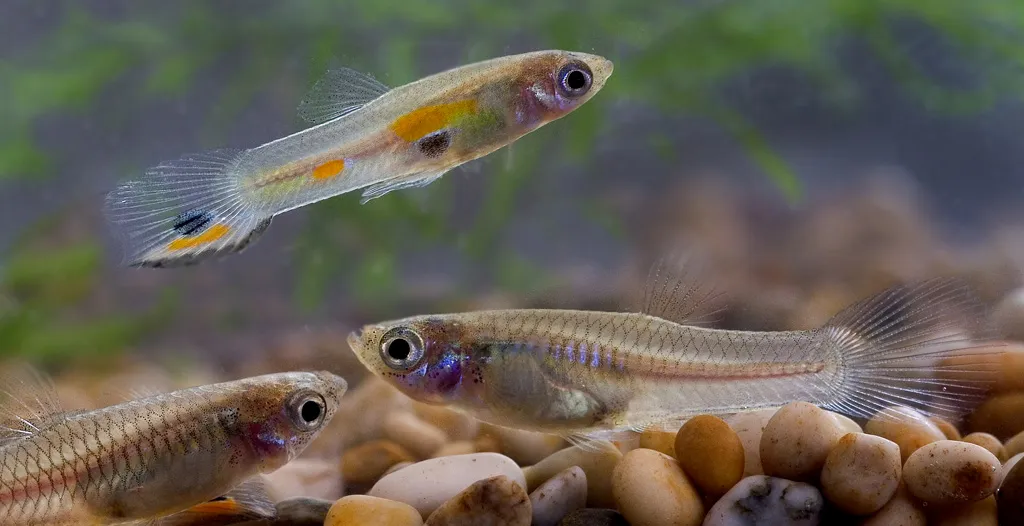
The guppy is Poecilia reticulata, described in 1859 by the German zoologist Wilhelm Peters from Venezuelan specimens. Reticulata is Latin for net-like, a reference to the dark edging on each scale that makes the body look finely meshed.
Guppies belong to the family Poeciliidae in the order Cyprinodontiformes, the toothcarps. The family is full of familiar livebearers, including platies, swordtails, mollies and the mosquitofish Gambusia, which hobbyists often group together simply as livebearers. Despite older names such as millionfish and rainbow fish, the guppy is unrelated to the true rainbowfishes of Australia and New Guinea.
2.2. Where the name comes from
The common name honours Robert John Lechmere Guppy, a British-born naturalist living in Trinidad. In 1866 he sent specimens to the British Museum in London, where Albert Günther named the fish after him. It later turned out that Peters had already described the same species, so the scientific name reverted to Poecilia reticulata, but Guppy’s name stuck as the everyday one.
The word has spread almost unchanged into dozens of languages. Strain names in the hobby are a different matter: they mix English, Japanese and German breeding traditions, so the same fish may be sold as a half-black, a tuxedo or a Moscow depending on who bred it.
2.3. Close relatives
The guppy’s closest relative is Endler’s livebearer, Poecilia wingei, from a small area of Venezuela. It is smaller, with neon orange, green and black markings, and it hybridises readily with guppies; many fish sold as Endlers are actually crosses. Anyone wanting to keep pure Endlers should never house them with guppies.
Mollies are in the same genus but are larger and many prefer slightly brackish water. Platies and swordtails belong to a different genus, Xiphophorus, and do not interbreed with guppies.
3. History
3.1. Wild guppies and their spread
Wild guppies inhabit streams, ditches and pools in Venezuela, Guyana, northern Brazil and Trinidad and Tobago. They favour warm, fairly shallow water and are tolerant of a surprising amount of pollution.
Early in the twentieth century their appetite for mosquito larvae made them a tool in the fight against malaria, and guppies were released in large numbers across tropical and subtropical countries. The results for disease control were mixed, and in many places the newcomers competed with native killifish and other small fish. Today guppies are regarded as an invasive species in a number of regions.
3.2. The guppy as an aquarium fish
Guppies spread through European and American aquariums in the early twentieth century, as affordable heaters made tropical fishkeeping possible at home. Small, sturdy and almost self-propagating, they quickly became a staple. Breeders in Germany, the United States, Japan and later Thailand fixed tail shapes and colour lines, and international guppy associations published show standards, creating the world of fancy or show guppies.
In Korea, guppies have long been a basic stock fish in tropical fish shops. Hobby clubs and online communities from the 1990s onward helped local breeders maintain and trade their own lines, and guppies are now common in classrooms and family homes as a way to watch new life arrive.
3.3. A star of evolutionary biology
Many mountain streams in northern Trinidad are split by waterfalls into very different worlds. Below the falls live predatory cichlids that eat guppies; above them, only a small killifish that rarely takes adults. Researchers found that males from high-predation sites are relatively drab, while males from low-predation sites carry far more bright orange spotting.
When guppies from dangerous stretches were moved into predator-free streams, the transplanted populations changed within a few years to a couple of decades: males became more colourful, and females shifted the age at which they first bred and the number and size of their young. These studies are now textbook examples of natural and sexual selection producing measurable change in a human timeframe.
4. Body
4.1. Size and build
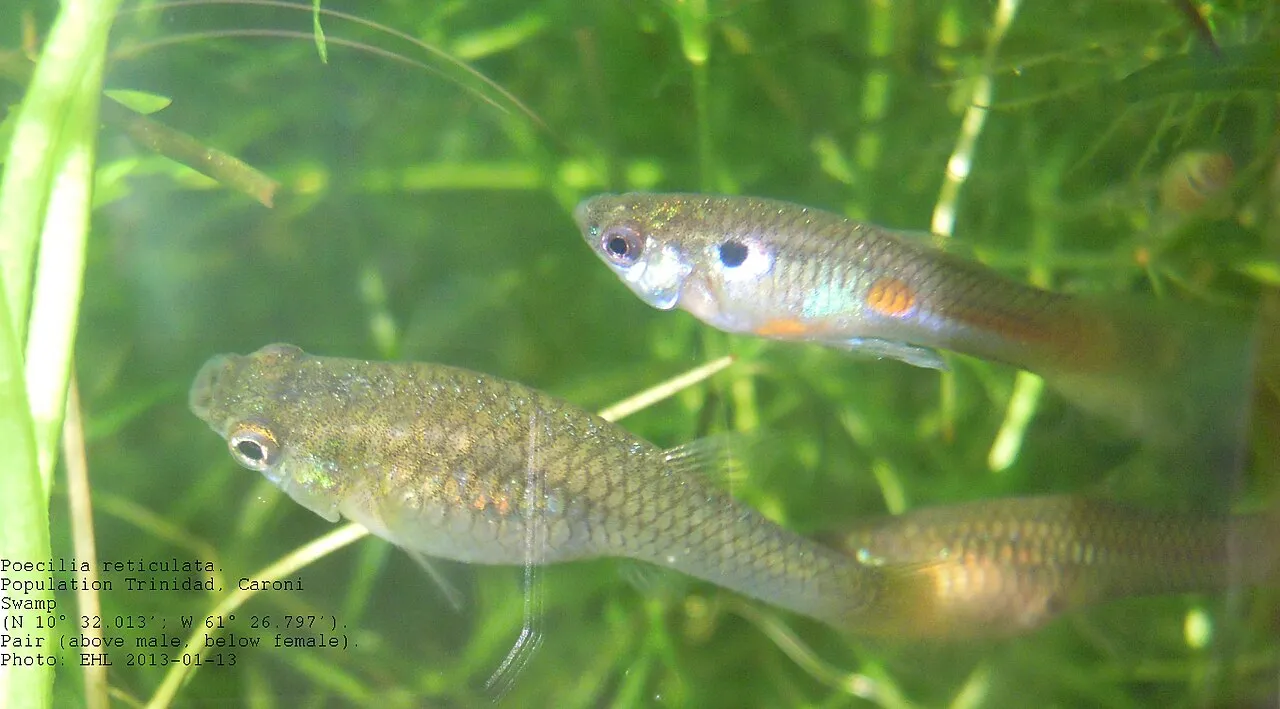
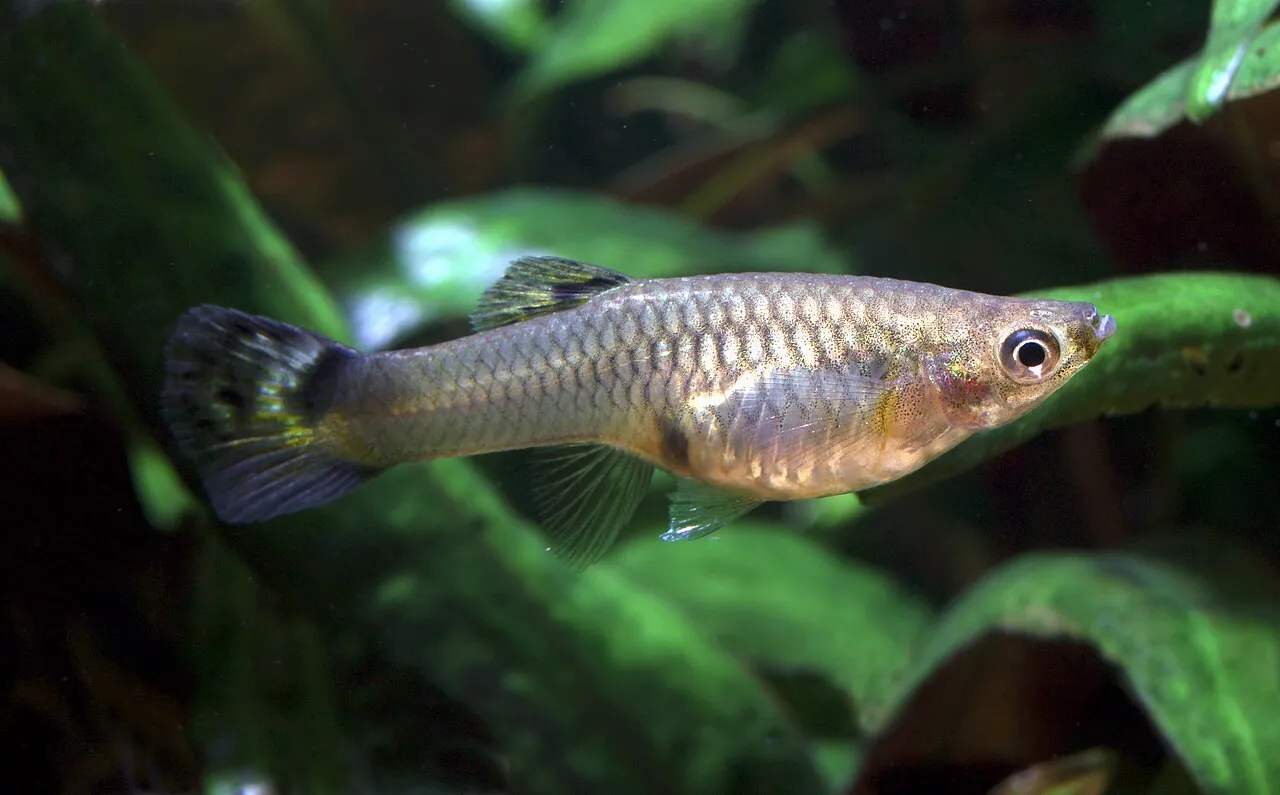
Male and female guppies differ dramatically in size. Males reach about 2.5–3.5 cm excluding the tail, while females grow to 4–6 cm and are much deeper-bodied. Both have a slightly compressed, streamlined shape and an upturned mouth suited to feeding near the surface.
As a male matures, his anal fin narrows into a rod-like copulatory organ called the gonopodium. It normally lies folded against the body and swings forward during mating to transfer packets of sperm to the female. All male poeciliids share this structure.
4.2. Colour and tails
Wild males have a grey-brown body splashed with orange, black, blue and green spots in patterns so variable that no two fish look alike. The orange comes from carotenoid pigments obtained from food, and studies show wild females tend to prefer males with brighter orange, probably because it advertises good foraging and health.
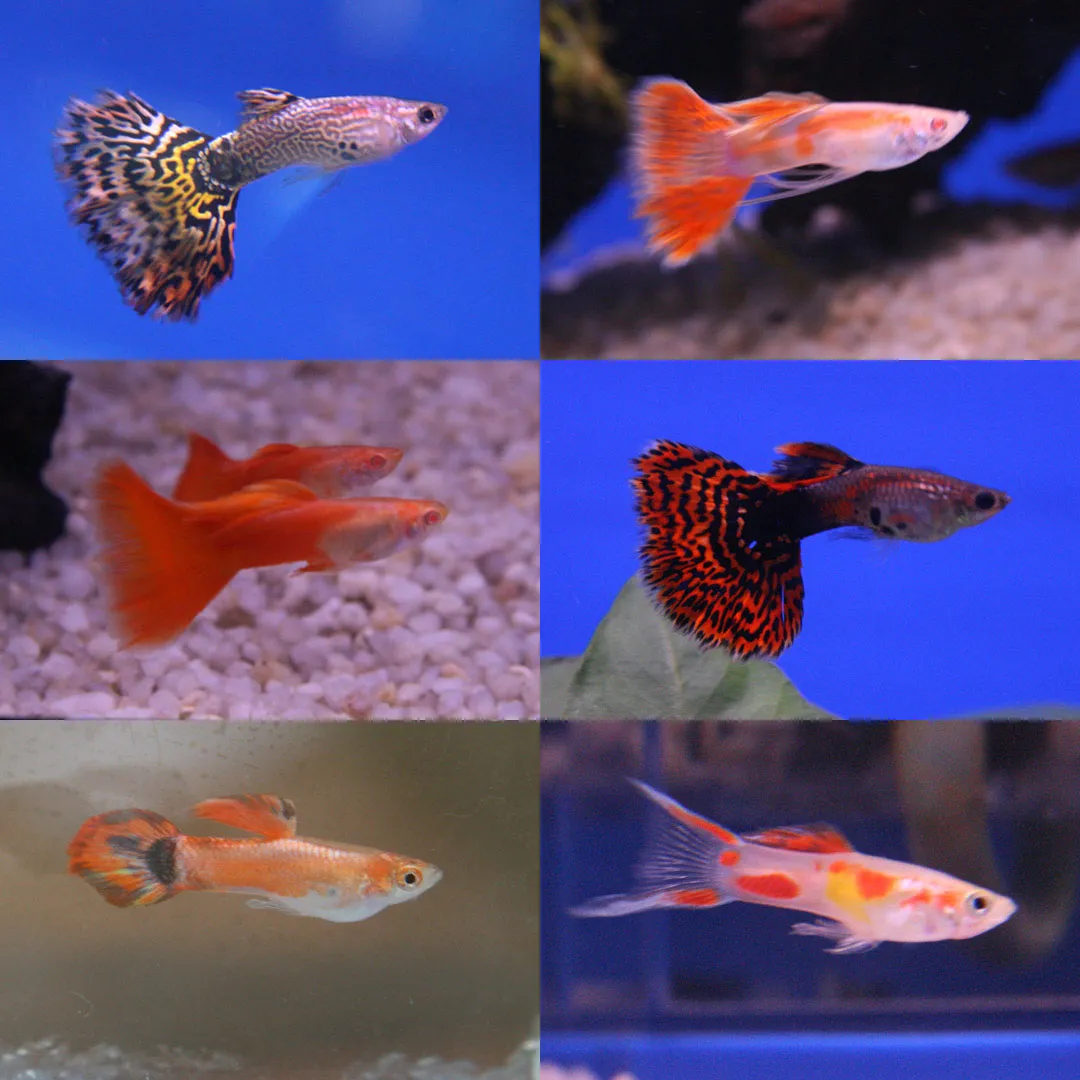
Fancy guppies are that variability pushed to extremes. Male tails can match or exceed the length of the body, and strains range from solid single colours to intricate patterns. Females are usually plain grey or pale, though in many fancy lines they carry tail and body colour that echoes the males.
4.3. Sexing and signs of pregnancy
Guppies can be sexed from about six to eight weeks old. Young males become slimmer and more colourful and their anal fin starts to lengthen into a gonopodium; females keep a fan-shaped, triangular anal fin.
A pregnant female grows steadily rounder and shows a dark gravid spot near the vent. Close to birth her belly becomes boxy, and the eyes of the developing fry may be visible as tiny dark dots inside the gravid area. Just before giving birth she often hides alone in plants or a quiet corner.
5. Strains
Guppy strains are named by combining tail shape with body and tail colour or pattern. Standards differ between breeders and countries, so treat the tables below as a guide.
| Tail shape | Description |
|---|---|
| Delta (triangle) | Large triangular spread; the main show form |
| Fantail | Rounded fan, narrower angle than the delta |
| Veiltail | Long, drooping trailing edge |
| Roundtail | Small round tail, close to the wild type |
| Spade and speartail | Pointed, shovel or spear shape |
| Lyretail | Harp shape with extended upper and lower tips |
| Double sword | Sword extensions above and below |
| Top or bottom sword | A single sword extension above or below |
| Colour or pattern | Description |
|---|---|
| Full red | Body and fins entirely red |
| Blue or black Moscow | Whole body deep blue or black |
| Tuxedo (half-black) | Rear half of the body black |
| Mosaic | Irregular blotches on the tail |
| Grass | Fine speckles scattered across the tail |
| Cobra and king cobra | Snakeskin-like reticulated body pattern |
| Albino | Red eyes, reduced pigment |
| Platinum and metal | Metallic reflective layer on the body |
| Dumbo (big ear) | Enlarged pectoral fins |
Because strains are maintained by breeding closely related fish over many generations, fancy guppies are often less robust than wild-type fish. For a first tank, choose solid, active fish over the most extravagant tails.
6. Behaviour
Holger Krisp · CC BY 3.0
6.1. Shoaling and courtship
Guppies are social fish that move in loose shoals. A lone guppy tends to hide and act nervously, while a group explores the whole tank with confidence. Wild guppies tighten their shoal when a predator appears, and a few individuals may edge towards it to inspect the threat before retreating.
Much of a male’s day is spent courting. He arches his body into an S-shape in front of a female and quivers with his tail spread, or he tries a sneaky approach from behind and swings his gonopodium forward without any display at all. Where males outnumber females, the females are chased relentlessly, which is why mixed groups work best at about one male to two or three females.
6.2. Behaviour at home and what it means
Guppies spend most of their time in the middle and upper water and crowd the surface at feeding time. Within weeks they learn who feeds them and gather at the front glass when that person appears. These behaviours are useful clues to how they are doing.
- Fins open, swimming together in midwater: healthy and settled.
- Fins clamped, hanging still near the surface: suspect poor water or low oxygen.
- Shimmying, a side-to-side wobble on the spot: a classic sign of cold water or deteriorating water quality.
- Flashing against gravel or rocks: possible parasites or skin irritation.
- A heavily pregnant female hiding alone: birth may be imminent.
- Ragged, split male tails: nipping by tankmates, fin rot or simply age.
Guppies rarely bother other fish, but adults treat newborn fry as food. That is instinct, not a behavioural problem.
7. Life stages
Guppies usually live one to three years, typically about two. Warmer water speeds up growth and breeding but tends to shorten life, so a moderate 24–26°C is a good compromise for longevity.
| Stage | Age | What happens |
|---|---|---|
| Embryo | 21–30 days of gestation | Develops inside the mother; eyes visible just before birth |
| Newborn fry | 0–1 week | About 5–7 mm, swims and feeds immediately |
| Fry | 1 week–1 month | Rapid growth; cover decides who survives |
| Juvenile | 1–3 months | Sexes become distinguishable, male colour and tail develop |
| Adult | From about 2 months (males) and 3 months (females) | Breeding; females drop broods roughly every four weeks |
| Senior | Roughly 18 months on | Curved spine, frayed tails, fewer broods |
Older guppies may develop a slight curve in the spine and lose condition, and males’ tails split and droop. If young fish show the same signs, suspect mycobacterial disease or parasites and watch the rest of the group closely.
8. Housing
8.1. Tank and water
Six to eight guppies need at least 40 litres, and 60 litres or more is wiser given how quickly numbers grow. Small tanks crash fast once a population builds up, and mass die-offs follow.
Guppies tolerate 22–28°C but do best around 24–26°C. Below about 20°C their immune system falters, so a heater is necessary in most homes for much of the year. They like slightly alkaline, moderately hard water around pH 7.0–8.0, which suits many municipal supplies; very soft, acidic water tends to cause fin problems and poor condition.
Cycle the tank before adding fish. Until nitrifying bacteria are established, ammonia and nitrite build up quickly enough to kill even hardy guppies. Run the filter for two to four weeks or more and wait until your test kit shows zero ammonia and nitrite.
8.2. Filtration, plants and equipment
Newborn fry are easily sucked into filter intakes, so use a sponge filter or cover the intake of a hang-on or canister filter with foam. Keep the current low to moderate; males with big tails tire in strong flow.
Plants are close to essential in a guppy tank. Dense growth such as Java moss, hornwort and cabomba, plus floating plants like duckweed or salvinia, gives fry somewhere to escape their parents and soaks up nitrate at the same time.
- A tank of 40–60 litres or more, with a lid
- An adjustable heater and a thermometer
- A sponge filter, or a filter with a foam-covered intake
- Water conditioner and a liquid test kit
- Dense and floating plants
- Fine sand or small gravel
- A siphon, a bucket and a small net
- A fry net or a small separate tank for when you need one
8.3. Tankmates
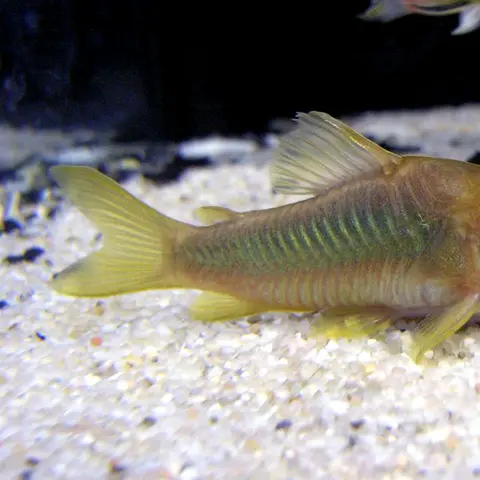
Guppies are peaceful and mix well with similarly sized, gentle fish: corydoras, otocinclus, platies, small rasboras and adult cherry shrimp are common choices, although shrimp babies may be eaten.
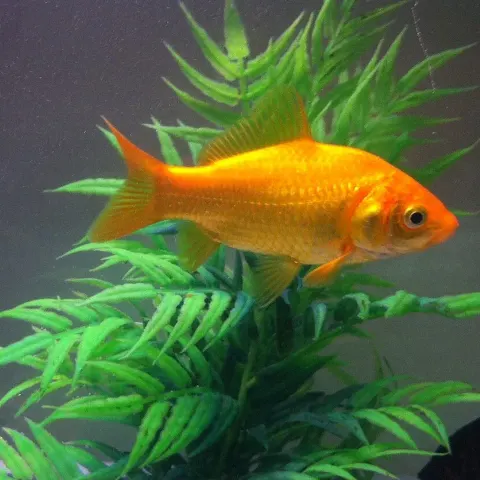
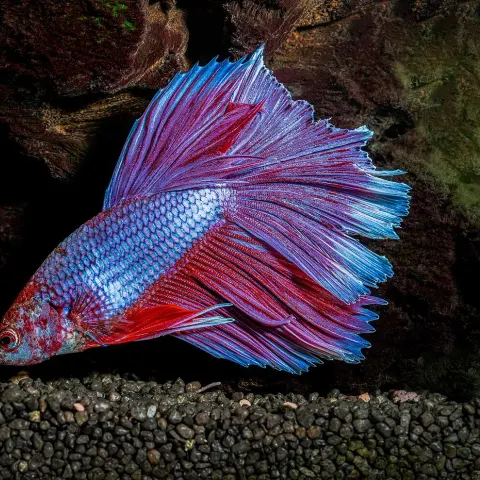
Avoid big-mouthed cichlids, angelfish, fin-nipping tiger barbs and male bettas, which may shred long tails or simply eat guppies. Goldfish are a poor match too: they need cooler water and will swallow a guppy given the chance.
9. Diet
Guppies are omnivores. In the wild they eat insect larvae, tiny crustaceans, algae and bits of plant. In an aquarium, use a small-particle food as the staple and vary it with animal and plant foods.
| Type | Examples | How often |
|---|---|---|
| Staple | Crushed flakes, micro pellets, granules | Once or twice a day |
| Animal foods | Frozen brine shrimp, daphnia, finely chopped bloodworm | Two or three times a week |
| Plant foods | Spirulina flakes, finely minced blanched vegetables | Once or twice a week |
| Fry food | Powdered food, newly hatched brine shrimp | Three to five small meals a day |
Offer what the group eats in about two minutes. Guppy mouths are tiny, so large pellets get carried around, spat out and left to rot. Carotenoid-rich foods and brine shrimp help bring out the reds and oranges in males.
Fry grow quickly and need several small meals a day. For the first week, crush adult flakes into powder between your fingers or use a dedicated fry food. Newly hatched brine shrimp are famous for boosting growth and survival.
10. Health
Guppies have a reputation for toughness, but fish from mass breeding farms can be weakened by inbreeding and transport stress. Quarantining newcomers for about two weeks in a separate tank is the single most effective protection.
| Condition | Cause | Signs | Prevention and response |
|---|---|---|---|
| White spot (ich) | Ciliate parasite | White dots on body and fins | Stable heat, quarantine new fish |
| Columnaris | Bacterial infection | Cottony or saddle-shaped white patches, rapid deaths | Isolate at once, improve water, treat |
| Camallanus | Parasitic nematode | Red threads protruding from the vent | Dewormer, treat the whole tank |
| Gyrodactylus | Skin flukes | Clamped fins, flashing | Quarantine and deworming |
| Tetrahymena | Ciliate infection | White patches, lifted scales, muscle damage | Act early, seek expert help |
| Fin rot | Bacterial infection | Melting, splitting tail edges | Better water, separate aggressors |
| Mycobacteriosis (fish TB) | Mycobacteria | Bent spine, wasting, ulcers | Rarely curable; isolate affected fish |
If several fish die one after another, the cause is usually water quality, an infectious disease or a temperature problem. Test ammonia, nitrite and nitrate and check the heater, and if the cause remains unclear, ask a fish vet, an experienced shop or a guppy club for help.
Some of the mycobacteria behind fish TB can also infect human skin, so wear gloves when working in the tank with cuts on your hands.
11. Breeding
11.1. How guppies reproduce
Guppies use internal fertilisation and give birth to live young. The male transfers sperm packets with his gonopodium, and the female stores the sperm and uses it to fertilise several successive broods. That is why a female separated from males can keep giving birth for months.
Gestation lasts roughly 21–30 days depending on temperature. Young females produce perhaps 5–20 fry, while large, mature females can exceed 50. Birth takes a few hours, and the fry swim and feed straight away. There is no parental care; the mother and other adults will eat babies they catch.
11.2. Raising fry and controlling numbers
If you want more fry to survive, dense planting is the most natural solution. Breeding boxes work for short spells just before birth, but a female confined for days often aborts or loses her brood from stress. Moving fry into a separate grow-out tank until they are too big to swallow raises survival dramatically.
The bigger issue is numbers. A mixed group can grow to dozens or more than a hundred fish within months, and once the population exceeds what the tank can support, water quality collapses and every fish is at risk. If you do not want babies, the simplest answer is an all-male tank, which is just as colourful and lively.
If you do want to breed, decide in advance where surplus fish will go: clubs, friends, local shops. Line breeders select only the fish that show the traits they want and bring in unrelated stock every few generations to avoid the deformities and weakness that come with endless inbreeding. Never release extra guppies into streams or drains.
12. Costs
Guppies themselves are cheap; the tank, heater and filter make up most of the start-up cost. The figures below assume six to ten guppies in a 60-litre tank and are rough examples in Korean won. Prices vary widely by shop, brand and strain.
| Item | Approximate cost (KRW) | Notes |
|---|---|---|
| Six to ten guppies | 10,000–50,000+ | Shop fish cost a few hundred to a few thousand won each; show pairs far more |
| Tank and lid | 30,000–80,000 | 40–60 L |
| Heater and thermometer | 15,000–40,000 | |
| Filter | 10,000–40,000 | Sponge filter or covered intake |
| Substrate and plants | 10,000–30,000 | |
| Conditioner, test kit, siphon | 15,000–30,000 | |
| Start-up total | About 70,000–200,000 | |
| Monthly food and consumables | 3,000–10,000 | More with lots of fry |
| Monthly electricity | 5,000–10,000 | Higher in winter |
| Monthly total | About 8,000–20,000 | |
| Yearly | About 100,000–250,000 | Excluding equipment replacement |
Planned breeding adds a grow-out tank, a brine shrimp hatchery and extra heaters. Fish vets are scarce, so budget for a quarantine tank and basic medications rather than relying on clinic visits.
13. Before you get one
Think about the following before buying guppies.
- Will you keep a mixed group or males only? That one decision shapes the next few years.
- If numbers grow, where will the extra fish go?
- Can you keep the water warm through winter?
- Can you manage at least one water change a week?
- Are you prepared to wait several weeks for the tank to cycle?
Healthy guppies swim actively with the group, fins fully spread. Avoid fish with clamped tails or that shimmy in one spot, fish with bent spines or hollow bellies, and any with red threads at the vent. If a shop tank has dead fish in it, do not buy from that tank.
Shop females are very often already pregnant. Finding a stray female among your males, or babies from a female bought alone, is so common that it pays to have plants and a spare container ready from the start.
14. Laws
Keeping guppies requires no licence in most countries, and the species is not listed by CITES. However, guppies are classed or managed as an invasive species in a number of places, because releases for mosquito control and dumped aquarium fish have created feral populations in warm waters around the world.
Never release guppies or tip them down a drain. Feral populations have turned up in thermal springs and warm industrial outflows even in temperate countries, where they compete with native fish for food and space. Rehome surplus fish through clubs or shops.
Some countries and states restrict moving, selling or releasing guppies in particular areas. If you live somewhere warm with native small fish, check local regulations before keeping or breeding them.
15. Guppies in culture
The guppy has long stood for the first pet fish. It lives in classroom tanks, turns up in children’s books and is used in schools around the world to show young people birth, growth and the cycle of life.
Its breeding rate earned it the old nickname millionfish. In cognitive science, the guppy effect names a puzzle about how concepts combine: asked for a typical pet, people think of a dog, and for a typical fish, something like a trout or salmon, yet the typical pet fish is a guppy or goldfish, which is typical of neither category on its own.
Guppies are also fixtures of biology textbooks and nature documentaries, thanks to decades of research on sexual selection, mate choice and evolution under predation.
16. Trivia
- A single mating can supply a female with enough stored sperm for several broods over a period of months.
- Wild male colour patterns are so individual that researchers can identify fish from photographs alone.
- Studies suggest female guppies often prefer males with unfamiliar patterns. That advantage for rarity helps explain why such variety persists in wild populations.
- Many places that once released guppies to control mosquitoes now restrict or ban their release.
- Many of the genes for male tail colour and pattern sit on the Y chromosome, so a male line’s pattern often passes straight from father to son.
- Guppies can tolerate a fair amount of salt and are sometimes found in brackish water near river mouths.
Health notes are general information. If something seems wrong, contact a vet who treats this species.
FAQ
I bought only a female and she gave birth. How?
Female guppies store sperm and can produce several broods from a single mating, even months after leaving the males.
Do I need to separate the fry?
Adults do eat fry. For better survival, add dense plants or move the babies to a separate grow-out tank.
My guppies don’t seem to live long. Is that normal?
Around two years is typical. Losses within a few months, however, point to water quality, temperature or weak stock.
Further reading
- 🗳️ Starting a fish tank: goldfish or guppies?
- 🗳️ Cherry shrimp: species-only tank or mixed with guppies?
- 🏢 Choosing a Pet When You Live Alone or Work Full Time
Photo credits
Photos are freely licensed images from Wikimedia Commons. Authors and licenses are listed below.
- Guppy male moscow.jpg — Marrabbio2 · CC BY-SA 3.0
- Guppy pho 0048.jpg — Per Harald Olsen · CC BY 3.0
- Guppy CS pair 4 20130113.jpg — Emilio17 · CC BY-SA 3.0
- Guppy Poecilia reticulata.jpg — Holger Krisp · CC BY 3.0
- Guppy breeds.jpg — Melanochromis · Public domain