TailVille
At a glance
Rough ranges for supplies, food and electricity in Korea (USD is approximate). Purchase or adoption fees are not included.
Adults comfortable with spiders who want a fascinating, long-lived display animal that costs very little to keep.
Anyone wanting a handleable pet, households with arachnophobic members, or homes where young children could open the enclosure.
1. Overview
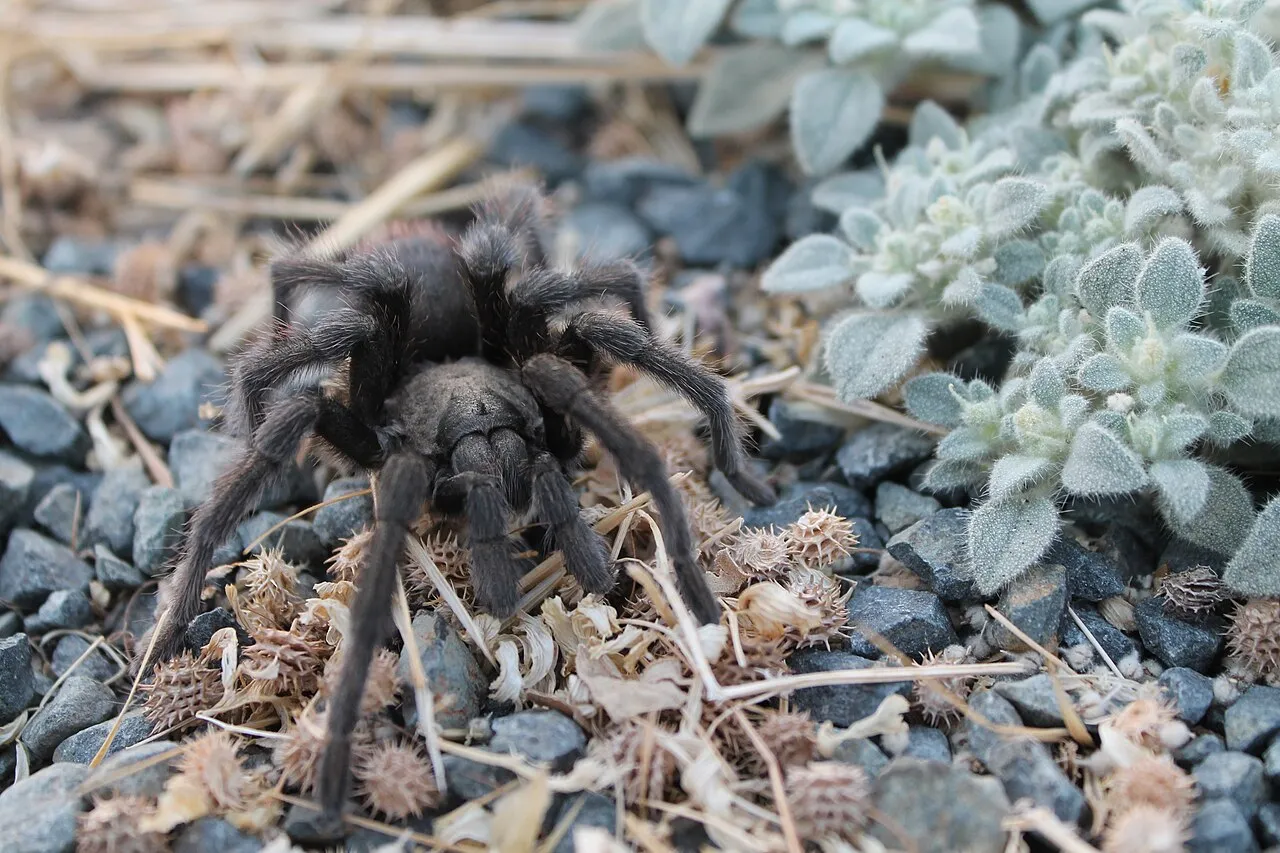
Tarantula is the everyday name for the large, hairy, heavy-legged spiders of the family Theraphosidae. More than 1,000 species are known from the tropics, subtropics and deserts of the Americas, Africa, Asia and Australia, ranging from dwarfs with a leg span under 5 cm to giants like the goliath birdeater that can exceed 25 cm.
As pets, tarantulas are silent, practically odorless and can spend their whole lives in an enclosure the size of two hands. They eat once every week or two and routinely fast for months. Females of many species live well past 20 years, so a tarantula can be as long a commitment as a dog or cat.
What a tarantula is not is a cuddly companion. It doesn't recognize its keeper, handling stresses it, and a fall can be fatal. New World species defend themselves by kicking off irritating abdominal hairs, while Old World species tend to be fast and more potently venomous, so species choice matters from day one. The real reward is observation: watching a spider dig, lay silk, hunt, molt and grow.
This article covers classification and the origin of the name, anatomy, popular species, behavior, growth and molting, housing, feeding, health, breeding, costs, laws and the tarantula's long career in popular culture.
2. Name and classification
2.1. Taxonomy
| Rank | Name |
|---|---|
| Phylum | Arthropoda |
| Class | Arachnida |
| Order | Araneae (spiders) |
| Infraorder | Mygalomorphae |
| Family | Theraphosidae |
Tarantulas belong to the mygalomorphs, a group whose fangs strike downward in parallel rather than pinching sideways, and which have two pairs of book lungs. That sets them apart from the garden orb weavers and jumping spiders most people know. Some other mygalomorphs live in burrows in temperate regions, but true theraphosids are tropical and subtropical animals.
Within the family, keepers routinely split species into New World tarantulas from the Americas and Old World tarantulas from Africa, Asia and Australia. It is not a formal taxonomic rank, but the two groups differ so much in temperament and defense that the distinction is fundamental in the hobby. Genetic studies have shuffled genus names frequently in recent years; several former Brachypelma species, for example, now sit in Tliltocatl, so the same spider may be sold under different names.
2.2. Where the name comes from
The name traces back to Taranto, a port city in southern Italy. From the Middle Ages onward, people there believed that the bite of a local wolf spider, Lycosa tarantula, caused a condition called tarantism that could only be cured by frenzied dancing. The spider was the original tarantula, and the dance survives as the folk tarantella.
When Europeans later encountered much larger, hairier spiders in the Americas, they borrowed the same name, and over time it shifted to the theraphosids entirely. The English nickname birdeater is generally traced to an eighteenth-century illustration of a spider eating a hummingbird; tarantulas do occasionally take small vertebrates, but birds are a rare meal. Keepers often shorten the name to T, as in a T with a 15 cm leg span.
3. History
Western audiences first learned about these spiders through naturalists' accounts and illustrated works from the Americas. For centuries tarantulas were shorthand for deadly danger, a role mid-twentieth-century Hollywood monster films were happy to exploit.
Keeping them as pets took off in the United States and Europe during the 1970s and 1980s. Mexican redknees, then known as Brachypelma smithi, were collected and exported in large numbers thanks to their colors and calm nature. Concern over wild populations followed, and the redknee was added to CITES Appendix II in 1985, with the listing later extended to the whole genus. The controls pushed the hobby toward captive breeding, and today many popular species are sold mainly as captive-bred spiderlings.
From the 1990s, online forums and specialist books broadened the hobby beyond New World beginners to Old World species from Asia and Africa and to tree-dwelling arboreals. In Korea, beginner species such as the Chilean rose and Mexican redknee reportedly became available through reptile and insect shops and online clubs from around the 2000s. There is no clear official record of the earliest imports, but tarantulas are now a common sight at insect fairs and exotic pet shows.
4. Body
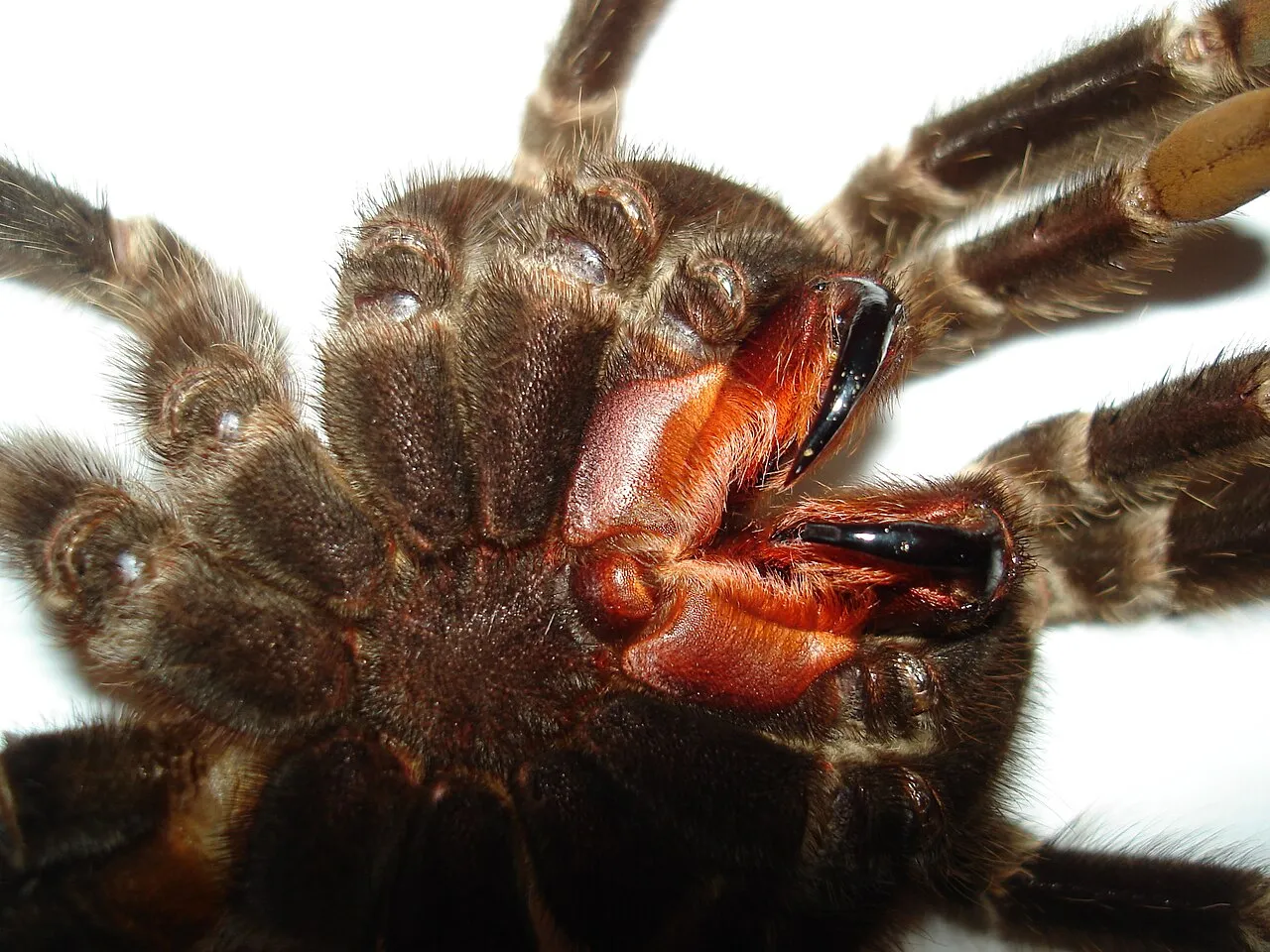
ing. David Rimeš · Public domain
4.1. Body plan
A tarantula's body has two main parts: the cephalothorax in front and the abdomen behind, joined by a narrow waist called the pedicel. The cephalothorax carries eight legs, two pedipalps for handling food and sensing, and two chelicerae tipped with fangs. The abdomen holds the heart, gut, reproductive organs, book lungs and, at the rear, the spinnerets that produce silk.
The body is encased in a rigid exoskeleton, so growth requires periodic molting. Muscles bend the legs, but extension relies on hemolymph pressure. That is why a badly dehydrated tarantula can't straighten its legs and curls them beneath itself, and why a ruptured abdomen from a fall is so hard to survive.
| Part | Function |
|---|---|
| Chelicerae and fangs | Stab prey, inject venom, dig |
| Pedipalps | Handle food, sense, and in males transfer sperm |
| Eight legs | Walking, detecting vibration, climbing smooth surfaces with tarsal pads |
| Spinnerets | Silk for burrow linings, retreats, molt mats and egg sacs |
| Book lungs | Breathing, two pairs under the abdomen |
4.2. Senses
Eight eyes sit clustered on a small mound called the ocular tubercle, but tarantula eyesight is poor, thought to register little more than light, dark and large movements. Instead they rely on thousands of sensory hairs across the body and legs that pick up air currents and ground vibrations. When prey brushes the silk lines laid around a burrow entrance, the spider reads the direction and distance from the vibrations and strikes.
The tips of the legs and pedipalps also carry chemical receptors that work much like taste, so a spider can judge whether something is edible by touching it. Heavy footsteps or slammed doors near the enclosure can startle a tarantula, so place it somewhere free of vibration.
4.3. Hair and urticating hairs
Tarantula hair is far from decorative. Most New World species carry urticating hairs on the upper abdomen, barbed or hooked at the tip. When threatened, the spider rapidly brushes its abdomen with its back legs, flicking a cloud of these hairs into the air. On human skin, eyes or nose they cause itching, rash and stinging that can last for days. Hairs in the eye can cause lasting inflammation and warrant a visit to an eye doctor.
Urticating hairs are classified into several types by shape, and how badly they affect people varies by species. A spider that kicks hairs often develops a bald patch on its abdomen, which regrows at the next molt. Old World species lack urticating hairs and rely on speed, threat displays and biting instead. Some species also weave hairs into their burrow entrances or egg sacs as a deterrent.
4.4. Venom
All tarantulas are venomous, yet there appears to be no reliable record of a human death from a tarantula bite. For most New World beginner species, a bite is usually likened to a bee sting in pain and swelling. Large species with fangs approaching a centimeter can still inflict a real wound, with a risk of secondary infection.
Old World genera such as Poecilotheria from India and Sri Lanka, Pelinobius from East Africa and Pterinochilus carry considerably stronger venom. Bites have been reported to cause intense pain plus whole-body symptoms such as muscle cramps and racing heartbeat lasting several days. Allergic people can react strongly to any species, so seek emergency care for breathing difficulty or widespread hives after a bite.
4.5. Telling males from females
Sexing matters enormously in this hobby. Males usually live only a year or two, sometimes just months, after their final molt, while females of the same species may live 15–25 years.
- Mature males: the pedipalp tips swell like boxing gloves and contain the sperm-transfer organs (emboli). In many species, hooks appear on the first pair of legs to brace the female's fangs during mating, and the legs grow longer while the body slims down.
- Molt sexing: the most reliable method. Open the shed skin between the book lungs on the underside of the abdomen; females show the spermathecae, the sperm storage pouches, and males do not.
- Ventral sexing: experienced keepers can often guess from the shape around the genital opening on a live spider, though this is less reliable in juveniles.
5. Popular species
Tarantulas fall broadly into terrestrials that live on the ground, fossorials that dig deep burrows and arboreals that live in trees. For a first spider, a calm, slow-moving New World terrestrial with simple care needs is the usual recommendation.
| Common name | Scientific name | Lifestyle | Level | Notes |
|---|---|---|---|---|
| Mexican redknee | Brachypelma hamorii | Terrestrial | Beginner | Black with orange knees, very slow growing |
| Mexican red-leg | Brachypelma emilia | Terrestrial | Beginner | Triangular mark on the carapace |
| Mexican fireleg | Brachypelma boehmei | Terrestrial | Beginner | Vivid orange legs, a keen hair kicker |
| Chilean rose | Grammostola rosea and porteri | Terrestrial | Beginner | Pinkish hair, famous for long fasts |
| Brazilian black | Grammostola pulchra | Terrestrial | Beginner | Jet-black, docile |
| Chaco golden knee | Grammostola pulchripes | Terrestrial | Beginner | Large, gold leg stripes |
| Curly hair | Tliltocatl albopilosus | Terrestrial | Beginner | Curly coat, very hardy |
| Mexican red rump | Tliltocatl vagans | Terrestrial | Beginner to novice | Red hairs on the abdomen |
| Green bottle blue | Chromatopelma cyaneopubescens | Terrestrial, heavy webber | Novice | Blue-green legs, orange abdomen |
| Brazilian salmon pink | Lasiodora parahybana | Terrestrial | Novice | Fast-growing giant, huge appetite |
| Antilles pinktoe | Caribena versicolor | Arboreal | Intermediate | Blue as a sling, changes color with age |
| Goliath birdeater | Theraphosa blondi | Terrestrial to fossorial | Intermediate | Among the largest spiders, potent hairs |
| Orange baboon | Pterinochilus murinus | Old World fossorial | Expert | Extremely defensive and fast |
| Indian ornamental | Poecilotheria regalis | Old World arboreal | Expert | Striking pattern, fast, strong venom |
| King baboon | Pelinobius muticus | Old World fossorial | Expert | Large, digs deep burrows |
Scientific names change often, so labels differ between sellers. Brachypelma and Tliltocatl are CITES-listed, so confirming the exact name matters.
6. Behavior
6.1. Life in the wild
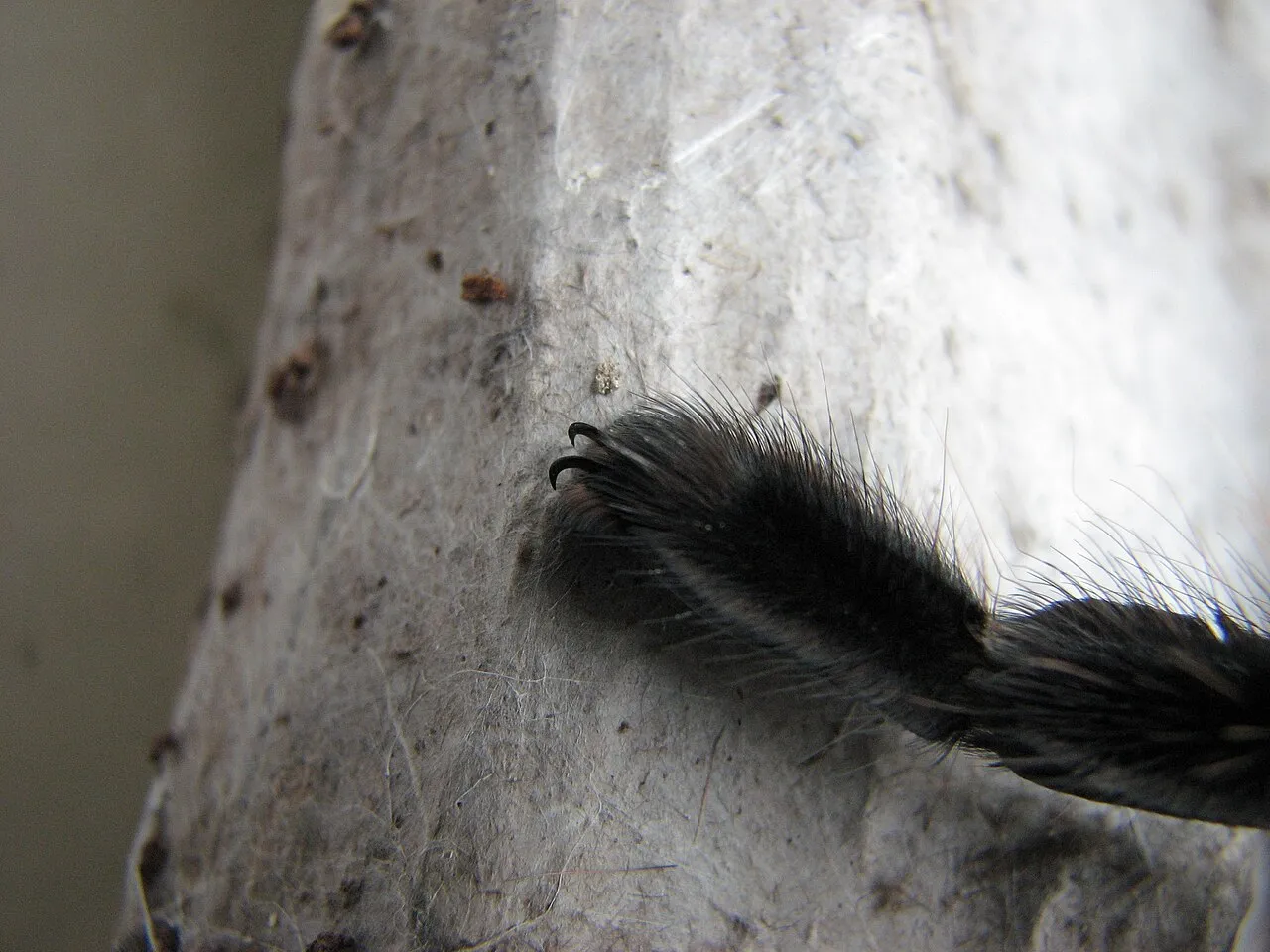
Most terrestrial tarantulas shelter in burrows, under rocks or among roots. They line the burrow with smooth silk and lay threads around the entrance as a vibration alarm. By day they stay inside; after dark they sit at the entrance and ambush passing prey. Unlike orb weavers, they use silk as housing and an early-warning system rather than a trap.
Prey is mainly crickets, grasshoppers, beetles and other arachnids, though large species also take frogs, lizards and small rodents. Arboreal species build silk tubes in bark crevices or among leaves. Species from places with a dry or cool season may seal the burrow entrance with soil and silk and stay inactive for long periods.
6.2. Behavior at home
In captivity a tarantula spends most of its time motionless in or beside its hide. Sitting in the same spot and pose for days is normal, which alarms many first-time keepers. At night you may see it walk slowly around the enclosure or move substrate to remodel its retreat.
When prey goes in, the spider senses its movement and strikes in a flash, injects venom and digestive fluid, then spends hours sucking out the liquefied contents. What remains is a compact ball of indigestible parts called a bolus, which should be removed because it attracts mold and mites. After a move to a new enclosure, many tarantulas hide and refuse food for days, so give them time to settle.
6.3. Reading the signals
- Front legs and pedipalps raised high, fangs showing: a threat posture. Withdraw your hand immediately or risk a bite.
- Rapid brushing of the abdomen with the back legs: hair kicking. Keep your face away.
- Constant climbing or pacing: the substrate may be too wet or the enclosure too warm, or a mature male may be searching for a mate.
- Legs curled tightly beneath the body (the death curl): severe dehydration or imminent death. Act at once.
- Laying a silk mat and lying on its back: a molt in progress. Do not touch.
- Sealing the burrow entrance with soil and silk: often premolt or a rest period. Leave it be.
- A growing dark, shiny bald patch on the abdomen with food refusal: a molt is approaching.
- Lying over the water dish for a long time: drinking, or a sign the enclosure is too dry.
7. Life stages and molting
Tarantulas grow through a series of molts after hatching. The number of molts and the pace vary enormously with species, temperature and food: fast growers mature in two or three years, slow ones take seven to ten.
| Stage | Rough timing | Notes |
|---|---|---|
| Egg and embryo | About 1–3 months in the sac | Passes through a legged embryo stage |
| Sling (spiderling) | First 1–2 years | 1–3 cm leg span, molts about monthly |
| Juvenile | 2–5 years | Gaps between molts stretch to months |
| Adult female | From 3–10 years depending on species | Molts about yearly, lives 15–25+ years |
| Adult male | After the maturing molt | Never molts again, usually dies within 1–2 years |
Molting is the most dangerous and most important event in a tarantula's life. Beforehand the spider refuses food, its bald patch darkens, and it may seal its hide or spin a silk mat. The molt itself begins with the spider on its back; the carapace splits and the spider slowly pulls its body and legs free over several hours. A fresh molt is soft and brightly colored, and the new exoskeleton takes one to two weeks to harden.
Molting is also a chance to repair damage. A lost leg returns smaller at the next molt and approaches full size over the following few. Aging females molt less often, every year or two or longer, and become less active and hungry. Late in life, a failed molt is a common cause of death.
8. Housing
8.1. Enclosure
Match the enclosure to the spider's lifestyle. Bigger is not better; the right size lets the spider find food and keeps falls harmless.
| Type | Enclosure shape | Guideline |
|---|---|---|
| Terrestrial | Wide and low | Floor three leg spans wide and two deep, open height no more than one leg span |
| Fossorial | Deep | 15–20 cm or more of substrate for burrowing |
| Arboreal | Tall | Height at least 1.5 times the width, cork tube near the top |
| Sling | Small vial or deli cup | About two to three leg spans across |
Use a lid that locks. Tarantulas can climb smooth plastic and glass using the pads on their feet and can squeeze through surprisingly small gaps. Place ventilation holes both high and low on the sides to create airflow. Front-opening acrylic enclosures let you work without reaching in from above, which startles the spider less.
8.2. Temperature and humidity
Most beginner species are comfortable at ordinary room temperature; aim for roughly 22–27 °C. Long spells below 18 °C slow growth and appetite. In cold weather, keep the enclosure in a warm room and, if needed, attach a thermostat-controlled heat mat to part of one side. Heating from below can force a burrowing spider up and away from its safe retreat. Heat lamps and direct sunlight can overheat an enclosure in minutes and kill the spider.
Humidity depends on the species' origin. Brachypelma from Mexico's dry regions and Grammostola from Chile and Argentina do best on mostly dry substrate with a water dish always full and one corner moistened about once a week. Rainforest genera such as Theraphosa and Avicularia like gently damp substrate, but they also need strong ventilation so the air never goes stale. Stagnant, humid air invites mold and mites and is a notorious killer of arboreal species.
8.3. Substrate and décor
Coco fiber, fertilizer-free topsoil and vermiculite, alone or mixed, are standard substrates. Packing the substrate firmly keeps burrows from collapsing. Give terrestrials 8–15 cm and fossorials 15 cm or more.
The best hide is a half-buried piece of cork bark or a cork tube. Starting a small hollow at the entrance often persuades the spider to burrow right there. Slings can do without a water dish if part of the substrate is kept damp, but from about 5 cm leg span add a shallow dish. Artificial plants and dry leaves give anchor points for silk, and arboreals need upright cork and branches. Avoid sharp rocks and glass ornaments that could cause injury in a fall.
8.4. Checklist
- Lockable enclosure suited to the species type
- Substrate: coco fiber, topsoil, vermiculite
- Cork bark or cork tube
- Shallow water dish
- Long tongs (25–30 cm)
- Digital thermometer and hygrometer
- Spray bottle or small watering can
- Clear catch cup and thin card for rehousing
- Soft paintbrush for gentle coaxing
- Feeder insect container
- Heat mat and thermostat for winter, if needed
9. Diet
Tarantulas live on live insects. As a rule, prey should be no longer than half the length of the spider's body, measured from the front of the carapace to the end of the abdomen.
| Food | Rating | Notes |
|---|---|---|
| Crickets | Good | Easy to find, but leftovers can bite the spider |
| Dubia roaches | Excellent | Nutritious and harmless to the spider |
| Red runners, Turkish roaches | Good | Quick movement triggers strikes |
| Mealworms, superworms | Occasional | They burrow; some keepers crush the head first |
| Silkworms, hornworms | Occasional | Soft, good treats |
| Pinky mice | Not recommended | Unnecessary and quick to rot |
| Wild-caught insects | Never | Pesticide and parasite risk |
| Stage | Frequency | Amount |
|---|---|---|
| Sling | Two or three times a week | One small item or a pre-killed piece |
| Juvenile | Weekly | One or two suitable insects |
| Adult | Every 1–2 weeks | One to three, adjusted to abdomen size |
An abdomen about one and a half times the size of the carapace indicates a well-fed spider. An overly fat abdomen ruptures more easily in a fall, so don't overfeed. Remove uneaten prey within 24 hours, especially around a molt, when a live cricket can attack the spider. Tarantulas don't need calcium or vitamin dusting, though gut-loading feeders with vegetables and chow helps indirectly. Adults drink from a dish, while slings also take tiny droplets from the enclosure walls.
10. Health
Vets who treat tarantulas are rare, and invertebrate medicine is still a young field, so prevention is everything. If something seems wrong, look first for an exotic vet who sees invertebrates, and treat advice from experienced hobbyists as a supplement rather than a substitute.
10.1. Common problems
| Problem | Cause | Signs | Prevention and response |
|---|---|---|---|
| Dehydration | No water dish, overly dry setup | Shriveled abdomen, curled legs | Keep a dish filled; place a dehydrated spider next to water |
| Bad molt | Dehydration, age, disturbance | Old skin stuck on, deformed legs | Proper humidity, never disturb a molt |
| Fall trauma | Tall enclosure, handling | Ruptured abdomen, leaking hemolymph, leg damage | Low enclosures, minimal handling |
| Post-molt attack | Live prey left in | Bite wounds, death | Remove prey around molts |
| Mites | Food remains, excess moisture | Tiny moving dots around the mouth and joints | Remove boluses, ventilate, replace substrate |
| Nematodes | Contaminated feeders or substrate | White discharge at the mouth, fasting, decline | Little treatment exists; isolate at once |
| Dyskinetic syndrome (DKS) | Suspected toxin exposure among others | Stumbling, loss of coordination | No pesticides or air fresheners nearby |
| Mold | Excess humidity, poor airflow | White fuzz on the spider or substrate | More ventilation, lower moisture |
Most mites are harmless scavengers feeding on leftovers, but a cluster on the spider itself needs action. Nematode infections can spread, so isolate a suspected case right away and use separate tools.
10.2. When to get help
- The abdomen suddenly shrinks and the legs curl under the body
- Clear or slightly milky hemolymph keeps leaking from the body
- The old skin stays stuck for more than a day and the spider can't pull free
- White discharge appears around the mouth with a long refusal to eat
- The spider staggers and can't right itself
- Months of fasting outside a premolt period while the abdomen keeps shrinking
Keepers sometimes use cornstarch or medical glue as first aid for small leaking wounds, but for anything serious, contact a clinic that treats invertebrates first. Trying to help with a stuck molt often tears off legs or damages the body, so don't intervene without guidance.
11. Breeding
Breeding is mostly the domain of experienced keepers. A mature male spins a small sperm web, deposits sperm on it and draws it up into the bulbs at the tips of his pedipalps. He then approaches a female, drumming on the ground to signal his intentions. If she is receptive, he uses the hooks on his front legs to hold her fangs safely apart and inserts a pedipalp beneath her body to transfer sperm. Afterward he needs to retreat quickly, as females fairly often attack and eat their mates.
Weeks to months later, the female builds an egg sac in her retreat. Clutch size ranges from a few dozen to nearly 2,000 eggs depending on species. She guards and turns the sac, and spiderlings emerge after roughly one to three months. Breeders sometimes remove the sac at a set point and incubate it artificially, to prevent the female eating it or mold setting in.
Before trying, consider the following.
- Can you house and feed hundreds of spiderlings in individual containers?
- Are you prepared for the risk that the male or female is injured or killed during pairing?
- For CITES-listed species, can you provide the paperwork needed when you rehome the babies?
- Are both spiders definitely the same species? Crossing look-alike species ruins bloodlines.
Never release surplus slings outdoors. Even where they cannot survive the winter, releasing exotic animals can carry legal and ecological consequences.
12. Costs
These are rough Korean price ranges in won and vary greatly by species, size, sex and seller. Confirm prices with the seller.
| Item | Approximate cost (KRW) | Notes |
|---|---|---|
| Beginner sling | 10,000–50,000 | Unsexed and small |
| Confirmed adult female | 50,000 to several hundred thousand | Varies hugely by species and size |
| Enclosure | 10,000–50,000 | Front-opening acrylic costs more |
| Substrate, cork, water dish | 10,000–30,000 | - |
| Tongs, thermo-hygrometer, catch cup | 10,000–30,000 | - |
| Total start-up | About 50,000–200,000 | Low end with a sling, high end with an adult female |
| Feeder insects | 3,000–10,000 a month | Less if you breed dubia |
| Substrate change | 10,000–20,000 a year | Once every 6–12 months |
| Monthly total | About 5,000–15,000 | - |
| Yearly total | About 70,000–200,000 | Excluding enclosure upgrades |
Raising a sling means two to four enclosure upgrades along the way, so budget for those. In a cold home, a heat mat and thermostat may add 30,000–70,000 won. Vet bills are usually low simply because so few clinics treat invertebrates, which also means help is hard to find when something goes wrong.
13. Before you get one
Tarantulas are cheap and small, making them easy to start, but a female may be your responsibility for close to 20 years. Think it through first.
- Has everyone you live with agreed to having a spider at home?
- Can the enclosure be placed and locked so young children can't open it?
- Can you source and store live crickets or roaches?
- Will watching, without touching, be enough for you?
- Is there someone to care for it when you move or travel?
- Can you keep cats and dogs away from the enclosure?
When choosing a spider, check these points.
- For a first tarantula, pick a New World terrestrial beginner such as Brachypelma, Grammostola or Tliltocatl.
- Make sure the scientific name is clear, and for CITES-listed species ask for legal import or captive-breeding paperwork.
- For a long-term pet, choose a spider confirmed female from a shed skin. Slings are cheap but there is roughly an even chance of a male.
- Look for a plump, firm abdomen and legs held normally rather than curled underneath.
- A mature male, recognizable by swollen pedipalp tips, has only a short time left.
After bringing it home, let it settle in quietly for a few days before offering food.
14. Laws
Several tarantula genera are listed in Appendix II of the Convention on International Trade in Endangered Species (CITES): all Brachypelma, the species moved from Brachypelma to Tliltocatl, and all Poecilotheria from India and Sri Lanka. Appendix II does not ban trade; it regulates it through export permits and related controls. In practice, when you buy or rehome these species, documentation showing legal import or captive breeding is what matters.
National and local rules vary widely. Some countries, states and cities restrict or license venomous invertebrates, some require permits for CITES-listed species even when captive-bred, and importing live arthropods may trigger agricultural or quarantine checks. Check with your national wildlife authority, agriculture or quarantine agency and local government before buying, moving or shipping a tarantula. Animal welfare laws in many places focus on vertebrates and may not cover invertebrates, but that is no excuse for neglect.
Everywhere, the same rule applies: never release a tarantula. Releasing exotic animals can harm local ecosystems and alarm neighbors, and in many places it is illegal.
15. In culture
For most of its pop-culture career, the tarantula has been a horror icon. The 1955 film Tarantula, about a lab-grown giant spider terrorizing a desert town, is a classic of the decade's giant-monster craze. In the 1962 James Bond film Dr. No, a tarantula crawling across a sleeping Bond became one of the movie's most memorable moments.
The opening of Raiders of the Lost Ark (1981) features tarantulas swarming over an expedition member's back, and in Home Alone (1990) the older brother's pet tarantula plays its part in the chaos. The spiders used in such scenes were reportedly mostly docile New World species; the irony is that they could be filmed safely precisely because the real animals are so much calmer than their screen reputation.
The fast, cheerful Italian folk dance known as the tarantella is tied to the old tarantism legends and is still danced at weddings and festivals. In Cambodia, the town of Skuon is famous for its market stalls of fried tarantulas, now a curiosity many travelers try. Games and comics regularly use tarantulas as the template for giant spider monsters, while their fuzzy, rounded bodies have also inspired plush toys and cute characters.
16. Trivia
- One of the tarantula's deadliest enemies is the tarantula hawk, a large wasp of genera such as Pepsis. It paralyzes a tarantula with its sting, drags it into a burrow and lays an egg on it, and the larva feeds on the living spider. New Mexico has adopted the tarantula hawk as its state insect.
- Mygalomorphs can be astonishingly long-lived. A female trapdoor spider (not a theraphosid) studied in Australia was reported to reach more than 40 years, and there are anecdotal accounts of captive tarantula females approaching 30.
- The goliath birdeater, often called the heaviest spider in the world, produces a hissing sound by rubbing its legs together when threatened, a behavior called stridulation.
- A fresh molt leaves behind a perfect spider-shaped skin, and newcomers sometimes think they suddenly have two tarantulas. Many keepers save molts as a growth record.
- The blue of species like the green bottle blue and cobalt blue comes not from pigment but from microscopic hair structures that reflect light, a form of structural color.
- Some arboreal slings look nothing like the adults. Antilles pinktoe babies are bright blue and gradually change to the adult's green and red tones.
- A study once suggested tarantulas can release silk from their feet as well as their spinnerets, possibly to help grip smooth surfaces, though the idea is still debated.
Health notes are general information. If something seems wrong, contact a vet who treats this species.
FAQ
Is a tarantula bite dangerous?
For beginner species, a bite usually causes bee-sting-like pain and swelling. People with allergies may react more strongly, and Old World species can cause days of muscle cramping, so seek medical care for severe symptoms. In practice, urticating hairs cause far more trouble than bites.
My tarantula hasn't eaten in months.
Adults often fast for one to three months or longer before a molt. If the water dish is full and the abdomen plump, there is no cause for concern; just offer a single insect every couple of weeks and remove it if ignored.
My tarantula lost a leg. What now?
A smaller replacement appears at the next molt and catches up in size over a few more. The joint usually seals itself, but if fluid keeps leaking, get advice from a vet straight away.
Further reading
Photo credits
Photos are freely licensed images from Wikimedia Commons. Authors and licenses are listed below.
- Brachypelma vagans p1.jpg — Carlos Valenzuela Montuy · CC BY-SA 4.0
- California ebony tarantula.jpg — Mychemicalromanceisrealemo · CC0
- Lasiodora parahybana, chelicerae.JPG — ing. David Rimeš · Public domain
- Lasiodora parahybana, claws.JPG — HTO · Public domain