TailVille
1. Overview
In the summer of 1935, a little over a hundred toads shipped from Hawaii arrived at sugarcane plantations in Queensland, Australia. They were expected to eat the beetles whose larvae were destroying cane roots. Nearly a century later, their descendants cover vast areas of northern and eastern Australia, and the cane toad is notorious as one of the world's worst invasive animals.
Native to tropical and subtropical Central and South America, the cane toad is a hefty amphibian, usually 10 to 15 cm long, with exceptional individuals topping a kilogram. Large glands behind its eyes produce potent toxins, females can lay tens of thousands of eggs at once, and it will eat almost anything it can swallow.
In its native range those traits are balanced by predators, parasites and competitors that evolved alongside it. Dropped into a continent full of animals with no experience of its poison, the toad became a disaster. Its story is now a standard lesson in why biological control must be approached with great caution.
2. Name and classification
Both 'cane toad' and the Korean name, meaning 'sugarcane toad', come from its use against sugarcane pests. It is also known as the marine toad or giant toad. The species name marina, 'of the sea', reflects Carl Linnaeus's mistaken belief that it lived in the sea when he described it in 1758. It does not, though its tadpoles can tolerate mildly brackish water.
Originally named Rana marina, it was known for most of the twentieth century as Bufo marinus. Genetic studies in the 2000s moved South American toads into the genus Rhinella, giving the current name Rhinella marina. It belongs to the true toad family Bufonidae and is a distant relative of the Asian common toad found in Korea.
In 2016 researchers proposed splitting populations from Mexico, Central America and northwestern South America as a separate species, Rhinella horribilis. Under that view, the toads introduced to Australia, Hawaii and elsewhere are Rhinella marina from the Guianas region. Not all authorities accept the split.
3. Evolution
The toad family Bufonidae includes hundreds of species worldwide and is thought to have originated in South America before spreading to other continents. Rhinella diversified extensively in South America, and the cane toad is one of its largest members. Fossils very similar to the cane toad have been found in Miocene deposits in Colombia, more than ten million years old.
The most fascinating chapter of its evolution, however, has unfolded in Australia within the last century. Toads at the invasion front turned out to have longer legs and to move farther and in straighter lines than those in older populations. Researchers explain this as spatial sorting: the fastest dispersers end up together at the front and breed with each other, so dispersal ability ratchets up each generation. The rate of spread accelerated from around 10 km a year in the early decades to more than 50 km a year across the tropical north.
Native animals have evolved too. Some Australian snakes in toad-invaded areas have developed smaller heads relative to body size, limiting how large a toad they can swallow, or greater resistance to the toxin, within a few decades.
4. Range and habitat
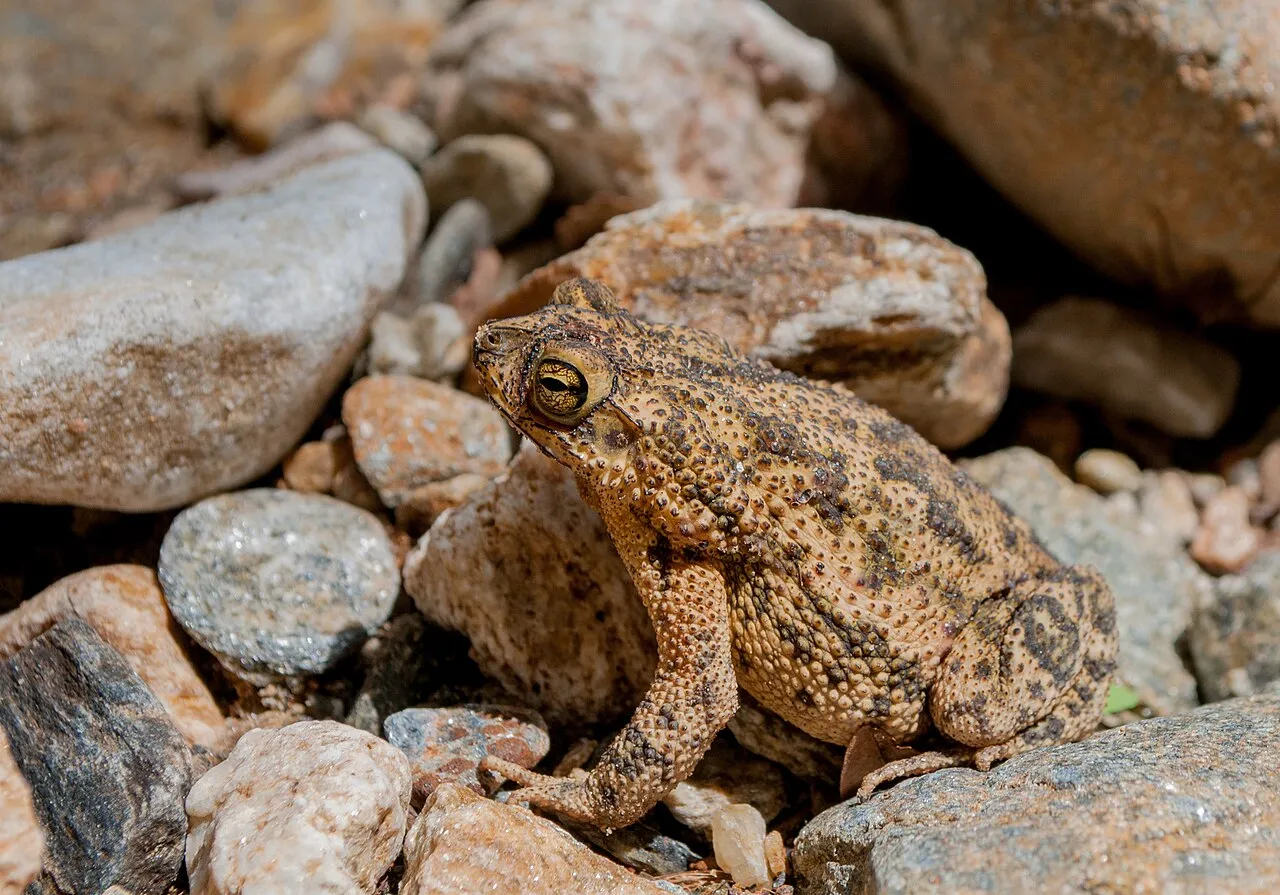
Wilfredor · CC0
The native range stretches from the southern tip of Texas through Mexico and Central America into South America, including the Amazon basin and parts of Peru and Brazil. Cane toads favour open habitats — forest edges, grassland, savanna and farmland — over dense rainforest, and they thrive around towns, often gathering under streetlights to feast on insects.
They have been introduced to an astonishing list of places, mostly in the 1930s and 1940s: Caribbean islands such as Puerto Rico, Jamaica and Barbados; Hawaii and Florida; the Philippines; Japan's Ogasawara and parts of the Ryukyu Islands; Taiwan; Fiji, Papua New Guinea and many other Pacific islands; and Australia, where the spread has been most dramatic.
After release on Queensland's northeast coast in 1935, toads expanded steadily west and south. They now occupy most of Queensland, the tropical Northern Territory, the Kimberley region of Western Australia and northeastern New South Wales, covering well over a million square kilometres. Population estimates run into the hundreds of millions or more but cannot be precise. Cold and very dry conditions limit them, and how far they will spread into the arid interior and the south is still being studied.
5. Body
The cane toad is among the largest toads in the world.
| Feature | Typical range | Records and notes |
|---|---|---|
| Snout–vent length | About 10–15 cm | Large individuals around 20–24 cm |
| Weight | About 50–500 g | Animals over 1 kg occasionally found |
| Sexes | Females larger | Males yellowish with rougher skin |
A captive toad in Sweden weighing about 2.65 kg was long cited as the record. In 2023 rangers in a Queensland national park found a monster of about 2.7 kg, nicknamed 'Toadzilla' by the media.
The skin is dry and covered in warty bumps. Colour ranges from grey and tan to olive and reddish-brown, with a pale, mottled belly. Bony ridges arch over the eyes, and behind each eye sits a large triangular parotoid gland, the main toxin store.
In the breeding season males develop dark nuptial pads on their front toes to grip females. The hind feet are lightly webbed; the front feet are not. The pupils are horizontal, and night vision is good.
6. Behaviour and ecology
Cane toads are mainly nocturnal. They spend the day in cool, damp shelters — under rocks, leaf litter, burrows and building cracks — and emerge at dusk to forage. In dry seasons they concentrate near water and reduce activity. Toads absorb water through a special patch of skin on the belly, so they often sit pressed against damp ground to rehydrate.
They have no social structure or territories, but dozens or hundreds may gather at waterholes or rich feeding spots. Streetlights, which attract swarms of insects, are favourite hangouts. Radio-tracking at the Australian invasion front has recorded toads moving hundreds of metres to more than a kilometre in a single night.
They are remarkably tough. They can reportedly survive losing close to half their body water and tolerate temperatures from roughly 5 °C to near 40 °C. Prolonged cold and extreme aridity remain their main limits.
7. Diet and feeding
Cane toads eat almost anything that moves and plenty that does not. Beetles, ants, termites, crickets, bees, centipedes, millipedes and snails form the bulk of the diet, but they also swallow small frogs, lizards, mice, nestling birds and smaller toads. Unusually among frogs and toads, they can locate stationary food by smell, so they will eat dog and cat food left outdoors and kitchen scraps.
They catch prey with a quick flick of a sticky tongue and use their front feet to stuff larger items into the mouth. Appetites are enormous.
Ironically, they did a poor job against the cane beetles they were brought to control. The adult beetles tended to stay high on cane stalks and the larvae underground, out of reach, and the cane fields offered little daytime shelter. The toads simply moved on into surrounding country, eating native insects and small animals instead.
8. Reproduction and life cycle
Prodigious breeding is a key reason for the cane toad's success. In the tropics it can breed almost year-round, especially in the wet season. Males gather at ponds, puddles, ditches and slow streams and call with a long, low trill often likened to an idling engine or a dial tone.
In amplexus the male clasps the female from behind around her armpits and fertilises the eggs as she lays them. Males are so indiscriminate that they will clasp other males, dead females or even inanimate objects.
Eggs are laid in long gelatinous strings, typically 8,000 to 25,000 per clutch and sometimes over 30,000. The eggs are toxic too, killing many aquatic animals that eat them.
| Stage | Duration | Notes |
|---|---|---|
| Egg | About 1–3 days | In jelly strings; toxic |
| Tadpole | About 3 weeks to 2 months | Small, black, often in schools |
| Toadlet | Just after metamorphosis | About 1 cm; massed at pond edges |
| Adult | Mature in roughly a year | Faster growth in the tropics |
Most eggs and tadpoles never reach adulthood, but the sheer numbers mean populations grow quickly. Wild lifespan is estimated at about five to fifteen years, and captive toads have lived close to twenty.
9. Toxin and special abilities
Cane toad poison, often lumped together as bufotoxin, is a cocktail of compounds. The most dangerous are bufadienolides, cardioactive steroids that disrupt the sodium-potassium pump in heart cells and cause irregular heartbeats. Other components act on nerves and blood vessels.
When threatened, a toad oozes milky, sticky toxin from its parotoid glands and, under strong pressure, can squirt it a short distance. Smaller amounts occur throughout the skin. Eggs, tadpoles and adults are all toxic, though newly metamorphosed toadlets go through a phase of relatively low toxicity.
In people, toxin in the eyes causes intense pain and temporary vision problems, and swallowing it can cause vomiting and dangerous heart effects. Deaths from eating toads or their eggs have been reported in several countries. Stories about licking toads to get high are misguided and dangerous: the cane toad's toxins are far more likely to cause cardiac poisoning than hallucinations. The toad famous for psychoactive secretions is a different species, the Colorado River toad.
Other notable abilities include tolerance of water loss, a broad thermal range, finding food by smell and homing: displaced toads have been seen returning to their original area.
10. Predators, survival and impact on native wildlife
In their native range cane toads do have enemies. Certain snakes, caimans, large fish, birds of prey and mammals tolerate the toxins or have learned to eat toads while avoiding the glands. Together with parasites and competitors, they keep toad numbers in check.
Australian animals had no such experience. Native predators that mistook toads for food often died after a single bite or swallow. Among the hardest hit:
- Northern quoll: has disappeared from many areas after toads arrived.
- Monitor lizards (goannas): severe local declines reported.
- Freshwater crocodiles: mass deaths recorded along some rivers.
- Blue-tongued skinks and some snakes: frequently killed after eating toads.
- Pet dogs and cats: many need emergency vet treatment each year.
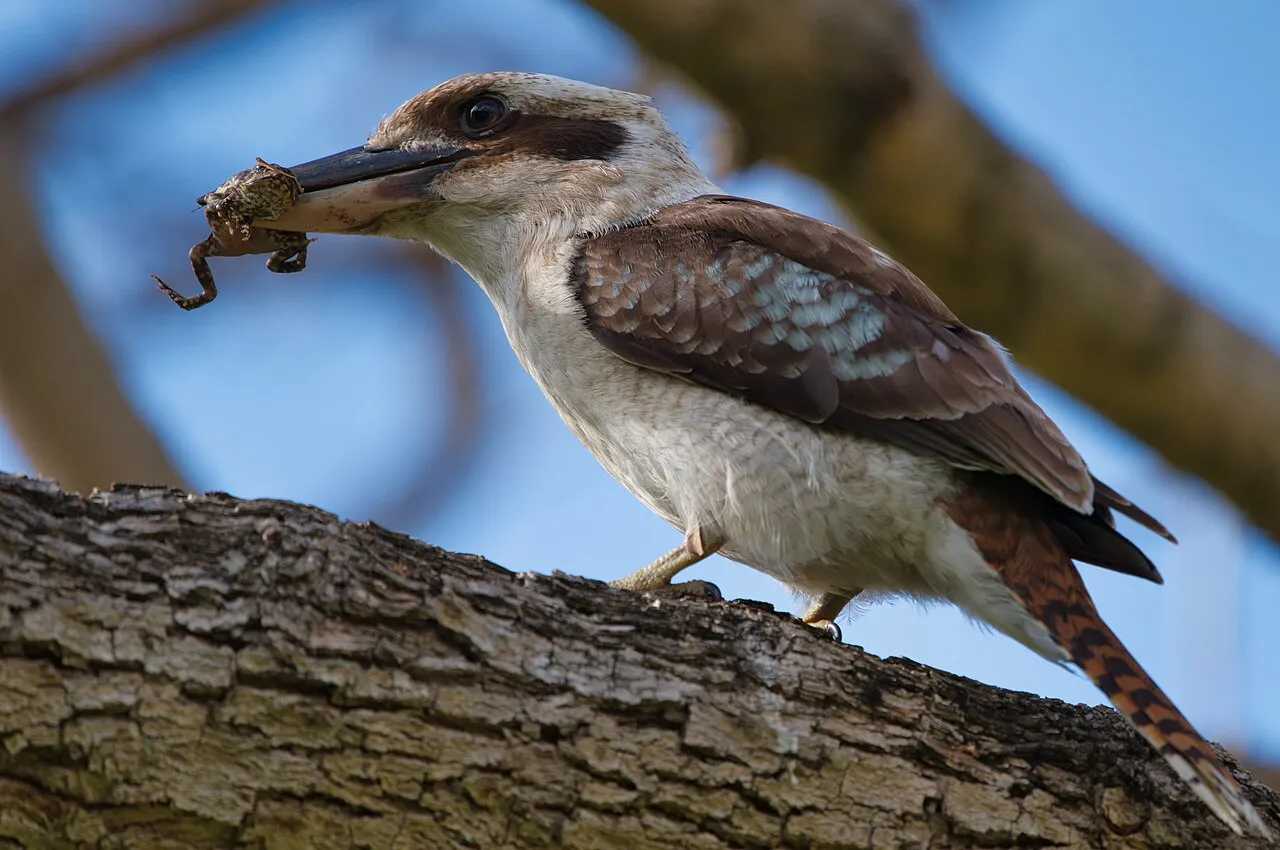
Some natives are adapting. Australian crows and kites have learned to flip toads over and eat the belly flesh and organs while avoiding the parotoid glands, and native water rats (rakali) have been reported surgically removing toads' hearts and livers. Native meat ants attack and eat small toadlets.
11. Relationship with humans
Cane toads spread around the world mainly because people moved them on purpose. Sugarcane growers in the Caribbean began introducing them as pest control in the mid-1800s. After their introduction to Hawaii in 1932, reports of success there, and exaggerated claims from Puerto Rico about controlling white grubs, encouraged further releases in Australia, the Philippines and across the Pacific.
In Australia there were warnings. Some scientists cautioned that the toads could harm native wildlife, and releases were briefly halted, but they resumed and the toads spread unstoppably. The cane toad has become the classic example of good intentions gone badly wrong.
Australians fight back in many ways: community 'toad busting' nights, traps that use a chemical lure to catch tadpoles, fences around breeding ponds to keep toads from water and humane euthanasia of captured adults. Researchers are also trying conditioned taste aversion, feeding native predators like northern quolls small, non-lethal toad baits laced with a nausea-inducing chemical so they learn to avoid toads.
Toad skin has been made into wallets and souvenirs, and its toxins have been studied for medical potential. Cane toads have not established in the wild in Korea, but the story is relevant everywhere: carelessly importing exotic animals, whether through travel or online purchases, can endanger native ecosystems.
12. Conservation status and management
The cane toad is listed as Least Concern on the IUCN Red List: it is widespread and abundant in its native range and, if anything, a threat to biodiversity elsewhere. The IUCN Invasive Species Specialist Group includes it among the '100 of the World's Worst Invasive Alien Species'.
In Australia it is managed as a pest, and several states restrict keeping or moving live toads. Researchers accept that eradication across the mainland is not realistic and focus instead on:
- Keeping toads off islands and regions not yet invaded, through quarantine and surveillance
- Slowing spread into southwestern and arid areas, for example by managing artificial water points
- Teaching native predators to avoid toads and maintaining insurance populations on toad-free islands
- Long-term research into genetic control methods
There is no record of cane toads establishing in Korea, and Korean winters would be a strong barrier. We could not confirm whether it is specifically designated under Korean invasive species rules, so anyone considering imports should check current Ministry of Environment notices. Korea's experience with the American bullfrog shows how much damage an introduced amphibian can do.
13. In zoos and education
In the Americas, cane toads are fairly common in zoos, nature centres and museums. They are large, hardy and easy to care for, and their parotoid glands and defensive postures make them good teaching animals for explaining amphibian defences.
In Australia the focus is different. Where toads have invaded, education centres concentrate on teaching people to tell cane toads from native frogs, because many native species are mistakenly killed as 'toads'. Key features include the bony ridges over the eyes, large parotoid glands, unwebbed front feet and a short, shuffling hop.
Animal welfare in pest control is a live debate. Cruel methods, such as hitting toads with golf clubs or running them over, are still used by some. Researchers and welfare groups recommend humane techniques, such as cooling followed by freezing or approved sprays. Most people agree that even an invasive animal deserves a humane death.
14. In culture
In Australia the cane toad is more than an animal; it is a cultural phenomenon. The 1988 documentary Cane Toads: An Unnatural History humorously explored the love-hate attitudes of Queenslanders toward the toads and became a cult classic, followed in 2010 by a 3D sequel.
Queenslanders are jokingly called 'cane toads', especially by New South Wales fans during the State of Origin rugby league series, and many Queenslanders wear the nickname with a kind of perverse pride. Cane toad races have been staged as pub and festival entertainment.
In the toad's native range, toads appear in ancient Mesoamerican art. Toad bones and toad-shaped artefacts have been found at Olmec and Maya sites, and some researchers have suggested toad toxins were used in rituals, though this is debated.
In Korean culture, toads symbolise luck and a good home, as in the children's rhyme asking a toad to trade an old house for a new one, but that refers to Korea's native toad. The cane toad appears in Korean media mainly as a textbook example of an ecological invader.
15. Trivia
- The founding Australian stock is usually given as 102 toads from Hawaii. Their offspring, released in their thousands in 1935, started the invasion.
- Cane toad tadpoles cannibalise the eggs of their own species, so earlier hatchlings reduce future competition. Researchers exploit the chemical cues behind this in traps that lure tadpoles.
- In parts of northern Australia, impacts on some native predators are worst in the first few years after toads arrive, with partial recovery observed later in some places.
- Toads are especially dangerous to dogs. Vets in toad country advise wiping the gums and mouth sideways with a damp cloth and getting to a clinic immediately if a dog mouths a toad.
- In the mid-twentieth century, cane toads and other amphibians were used in pregnancy tests, which relied on their reaction to hormones in human urine.
- A single female can produce clutches more than once in a year in warm climates, multiplying her output.
Wild animals are not pets. Catching, trading or keeping them is illegal in most places. If you find an injured wild animal, call your local wildlife rescue centre.
FAQ
Why was it brought to Australia?
It was introduced to Queensland in 1935 to control beetles in sugarcane fields. It did little against the beetles, but its own numbers exploded.
Is it dangerous if a dog licks one?
Yes, it can be very dangerous. If a dog drools heavily or trembles after mouthing a toad, wipe its mouth with water and get to a vet immediately.
Is it found in Korea?
There is no record of it establishing in the wild in Korea, and cold winters would be a barrier — but no exotic animal should ever be imported carelessly or released.
Photo credits
Photos are freely licensed images from Wikimedia Commons. Authors and licenses are listed below.
- Cane toad (Rhinella marina) Taveuni.jpg — Charles J. Sharp · CC BY-SA 4.0
- Kookaburra with Cane Toad - AndrewMercer - DSC00046.jpg — Andrew Mercer (www.baldwhiteguy.co.nz) · CC BY-SA 4.0
- Bufo marinus in Venezuela.jpg — Wilfredor · CC0