TailVille
1. Overview
The gray wolf is the largest wild member of the dog family and a highly social hunter that lives and works in family packs. It once occupied almost every land habitat in the Northern Hemisphere, from Arctic tundra and boreal forest to deserts, steppe and mountains, making it one of the most widespread land mammals in history apart from humans and cattle.
Every domestic dog descends from an ancient wolf population, so this is the wild ancestor of our closest animal companion. Paradoxically, it has also been one of the most feared and persecuted animals on Earth, shot, trapped and poisoned for centuries because of the threat it posed to livestock.
The species as a whole remains numerous and is listed as Least Concern by the IUCN, but local stories vary enormously. In South Korea no wild wolf has been confirmed for decades and the species is regarded as locally extinct, while in parts of Europe and North America wolves are making a striking comeback.
2. Name and classification
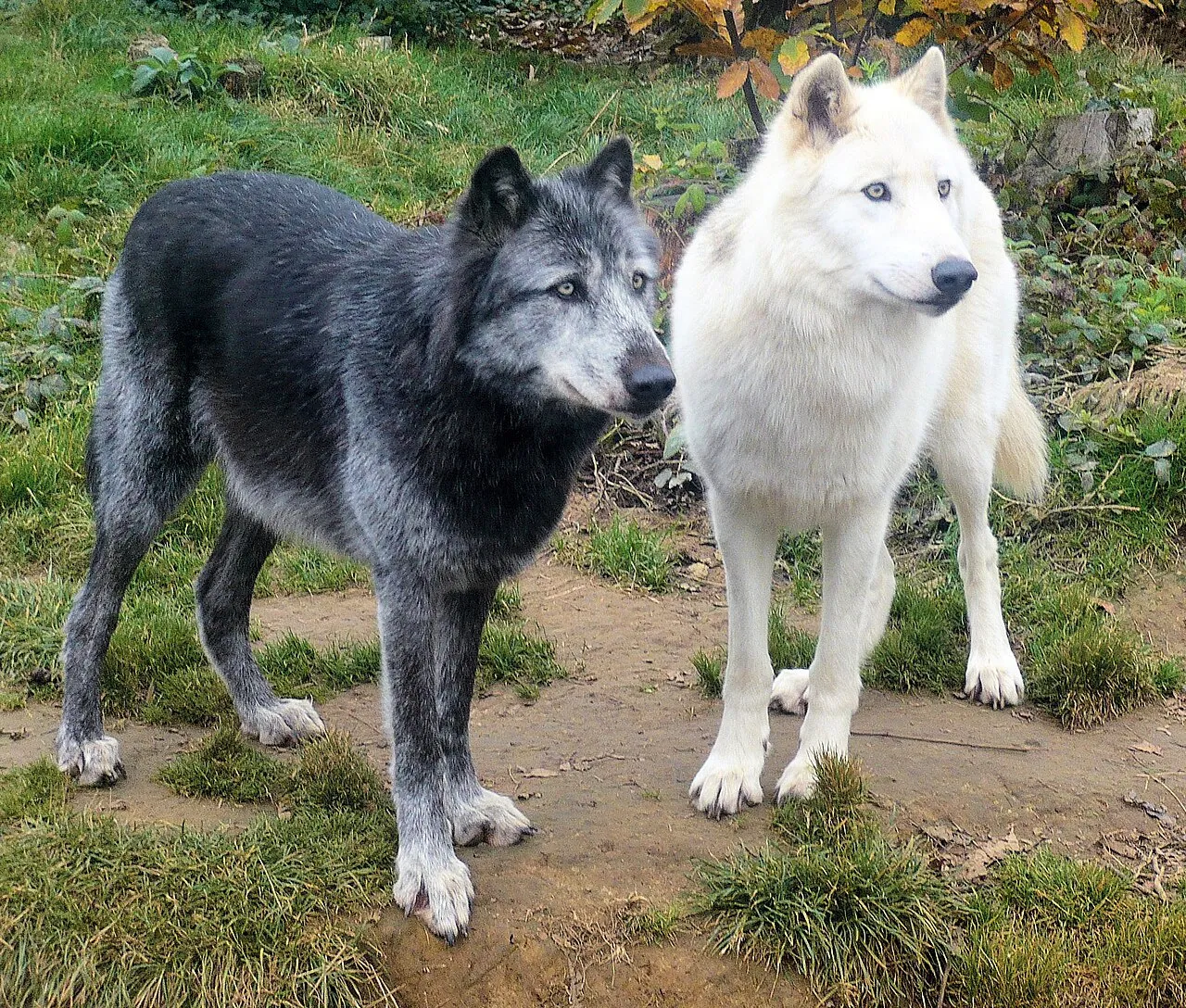
Carl Linnaeus named the species Canis lupus in 1758; canis is Latin for 'dog' and lupus for 'wolf'. Despite the English name, coats range from pure white through every shade of grey and tawny to jet black.
The origin of the Korean word neukdae is uncertain. Older Korean used ilhi or iri, and iri is still a synonym today. In Sino-Korean the character is rang (狼), which survives in several idioms.
Whether the domestic dog should be called Canis lupus familiaris, a subspecies of the wolf, or a separate species, Canis familiaris, is still debated among taxonomists.
2.1. Subspecies and relatives
Dozens of wolf subspecies have been proposed and merged over the years. A few of the better-known ones:
| Subspecies | Range | Notes |
|---|---|---|
| Eurasian wolf (C. l. lupus) | Europe to Russia and Central Asia | Most widespread |
| Arctic wolf (C. l. arctos) | Canadian Arctic islands, Greenland | White coat, small ears |
| Mexican wolf (C. l. baileyi) | US Southwest, Mexico | Small; under recovery |
| Indian wolf (C. l. pallipes) | India, Middle East | Short coat, light build |
| Japanese wolf (C. l. hodophilax) | Honshu, Shikoku, Kyushu | Extinct early 20th century |
Korean wolves were once described as a separate subspecies, C. l. coreanus, but many researchers now treat them as part of the mainland Eurasian population. Close relatives include the coyote, golden jackal, African wolf and Ethiopian wolf, some of which can hybridise with gray wolves.
3. Evolution
The genus Canis arose in North America several million years ago and spread into Eurasia. Wolves resembling today's gray wolf appear in Eurasia a few hundred thousand years ago and, during the Ice Ages, followed mammoths, bison and wild horses across the whole Northern Hemisphere. The famous dire wolf, despite its name, belonged to a quite separate lineage that lived only in the Americas and died out.
The origin of the dog is the most intriguing chapter. Genetic studies indicate that dogs did not come from any living wolf population but from an ancient one that has since vanished. Estimates of the split range roughly from 15,000 to 40,000 years ago. A widely accepted idea is that bolder, less aggressive wolves scavenging around human camps gradually became tolerated, then tamed, and eventually domesticated.
4. Range and habitat
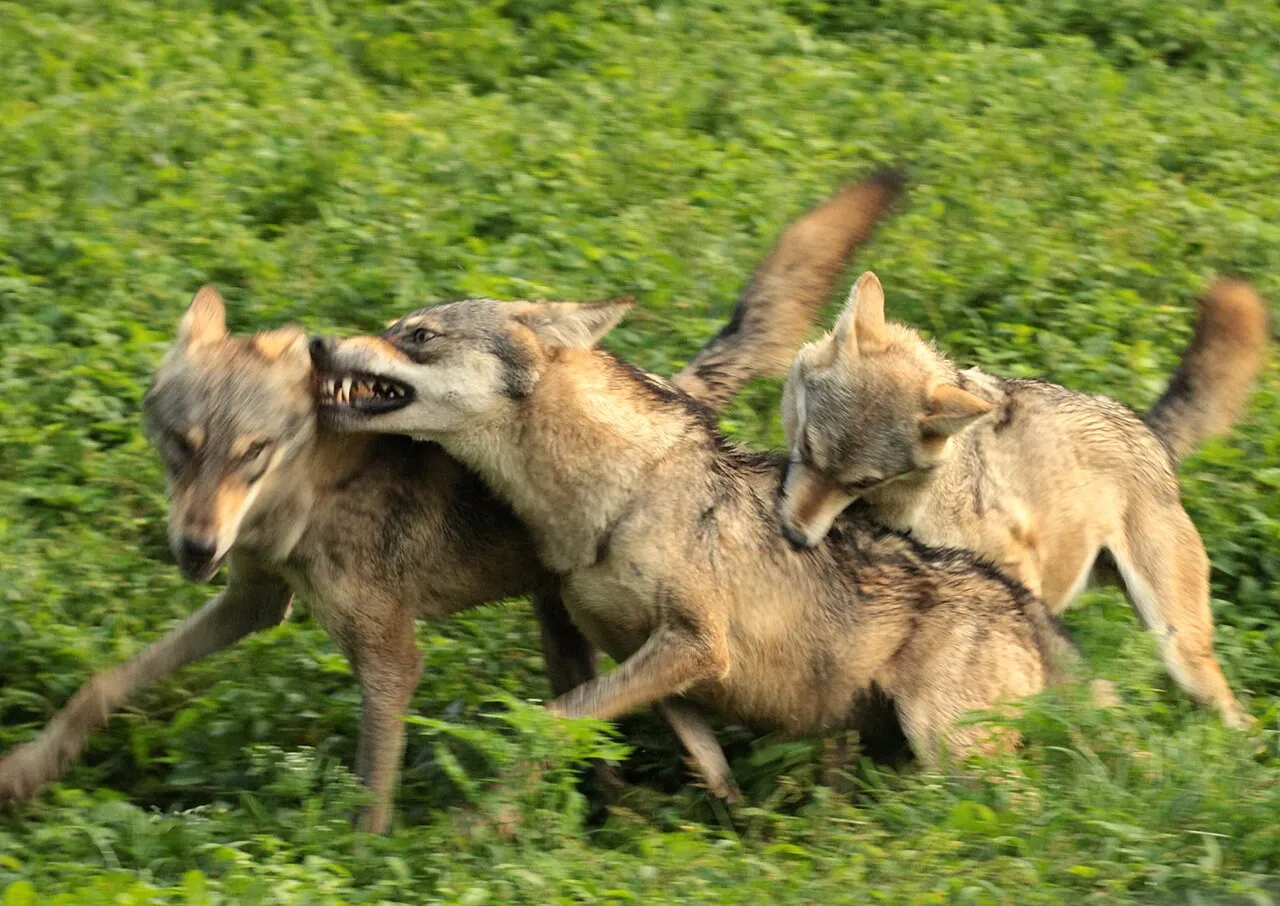
Pavan Kunder · CC BY 2.0
Wolves originally ranged across North America, Europe and Asia, south into the Middle East and India. Given enough prey they can live almost anywhere: tundra, taiga, broadleaf forest, grassland, semi-desert and high mountains.
As farming and herding expanded, wolves were systematically exterminated. They vanished from most of western Europe, most of the contiguous United States, Japan and southern Korea. Today the strongholds are vast, thinly populated regions such as Canada, Alaska, Russia, Mongolia and Central Asia.
In recent decades the tide has partly turned. Under legal protection, wolves from Italy and eastern Europe have spread into Germany, France, the Netherlands, Denmark and beyond, and in the United States the reintroduction to Yellowstone helped wolves return to several western states.
Wolves once lived throughout the Korean Peninsula, from mountains to farmland. They may survive in North Korea's northern highlands, but reliable survey data are scarce.
5. Body
A wolf looks like a large dog at first glance, but in person it is leggier, with a narrow, deep chest and big feet, giving a far more athletic impression. Size varies a lot with geography: northern wolves tend to be large and southern ones small.
| Measure | Approximate value |
|---|---|
| Head-body length | 100–160 cm |
| Tail | 30–50 cm |
| Shoulder height | 60–90 cm |
| Weight, male | 30–80 kg, typically 40–55 kg |
| Weight, female | 25–55 kg, typically 35–45 kg |
| Top speed | about 50–60 km/h in short bursts |
The coat has two layers: dense underfur for insulation and long guard hairs that shed snow and rain. In winter it thickens enough to cope with minus 40 degrees.
The jaws are powerful enough to crack the bones of large prey. The sense of smell is far keener than ours, and wolves can hear a howl several kilometres away. Broad paws spread their weight on snow. Males average roughly 15–20 percent heavier than females.
6. Behaviour and ecology
A wolf pack is usually a family: one breeding pair and their offspring from the past few years. Typical packs number four to eight, though packs of more than twenty have been recorded where prey is large and plentiful. Young wolves help their parents for one to three years, then leave to find a mate and found their own pack.
The popular idea of an 'alpha wolf' ruling by force came largely from studies of unrelated captive wolves thrown together in enclosures. In wild packs, the 'leaders' are simply the parents.
Packs defend territories, marking boundaries with scent and announcing themselves with howls. Territory size ranges from tens to thousands of square kilometres depending on prey density. Wolves may cover dozens of kilometres in a day, and dispersing youngsters have been tracked travelling hundreds of kilometres before settling.
7. Diet and feeding
Wolves specialise in hoofed animals, often larger than themselves: deer, elk, moose, caribou, bison, wild boar and wild sheep or goats, depending on the region. They also take hares, beavers and rodents, and when times are hard they scavenge carcasses, raid rubbish or even eat fruit.
Hunting is a team effort. The pack locates prey by scent, approaches to test the herd's reaction, and then singles out a young, old, sick or injured animal for a persistent chase. Most attempts on large prey fail, so wolves are adapted to a feast-or-famine life; a hungry wolf can eat close to a fifth of its body weight in one sitting.
Where livestock is common, sheep, goats and cattle can become targets, which is the main source of conflict between wolves and people.
8. Reproduction and life cycle
Usually only one pair breeds in each pack. Mating takes place around January to March and gestation lasts about 62–65 days. As birth approaches, the female prepares a den in an earth burrow, rock crevice or beneath a fallen tree, and gives birth to an average of four to six pups.
| Stage | Age | What happens |
|---|---|---|
| Newborn | 0–2 weeks | Blind, about 400–500 g |
| Den life | 2–8 weeks | Eyes open, explore outside, begin eating regurgitated meat |
| Rendezvous site | 2–6 months | Leave the den, stay at a meeting place, practise hunting in play |
| Juvenile | 6 months–2 years | Travel and hunt with the pack |
| Dispersal | 2–3 years | Leave to find a mate |
The whole pack helps raise the pups. Adults returning from a hunt regurgitate meat for them, and older siblings babysit.
Wild wolves often live only five to eight years because of hunting injuries, fights with rival packs, disease and human-caused deaths. Some exceed ten years in the wild, and captive wolves may pass fifteen.
9. Intelligence, communication, special abilities
The howl is the wolf's signature. It reassembles scattered pack members, warns neighbours off the territory and seems to strengthen bonds within the group. When several wolves howl together they vary their pitch, which may make the pack sound bigger than it is. On a still night a howl can carry close to ten kilometres.
Wolves also growl, whine, whimper and bark, and they pack a great deal of information into tail position, ear angle, facial expression and posture. A high tail signals confidence; a low tail and crouched body signal submission or appeasement. Scent marks from urine, scat and glands in the feet are equally important.
Wolves are good problem-solvers and in some experiments outperformed dogs at opening puzzle boxes on their own. Dogs, however, are better at following human pointing gestures even compared with hand-raised wolves, which researchers see as evidence that domestication reshaped the dog's social cognition.
10. Predators and survival
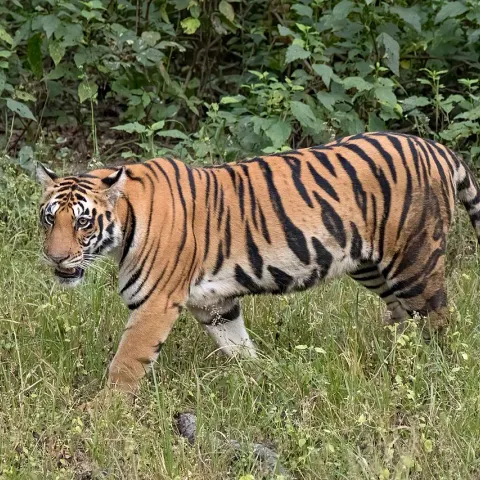
Few animals regularly kill healthy adult wolves. Tigers are known to kill or displace them, and in the Russian Far East wolves tend to be scarce where tigers are common. Brown bears frequently clash with wolves over carcasses, and pups can fall to bears, eagles or rival packs.
In fact the most dangerous animal for a wolf is usually another wolf. Territorial fights between packs are the leading natural cause of death in many studies. Kicks from large prey often cause serious injuries, and diseases such as distemper, parvovirus and mange can crash local populations. Globally, though, people remain the biggest cause of wolf deaths, through hunting, trapping, poisoning and traffic.
11. Relationship with humans
Our history with wolves mixes partnership and conflict. Early hunters competed with wolves for the same prey, and some wolves became dogs, our closest companions. Once herding began, however, wolves were cast as enemies, and governments in Europe and North America paid bounties to wipe them out for centuries.
Attacks on people are actually very rare. Many recorded cases involved rabid wolves or animals that had become habituated to human food. Even so, fear of wolves has been greatly amplified by fairy tales and folklore.
11.1. Wolves in Korean history
Joseon-era records repeatedly mention wolves entering villages and killing people and livestock, showing how common they once were across the peninsula. The turning point came under Japanese colonial rule, when a 'harmful beast eradication' campaign targeted tigers, leopards, bears and wolves, and thousands of wolves were reportedly killed.
After liberation, war, deforestation and widespread poisoning drove numbers down further. The last confirmed capture of a wild wolf in South Korea is usually given as a case from North Gyeongsang Province in the late 1960s. Unverified sightings continued, but the species is generally considered locally extinct in the south.
Restoration is occasionally discussed, but wolves need huge territories, abundant prey and acceptance from livestock owners, making them a far harder prospect than the moon bear.
11.2. Yellowstone and the return of wolves
Wolves were eliminated from Yellowstone National Park by the 1920s. Elk numbers then soared, and browsing hammered young willows and aspens along streams. In 1995 and 1996 wolves captured in Canada were released in the park, and subsequent studies reported changes in elk numbers and behaviour along with some recovery of vegetation.
Yellowstone is often cited as a textbook trophic cascade, in which a top predator reshapes an entire ecosystem. More recent research urges caution, pointing to climate, human hunting, bears and cougars as additional factors, so wolves alone probably do not explain every change.
12. Conservation
The IUCN lists the gray wolf as Least Concern. The world population is estimated very roughly at 200,000 to 300,000, though sources differ. Large populations live in Canada, Russia and Alaska, and in Europe legal protection has allowed numbers to climb into the tens of thousands.
Regionally the picture is mixed. The Mexican wolf went extinct in the wild and is being rebuilt from captive stock, while wolves remain scarce in much of India, the Middle East and East Asia. International trade is regulated under CITES Appendix II, with some South Asian populations on Appendix I.
As wolves expand in Europe and the United States, arguments over livestock losses and hunting quotas have flared again. Some want protection loosened, others want it kept, and coexistence tools such as electric fencing, livestock guardian dogs and compensation schemes are being tested.
In South Korea the wolf is a Class I endangered species under the Wildlife Protection and Management Act.
13. In zoos
Many zoos keep wolves, and watching a pack interact has real educational value. But animals that travel dozens of kilometres a day easily become stressed in small enclosures, and tensions can erupt within captive groups. Large, well-planted yards with plenty of cover, and packs built around family groups, make a big difference.
For wolves that nearly vanished from the wild, such as the Mexican wolf and the red wolf, zoo breeding programmes were the backbone of recovery. By contrast, the fashion for keeping wolf-dog hybrids as pets is widely criticised. Their unpredictable behaviour, escape skills and socialisation problems lead to incidents and abandonment, and many countries and regions restrict them. Wolves, in any form, are not house pets.
14. In culture
Few animals carry such contradictory images. In Roman legend a she-wolf suckled Romulus and Remus, and Mongol origin stories begin with a heaven-sent 'blue wolf'. Turkic peoples likewise honoured the wolf as ancestor or guide. Norse myth, meanwhile, gave us Fenrir, the monstrous wolf destined to swallow a god at the end of the world.
European fairy tales mostly cast the wolf as villain: 'Little Red Riding Hood', 'The Three Little Pigs' and 'The Wolf and the Seven Young Kids', while werewolf legends turned it into a symbol of terror. Elsewhere the image flips. Kipling's 'The Jungle Book' has a wolf family raise Mowgli, Jack London's novels celebrate the wild, and the Japanese film 'Princess Mononoke' presents wolves as noble guardians of the forest.
In Korean slang, 'wolf' can describe a man with designs on women, and the wolf appears in the familiar fable of the boy who cried wolf. Korean films have also used the wolf to blend innocence and wildness.
15. Trivia
- Wolves don't howl at the moon. They point their muzzles up to project sound further; the moon is just a romantic addition from artists.
- Wolf tracks are longer and narrower than those of a similar-sized dog and often fall in a near-perfect straight line.
- Research suggests black coat colour in North American wolves came from an ancient interbreeding with domestic dogs.
- In Europe, single dispersing wolves have been tracked travelling more than 1,000 km and settling in a different country.
- A 'lone wolf' is usually a young adult looking for a mate and new territory, not an animal doomed to a solitary life.
Wild animals are not pets. Catching, trading or keeping them is illegal in most places. If you find an injured wild animal, call your local wildlife rescue centre.
FAQ
Are there no wolves left in Korea?
No wild wolf has been officially confirmed in South Korea since the late 1960s, so the species is considered locally extinct. Wolves may persist in North Korea's northern mountains, but reliable data are lacking.
Is it true that an 'alpha wolf' rules the pack?
Largely a myth. The idea came from studies of unrelated wolves housed together in captivity. In wild packs, the 'leaders' are usually just the parents raising their young.
Can I keep a wolf-dog as a pet?
It is strongly discouraged. Wolf-dogs are unpredictable and skilled escape artists, often leading to incidents or abandonment, and many countries and regions restrict them.
Photo credits
Photos are freely licensed images from Wikimedia Commons. Authors and licenses are listed below.
- Eurasian wolf 2.jpg — User:Mas3cf · CC BY-SA 4.0
- Black and White Wolves.jpg — Stéfan · CC BY 2.0
- Canis lupus pallipes Mysore Zoo 2.jpg — Pavan Kunder · CC BY 2.0