TailVille
1. Overview
The lion (Panthera leo) is a large cat of the genus Panthera and, after the tiger, the second-largest cat alive. What sets it apart from every other wild cat is its social life: lions live in family groups called prides, hunting together, raising cubs communally and defending a shared territory. That unusual sociability, together with the male's mane and thunderous roar, has made the lion a symbol of power and kingship for thousands of years.
Today wild lions survive in the savannas and scrublands of sub-Saharan Africa and in one small area of western India, the Gir Forest of Gujarat. Just two thousand years ago they still roamed Greece, the Middle East and northern India, and during the Ice Age close relatives ranged across Europe, Siberia and the Americas. The species has lost most of its historic range and is listed as Vulnerable on the IUCN Red List.
Lions are among the most familiar animals on the planet, yet the life of a wild lion is harder than most people imagine. Hunts fail more often than they succeed, more than half of all cubs die before adulthood, and a male who wins a pride may hold it for only a few years. This article covers the lion's classification, evolution, anatomy, behaviour, relationship with people and the conservation challenges it faces.
2. Name and classification
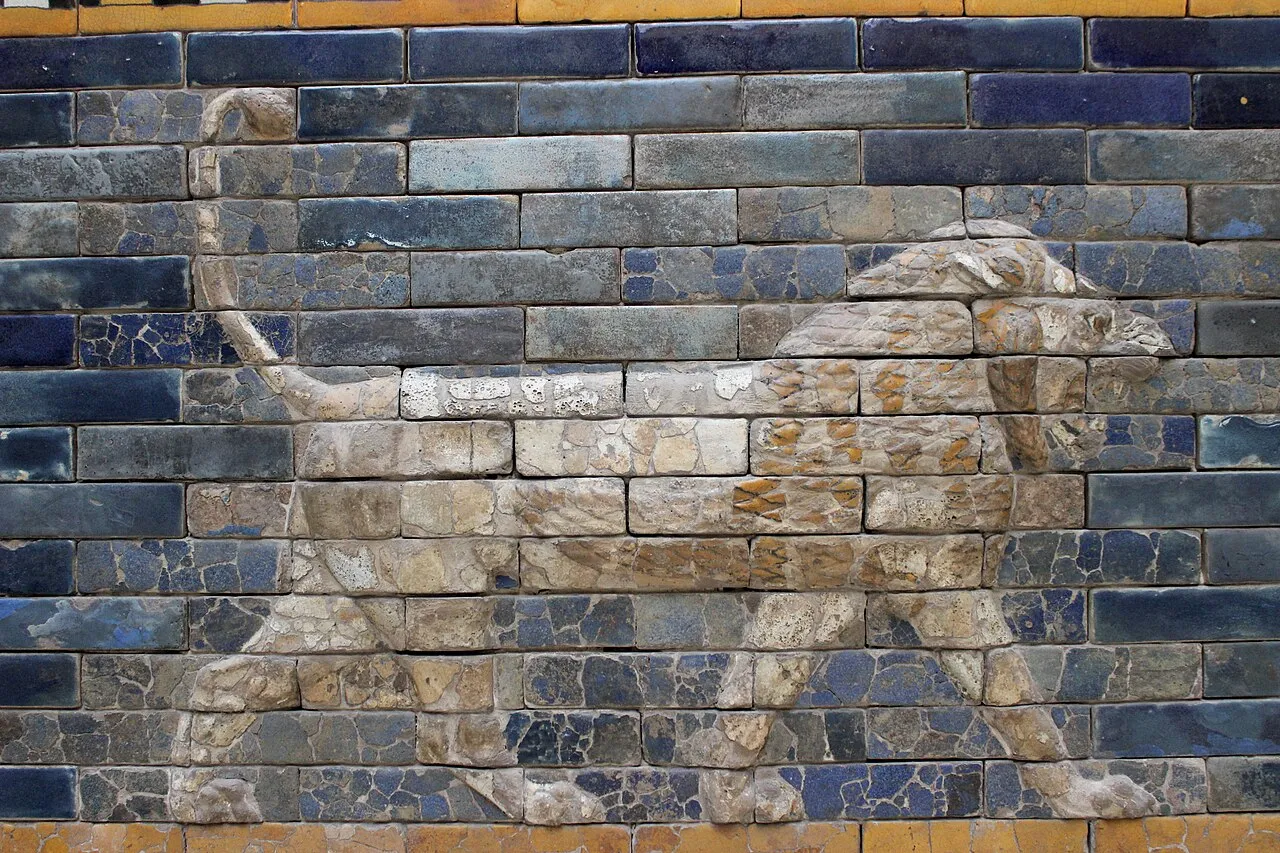
Miguel Hermoso Cuesta · CC BY-SA 4.0
The species name leo is Latin for lion, borrowed from Greek leōn; English lion, French lion and German Löwe all share that root. The genus name Panthera comes from an old Greek word for large spotted cats, and the genus today includes the lion, tiger, leopard, jaguar and snow leopard.
The Korean word saja (獅子) is Sino-Korean. Lions never lived in China, and the character 獅 was coined for animals that arrived as tribute along the Silk Road from Central Asia and Persia. A common explanation is that the word ultimately renders a Persian name for the lion (related to shir). No lions ever lived on the Korean peninsula either, so for most of Korean history the lion was known through Buddhist art and Chinese texts rather than direct experience.
2.1. Subspecies
Older works recognised up to ten regional subspecies, but in 2017 the IUCN Cat Specialist Group, drawing on genetic studies, reduced them to two.
| Subspecies | Range | Notes |
|---|---|---|
| P. l. leo | West Africa, northern Central Africa, India | Includes the Asiatic lion and the extinct Barbary lion; small, scattered populations |
| P. l. melanochaita | East and southern Africa | Most familiar lions, from the Serengeti to Kruger |
Asiatic lions in India are slightly smaller than most African lions, often have a longitudinal fold of skin along the belly, and males tend to have shorter manes that leave the ears visible. The Barbary lion of North Africa's Atlas Mountains, famous for its dark, heavy mane, disappeared from the wild around the middle of the 20th century.
2.2. Relatives and hybrids
Genetic studies show that the lion's closest living relative is the leopard, followed by the jaguar, with the tiger and snow leopard on a more distant branch. In captivity lions and tigers can produce hybrids: a male lion and female tiger produce a liger, while a male tiger and female lion produce a tigon. These do not occur in the wild, where the two species barely overlap, and hybrids are widely criticised because they often suffer health problems and have no conservation value.
3. Evolution
The Panthera lineage is thought to have arisen in Asia some 6 to 4 million years ago, while the lion lineage itself emerged in Africa. Estimates of when lions split from their common ancestor with leopards vary, but most fall somewhere around two million years ago. Lion-like fossils appear in Pleistocene deposits in East Africa, including Olduvai Gorge in Tanzania.
From Africa, lions spread into Eurasia and, during the Ice Age, evolved into distinctive regional forms. The best known is the cave lion (Panthera spelaea) of Europe and Siberia. Cave paintings at Chauvet in France show groups of these animals, apparently with little or no mane, and frozen cubs with fur and whiskers intact have been recovered from Siberian permafrost. Cave lions were somewhat larger than modern lions, and many researchers treat them as a separate species that diverged hundreds of thousands of years ago.
Cave lion ancestors crossed the Bering land bridge into North America, giving rise to the American lion (Panthera atrox), a long-legged giant whose fossils have been found as far south as Mexico and Peru. These great Ice Age lions died out around 12,000 to 10,000 years ago, along with mammoths and much of the other megafauna. Modern lions later disappeared from Europe and the Middle East as well, probably through a mix of climate change and human persecution.
4. Range and habitat
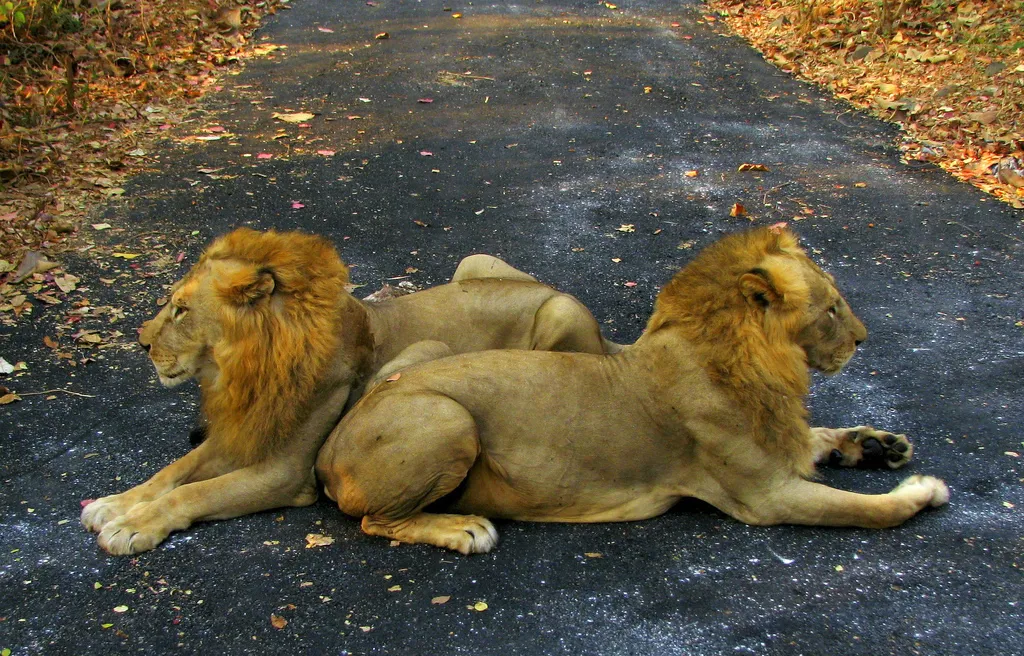
supersujit · CC BY-SA 2.0
Lions now live in roughly two dozen countries south of the Sahara. Most are concentrated in eastern and southern Africa, notably Tanzania, Kenya, Botswana, Zambia, Zimbabwe and South Africa, while West and Central Africa hold only small, isolated groups. The West African population is thought to number only a few hundred and is regionally critical. In Asia the only wild lions live in and around Gir National Park in Gujarat, India.
The lion's preferred habitat is open savanna and lightly wooded grassland with plenty of large grazing animals, cover for stalking and access to water. Lions are adaptable, though: desert lions in Namibia can go weeks without drinking, getting moisture from their prey, and lions have been recorded at around 4,000 metres in the Ethiopian highlands. They generally avoid the interior of dense rainforest.
The contrast with the past is stark. In ancient times lions ranged across most of Africa, the Mediterranean fringe, Arabia, Iran and northern India. Some analyses suggest they now occupy less than a tenth of that historic range, and what remains is increasingly broken into fragments centred on national parks and reserves.
5. Body
The lion has a classic big-cat build: a deep, muscular chest, relatively short powerful legs and a large head. Its short coat ranges from sandy buff to tawny and silvery grey, and it is the only cat with a dark tuft at the tip of the tail, sometimes hiding a small horny spur. Cubs are born with faint spots that mostly fade as they grow.
| Measurement | Male | Female |
|---|---|---|
| Head and body | about 1.7–2.5 m | about 1.4–1.75 m |
| Tail | about 0.9–1 m | about 0.7–1 m |
| Shoulder height | about 1.1–1.25 m | about 1 m |
| Weight | about 150–250 kg | about 120–180 kg |
Lions in southern Africa tend to be the largest, while East African and Indian lions are a little smaller. Wild males over 250 kg are rare; heavier records mostly come from captive animals.
5.1. The mane
A male's mane usually begins to grow at around two years old and is fully developed by four or five. Its length and colour vary with age, nutrition, testosterone level and climate. Long-term research in the Serengeti found that males with darker, fuller manes tend to be preferred by females and are less often challenged by rivals, so the mane works as a kind of honest health certificate.
It is costly, though. A dark mane traps heat and makes the lion more conspicuous, so in very hot, dry places such as Kenya's Tsavo region many males have scant manes or none at all. Castrated males or those with hormone problems lose their manes, and a few maned females have been reported in Botswana.
5.2. Teeth, claws and senses
A lion's canines are around 7 cm long and are used to clamp a prey animal's throat or muzzle until it suffocates. Its carnassial teeth shear meat like scissors, and the tongue is covered in rear-facing spines that rasp flesh from bone. The claws stay sheathed while walking and extend when grabbing prey.
A reflective layer behind the retina, the tapetum lucidum, gives lions far better night vision than ours, and many hunts happen at dusk or after dark. Their hearing picks up roars and hyena calls several kilometres away. Smell is used to read scent marks and a female's reproductive state, often with the lip-curling flehmen response.
6. Behaviour and ecology
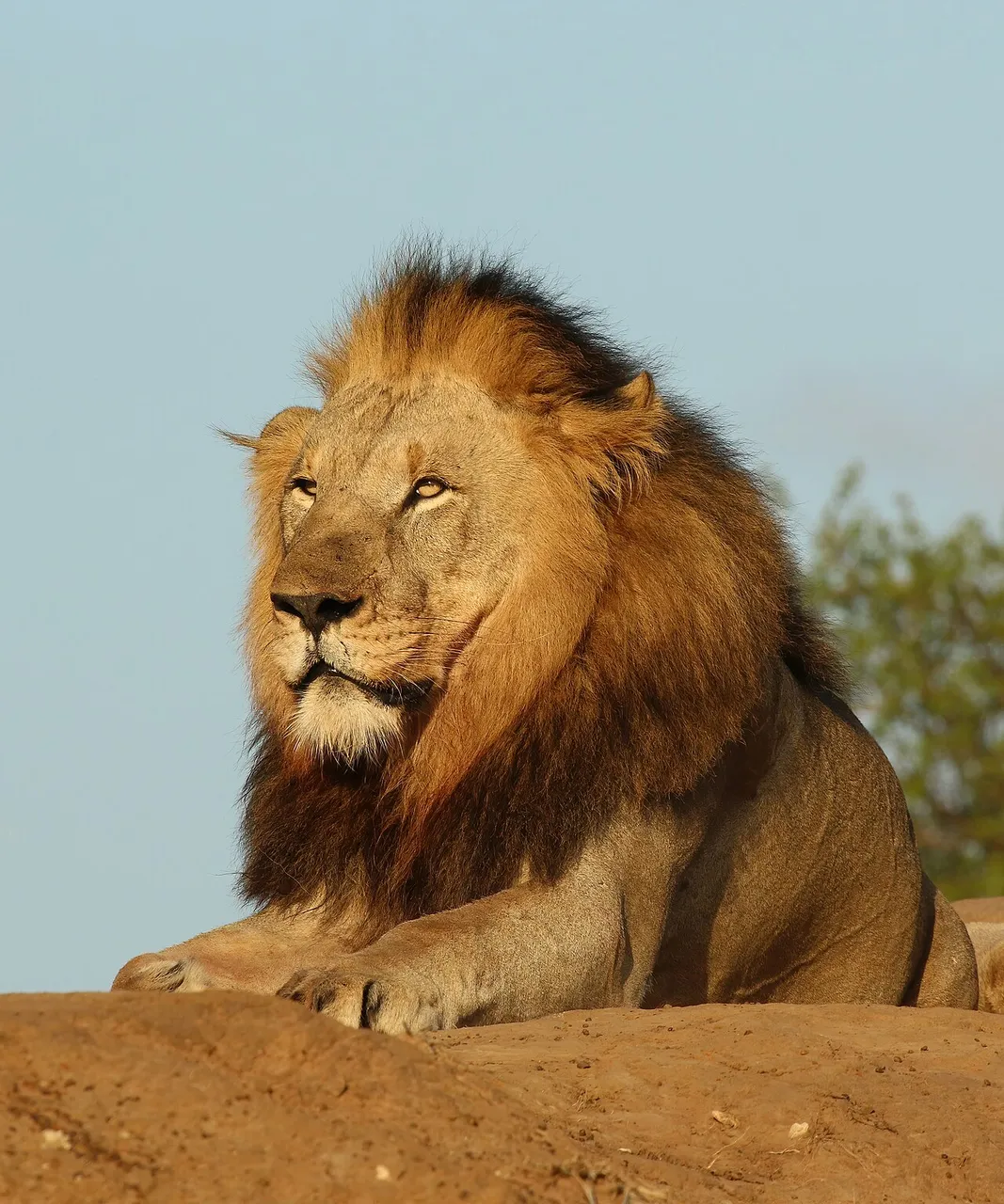
Lions are champion resters, spending 16 to 20 hours a day lying in the shade and becoming active mainly from dusk to dawn. Daytime hunting is uncommon. On hot days they lounge on rocks, under trees or even in branches; the tree-climbing lions of parts of Uganda and Tanzania are a well-known tourist sight.
6.1. How a pride works
A typical pride consists of 2 to about 10 related adult females, their cubs and 1 to 3 resident males who joined from outside; large prides can exceed 30 animals. Females are the core. They usually stay in their birth pride for life, hunting and raising cubs alongside mothers, sisters and cousins. Young males are pushed out at two to four years old and roam as nomads, often in coalitions with brothers or other unrelated males.
When a nomadic coalition is strong enough, it challenges the resident males. Winners take over the pride and frequently kill the young cubs of the previous males. Brutal as it seems, this brings the mothers back into breeding condition sooner, letting the new males father offspring quickly. Coalitions typically hold a pride for two to four years, and larger coalitions tend to last longer.
6.2. Territory
Territory size depends heavily on prey. In rich areas such as the Ngorongoro Crater or Serengeti a pride may use 20 to 200 km², while in the prey-poor Kalahari a range can exceed 1,000 km². Lions advertise ownership by roaring, spraying urine, rubbing against vegetation and scraping the ground, and fights with intruders can be fatal. Females also defend territory against neighbouring prides, and the side with more lions usually wins.
7. Diet and feeding
Lions mainly take medium to large herbivores weighing roughly 50 to 500 kg. Depending on the region that means wildebeest, plains zebra, African buffalo, impala, warthog, giraffe or gemsbok; Asiatic lions in Gir eat chital, sambar, nilgai and village livestock. Large prides sometimes tackle giraffes, young elephants or, occasionally, hippos, and lions in Botswana's Savuti region became famous for hunting elephants.
Females do most of the hunting. They stalk low through the grass to within 20 to 30 metres, then rush the target in a short burst. A lion can reach about 60 to 80 km/h but tires quickly, so surprise is everything. In group hunts, some lionesses drive the prey while others wait on the flanks or ahead, and individuals often take the same position from hunt to hunt. Even so, only around one in four or five hunts succeeds.
Once prey is down, the whole pride piles in and rank becomes obvious. Big males usually claim the best parts first, with females and cubs feeding afterwards. An adult male can eat 30 to 40 kg at a sitting and may then go several days without food. On average a male needs about 7 kg of meat a day and a female about 5 kg.
Lions are also opportunists. They readily scavenge carcasses and steal kills from hyenas, cheetahs and leopards, and in some areas a large share of their food is stolen. The popular image of the noble lion hunter and the scavenging hyena is misleading: each species regularly robs the other.
8. Reproduction and life cycle
Lions have no fixed breeding season. When a female comes into oestrus, a male shadows her for several days and they mate every 15 to 30 minutes, dozens of times a day. Each mating lasts only seconds; small spines on the male's penis are believed to trigger ovulation. Females in a pride often cycle together, so cubs tend to be born in clusters.
Gestation lasts about 110 days. Before giving birth the female slips away to a thicket or rocky den and delivers one to four cubs, usually two or three. Newborns weigh around 1.5 kg and are blind, and the mother moves them between hiding places for several weeks. At six to eight weeks they join the pride, where lactating females often nurse each other's cubs in a shared nursery known as a crèche.
| Stage | Age | What happens |
|---|---|---|
| Newborn | 0–3 weeks | Eyes closed, hidden in a den |
| Joining the pride | 6–8 weeks | Meets other cubs and adults |
| Weaning | 6–7 months | Eats meat; milk gradually stops |
| Learning to hunt | 1–2 years | Follows and joins adult hunts |
| Independence | 2–4 years | Males leave; most females stay |
| First breeding | Females 3–4 yrs, males around 5 | Males must win a pride to breed |
Cubhood is perilous. Starvation, attacks by hyenas and leopards, and infanticide by incoming males mean that more than half of cubs die in their first two years. Wild females typically live to around 15, while males, worn down by fighting and nomadic life, often die at 10 to 12. Captive lions sometimes pass 20.
9. Intelligence, communication and special abilities
A lion's roar is among the loudest sounds made by any cat and can carry about 8 km on a still night. Like other roaring cats, lions have a specially built larynx and hyoid apparatus that produces deep, resonant calls. They roar mostly at dusk, during the night and at dawn, announcing territorial ownership and keeping scattered pride members in touch. In playback experiments, lions appeared to estimate how many strangers were roaring and approached only when they outnumbered the intruders, a sign of basic number sense.
Beyond roaring, lions grunt, moan, mew softly to cubs, growl, snarl and hiss. Body language matters just as much: head-rubbing greetings reinforce bonds within the pride, and some researchers suggest the dark tail tuft acts as a flag that helps lions follow each other through tall grass.
Cooperative hunting showcases lion intelligence. Studies in Namibia's Etosha National Park found that individual lionesses tended to take the same role, wing or centre, in hunt after hunt. In problem-solving tests at zoos, social lions opened puzzle boxes more successfully than solitary tigers or leopards, supporting the idea that living in groups favours brainpower.
10. Predators and survival
No animal routinely preys on healthy adult lions; their only true predator is humans. That does not make life safe. The biggest danger to a lion is other lions: territorial clashes and fights between males cause serious injuries and deaths, and incoming males kill cubs.
Spotted hyenas are the lion's great rival. A large clan can drive a few lionesses off a kill and may attack old or injured lions alone, while lions often kill hyenas without eating them. Cubs fall victim to hyenas, leopards, pythons and male lions.
Prey fights back too. Buffalo can gore lions to death, a giraffe's kick or a zebra's hoof can shatter a jaw, and a careless encounter with a porcupine can leave quills that cripple a lion for months. Because injuries usually end in starvation, staying unhurt is, for a wild lion, the same as staying alive.
Disease matters as well. In 1994 canine distemper, probably spread from village dogs, killed roughly a third of the Serengeti's lions, prompting vaccination campaigns for domestic dogs around the park. Bovine tuberculosis also affects lions in places such as South Africa's Kruger National Park.
11. Relationship with humans
Lions have inspired awe and fear since the dawn of civilisation. Ancient Egyptians worshipped Sekhmet, a lion-headed goddess of war, and Assyrian kings treated lion hunts as proof of royal power, carving them in palace reliefs that are now in museums. Rome shipped vast numbers of lions from North Africa and the Middle East to die in arena spectacles, which may have contributed to their decline in those regions.
Colonial-era trophy hunting and large-scale killing to protect livestock followed. Conflict with people remains one of the gravest threats today. When lions take cattle or goats, herders who lose their livelihood often retaliate with poison or snares, and this is now a leading cause of lion decline. Attacks on people still occur, particularly in parts of southern Tanzania.
The most famous case is the pair of 'man-eaters of Tsavo', two maneless males that killed railway workers in Kenya in 1898. Later analysis suggested that one had serious dental problems that may have made normal hunting difficult. Their story has been retold in books and films.
Korea's connection with lions is indirect. Lions never lived there, but lion motifs arrived with Buddhism and appear on stone pagodas, lanterns and the lion throne of the Buddha; stone lions guard the Bunhwangsa pagoda in Gyeongju and Dabotap at Bulguksa. Lion dances such as the Bukcheong saja-noreum and the lion scene of Bongsan masked dance cast the lion as a protector that drives away evil spirits.
12. Conservation
The lion is listed as Vulnerable on the IUCN Red List, but the picture varies by region; the West African population has been assessed separately as Critically Endangered. Counts in Africa are uncertain, but late-2010s estimates commonly fall around 20,000 to 25,000 lions, and some analyses suggest a decline of over 40% in about two decades from the early 1990s. India's Asiatic lions tell a happier story: reduced to perhaps a few dozen in the early 1900s, they were counted at about 670 in 2020.
The main threats are:
- Habitat loss and fragmentation as farms and settlements expand.
- Prey depletion through bushmeat hunting.
- Retaliatory killing with poison and snares after livestock losses.
- Trade in bones, teeth and claws, sometimes as a substitute for tiger parts in traditional medicine.
- Poorly managed trophy hunting, which can remove pride males and trigger more infanticide.
Conservation responses include building predator-proof livestock enclosures, compensating herders for losses, and programmes in Kenya that employ young Maasai warriors as lion guardians rather than lion killers. Large cross-border conservation areas aim to keep populations connected. In India, there has long been debate about establishing a second home for Asiatic lions so the entire population is not exposed to a single epidemic or disaster in Gir.
Internationally, African lions are on CITES Appendix II and the Asiatic lion on Appendix I, so trade in live animals and parts requires permits. Many countries, including South Korea, implement these rules through national wildlife laws that also restrict private ownership.
13. In zoos
Lions are among the most popular zoo animals and breed readily in captivity. But an animal that roams tens or hundreds of square kilometres in the wild easily develops stereotypic pacing in a small enclosure. Modern zoos therefore aim for large, varied exhibits with hiding places, rocks and trees, plus enrichment such as scent trails, carcass feeding and meat hung from ropes for lions to pull and tear.
The ethics remain debated. Supporters argue that zoos provide genetic insurance and education; critics question breeding lions when there is little prospect of releasing them. Far more controversial are commercial lion-breeding facilities in some countries, where cubs are used for petting and selfies, older animals for 'walking with lions' tourism, and adults may end up shot in fenced 'canned hunts' or slaughtered for the bone trade. Claims that cub petting supports conservation are, in most cases, simply untrue.
14. Lions in culture
Few animals have been used as symbols as widely as the lion. In Greek myth, Heracles' first labour was to kill the Nemean lion, whose hide no blade could pierce, and he wore its skin as a cloak. The Great Sphinx of Giza has a lion's body and a human head. In the Bible, Daniel survives a night in the lions' den, and the lion is the emblem of the tribe of Judah.
In medieval Europe the lion became the heraldic animal par excellence, standing for courage and sovereignty. Lions appear in the royal arms of England and Scotland and in the national arms or flags of Belgium, the Netherlands, Finland, Sri Lanka and many others. England's Richard I earned the nickname Lionheart, and the lion capital of the Indian emperor Ashoka is now India's national emblem.
In modern pop culture, Simba from Disney's The Lion King (1994) is probably the most famous lion of all, later reaching new audiences through a stage musical and a photorealistic remake. Aslan in C. S. Lewis's Narnia books, the Cowardly Lion of The Wizard of Oz and Osamu Tezuka's Kimba the White Lion are other classics, and the MGM film studio has long opened its movies with a roaring lion.
Sport loves lions too: England's football team is known as the Three Lions, and the Samsung Lions are a well-known South Korean baseball club. Singapore's name is often said to derive from Sanskrit words meaning 'lion city', and its Merlion mascot has a lion's head on a fish's body.
15. Trivia
- A male's mane tends to darken with age, so researchers can roughly estimate age from mane colour.
- The pattern of whisker spots above a lion's lip is unique, and field researchers use these 'whisker maps' to identify individuals.
- White lions are not a separate species but a recessive colour variant from the Timbavati area of South Africa. Unlike albinos, they have normal pigment in their eyes and skin.
- Although built for meat, lions occasionally chew grass, possibly to aid digestion or bring up hairballs.
- Male lions can and do hunt. Nomadic males must feed themselves, and male strength is decisive when tackling buffalo or other powerful prey.
- Asiatic lions in Gir live in smaller groups than most African lions, with males and females often living apart and meeting mainly to mate or share large kills.
- Lions once lived in Britain: bones of Ice Age cave lions have been dug up beneath London, including near Trafalgar Square, ironically home to Landseer's famous bronze lions.
- Calling a group of lions a pride comes from the playful collective nouns of medieval English hunting lore.
Wild animals are not pets. Catching, trading or keeping them is illegal in most places. If you find an injured wild animal, call your local wildlife rescue centre.
FAQ
Is the lion really the strongest animal, the 'king of beasts'?
Symbolically yes, but in reality it depends. Lions avoid adult elephants, hippos and buffalo herds, and hyena clans regularly steal their kills. One-on-one, a tiger is usually somewhat larger and heavier.
Can a lion be kept as a pet?
No. However gentle a cub looks, it grows into a predator of over 200 kg, and keeper deaths happen every year. Private ownership is banned or tightly restricted in most countries, and cub-petting tourism feeds the captive-breeding and 'canned hunting' industry.
How many wild lions are left?
Estimates vary, but roughly 20,000–25,000 lions remain in Africa, far fewer than in the mid-20th century, and they have vanished from over 80% of their historic range. India's Asiatic lions are increasing, counted at about 670 in 2020.
Photo credits
Photos are freely licensed images from Wikimedia Commons. Authors and licenses are listed below.
- 020 The lion king Snyggve in the Serengeti National Park Photo by Giles Laurent.jpg — Giles Laurent · CC BY-SA 4.0
- Berlín Ishtar león. 02.JPG — Miguel Hermoso Cuesta · CC BY-SA 4.0
- India Animals.jpg — supersujit · CC BY-SA 2.0
- Lion (Panthera leo) male 6y.jpg — Charles J. Sharp · CC BY-SA 4.0