TailVille
At a glance
Rough ranges for supplies, food and electricity in Korea (USD is approximate). Purchase or adoption fees are not included.
Experienced, active owners who enjoy training and enriching the home and can play every day.
Anyone wanting a sedate lap cat, people away for long hours, or homes with small pets.
1. Overview
The Bengal is a breed created by crossing the wild Asian leopard cat (Prionailurus bengalensis) with domestic cats. Its hallmarks are spots and rosettes reminiscent of a leopard or jaguar, a muscular body and boundless energy. Pet Bengals are classed like any other house cat as Felis catus.
The breed began with a goal: a domestic cat that looked wild. Generations of breeding back to domestic cats shaped a temperament suited to home life, and the Bengals usually sold today are many generations removed from the wild ancestor and treated as fully domestic.
The personality, though, is often described as just as 'wild' as the looks, in the sense of extraordinary energy and curiosity, and the Bengal is widely regarded as one of the more demanding breeds. This article leaves general cat information to the main cat article and covers the Bengal's origins, generations, appearance, temperament, home set-up, inherited disease, legal questions and what to check before buying.
2. Name and origin
2.1. The Asian leopard cat and Jean Mill
The Asian leopard cat is a small wild cat found widely across East, Southeast and South Asia; the leopard cats living in Korea belong to the same species. The breed name Bengal is generally said to come from the species name, bengalensis.
The central figure in the breed's history is American breeder Jean Mill (formerly Sugden). She first crossed a leopard cat with a domestic cat in the 1960s and launched a serious breeding programme in the 1970s and 1980s. A key step, by most accounts, was acquiring hybrid females from Dr Willard Centerwall, a researcher who kept leopard cat crosses for studies related to feline leukaemia.
Mill bred these cats with a variety of domestic cats. Among those said to have contributed to the early lines were a street cat from near a zoo in Delhi, Egyptian Maus, Abyssinians and Burmese.
2.2. Generations and recognition
Bengals are classified by how many generations separate them from the wild ancestor.
| Generation | Meaning | Notes |
|---|---|---|
| F1 | One parent is an Asian leopard cat | Strongly wild temperament; males are usually sterile; unsuitable as ordinary pets |
| F2–F3 | Leopard cat as grandparent or great-grandparent | May still be highly strung; used in breeding programmes |
| F4 and later | Four or more generations from the wild cat | The generations sold as pets |
| SBT | At least three generations of Bengal-to-Bengal breeding (TICA term) | Eligible for showing; settled domestic temperament |
Early-generation males tend to be infertile, so breeding relied mainly on early-generation females and domestic-line males.
TICA accepted the Bengal as a new breed in the 1980s and is reported to have granted championship status in the early 1990s. Britain's GCCF and Europe's FIFe also recognise it, but the American CFA long declined to, partly because of its wild-hybrid origin. Rules and dates vary by registry, so check official sources if you need specifics.
3. History and popularity in Korea
Bengals became known in Korea in the 2010s under nicknames such as 'leopard cat' and 'mini leopard'. Their wild looks stood out in photos and videos, making them a social media favourite, and local catteries followed.
Plenty of owners, though, bought on looks without fully understanding the breed's energy and curiosity, and struggled with damaged furniture, night-time noise and rough play. For that reason the Bengal is often recommended to people with previous cat experience rather than first-timers.
A particular point in Korea is that the breed's ancestor, the leopard cat, is a protected endangered species there. Later-generation Bengals sold as pets are treated as domestic cats, but leopard cats themselves and early-generation hybrids can raise legal issues.
4. Appearance and breed standard
User:Lightburst · CC BY-SA 4.0
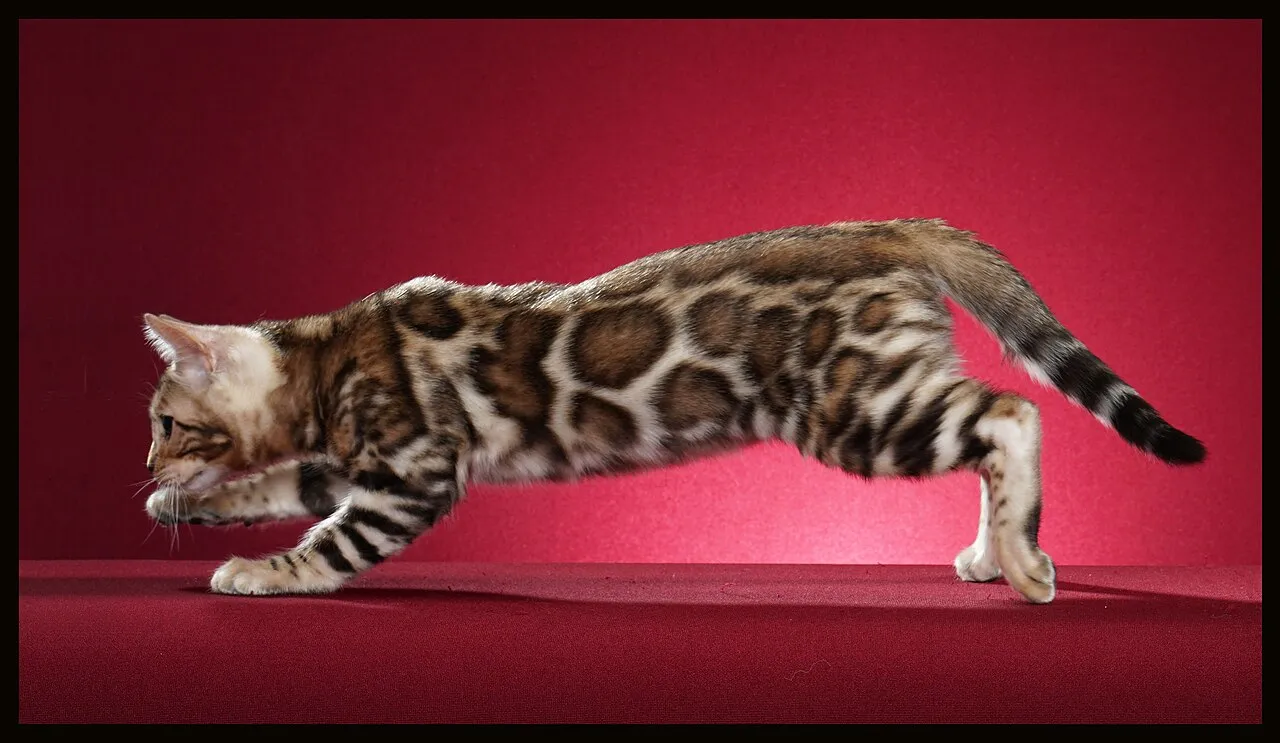
The Bengal is a medium to largish, muscular cat. Hind legs slightly longer than the front give it a distinctive, slightly raised rear.
| Feature | Description |
|---|---|
| Weight | Males about 4.5–7 kg, females about 3.5–5 kg |
| Build | Long and muscular, sturdy bone, hind legs a little longer |
| Head | Broad modified wedge, smallish for the body, with a strong muzzle and prominent whisker pads |
| Ears | Medium to small, wide at the base, rounded tips |
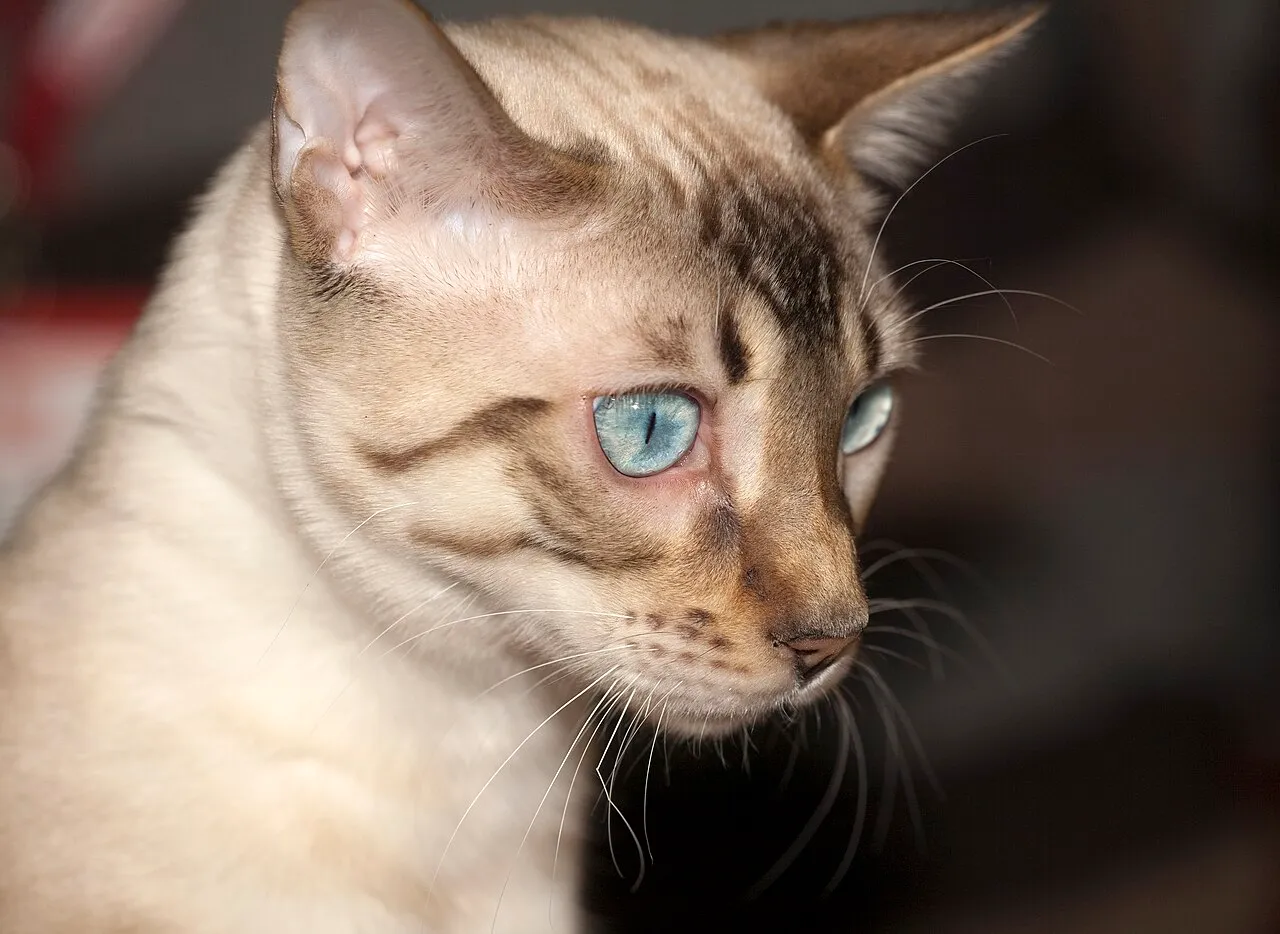
| Eyes | Large and oval; green or gold, among others (snows may have blue or aqua) |
| Tail | Medium length, thick, rounded with a black tip |
| Coat | Short, dense and pelt-like; some coats have 'glitter' |
| Patterns | Spotted, rosetted or marbled |
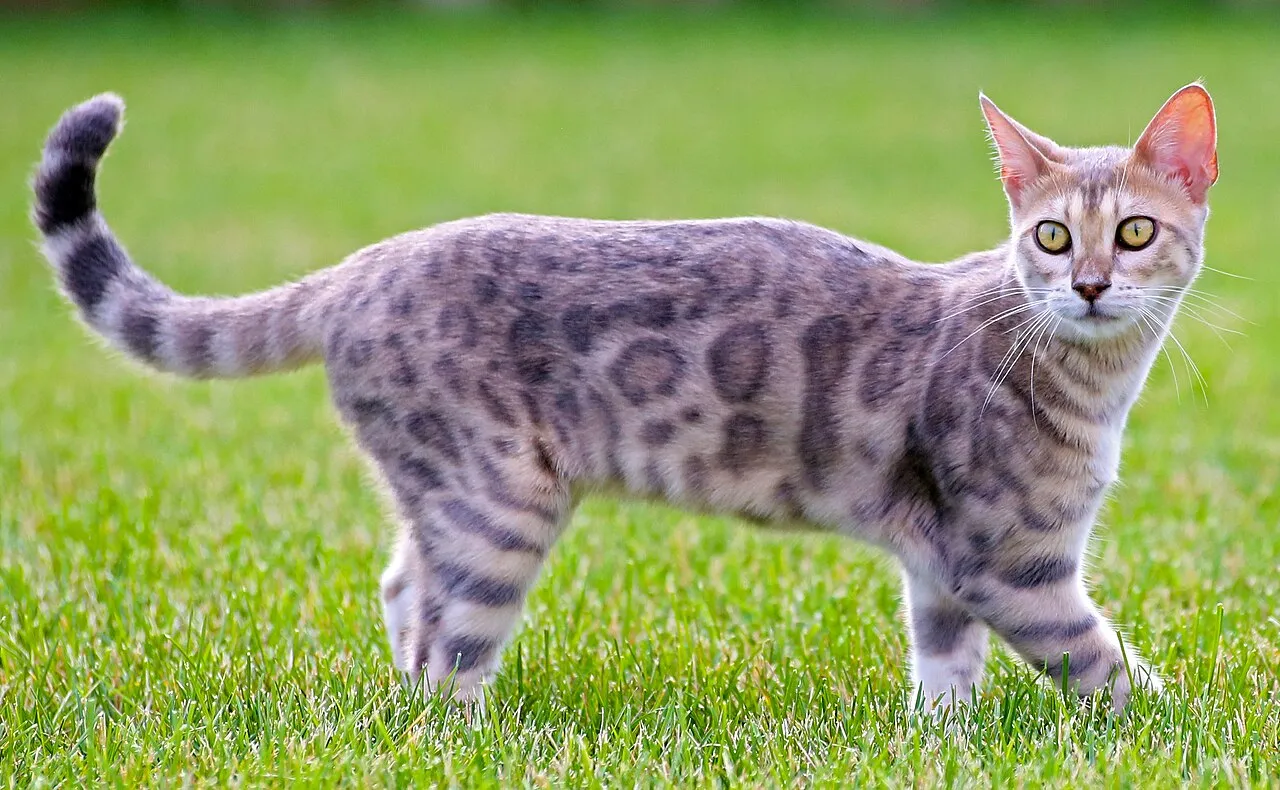
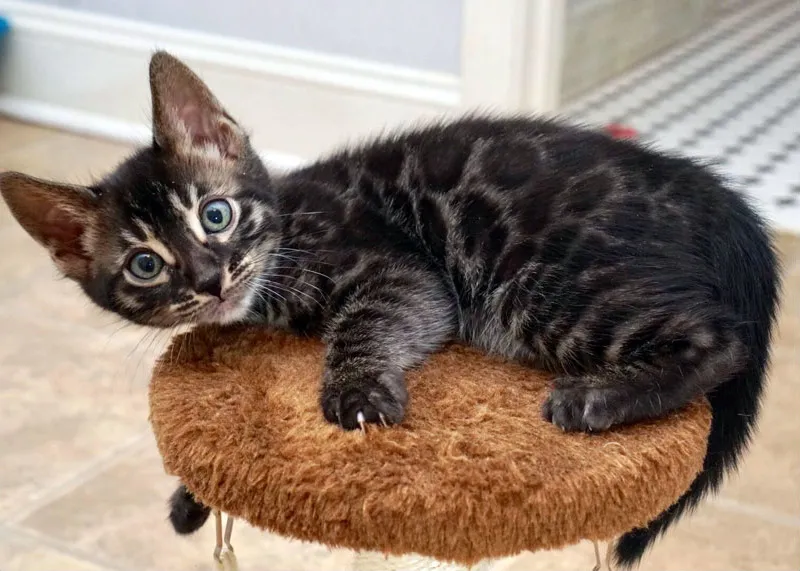
| Colours | Brown, snow (seal lynx, mink, sepia), silver, charcoal and others, depending on registry |
Rosettes are the most prized pattern: two-toned spots, darker inside than the background and darker still around the rim, much like a leopard's or jaguar's. Marbled Bengals have swirling, marble-like markings flowing along the sides instead of spots.
Some coats sparkle in the light as if dusted with gold, a trait called glitter, which is thought to come from how the hair shaft's structure reflects light. A pale, spotted belly is another breed hallmark.
5. Temperament
The word that comes up most when describing Bengals is energy. They spend the day running, climbing, chasing and investigating, and want to be involved in whatever you're doing. Many patrol the house at times when most cats would be napping.
Their intelligence lets many work out how to pull down door handles, open drawers or flick light switches. The same intelligence means they bore quickly, tire of familiar toys and constantly seek new stimulation.
Their attitude to water is unusual. Many Bengals aren't afraid of it at all: they bat at running taps, drop toys into water bowls and may even join you in the bathroom while you shower.
They bond strongly with their owners and love interactive play, though many dislike being held or kept on a lap. Their vocal repertoire is wide, from chirps to loud, almost howling calls.
A Bengal without enough outlet for its energy is prone to knocking things over, scratching furniture and ambushing hands and feet. In most cases that's not 'wildness' but unmet needs for activity.
6. Who it suits and who it doesn't
AlmightyWorm · CC0
- Suits: experienced cat owners who can provide 30–60 minutes or more of active play every day
- Suits: people who enjoy turning the home into a cat playground with wheels, catwalks and tall trees
- Suits: anyone keen to try clicker training or harness walking with their cat
- Doesn't suit: those wanting a calm, sedate lap cat
- Doesn't suit: people out most of the day (a second cat can help but adds space and cost)
- Doesn't suit: homes with hamsters, birds, fish or other small pets
- Doesn't suit: anyone determined to keep fragile ornaments on open shelves
7. Exercise and play
Exercise and mental stimulation are the heart of life with a Bengal. Many people reckon on two or three active sessions a day totalling at least 30–60 minutes.
- Hunting play: sweep a wand toy widely so the cat runs and leaps. End with a catch followed by a treat or meal to create a natural hunt, eat, rest rhythm.
- Cat wheel: a running wheel for cats is especially effective. Teach use with treats or a toy at first.
- Vertical space: sturdy floor-to-ceiling cat trees, wall shelves and catwalks so the cat can travel around the room off the ground.
- Brain work: puzzle feeders, hidden treats and clicker training for sit, high-five, jump and fetch.
- Water games: many love chasing a ping-pong ball in shallow water; wipe up afterwards.
- Harness walks: once the cat is fully comfortable in a harness indoors, start with short outings somewhere quiet. Head home at the first sign of fear.
Rotate a few toys every few days to keep things fresh. Playing with bare hands or feet teaches the cat that people are prey, so always keep a toy between you.
8. Coat and hygiene
User:Lightburst · CC BY-SA 4.0
The short, dense, pelt-like coat is easy to care for: a weekly session with a rubber or soft brush is enough, a little more during moults.
- Shedding: many owners find Bengals shed less than other shorthairs, but they produce the same allergen, so test for allergies first.
- Bathing: liking water doesn't mean liking baths. Bathe only when necessary, with a cat shampoo.
- Claws: active cats with strong claws need trimming about every two weeks. Provide plenty of scratchers, both vertical and horizontal.
- Teeth and ears: check weekly and brush teeth as often as you can.
- Litter: energetic diggers can spray litter far and wide; a large box with high sides or a hood helps.
9. Diet and weight
With plenty of muscle and activity, Bengals do well on high-protein diets.
| Item | Guideline |
|---|---|
| Daily energy (neutered 5 kg adult) | About 250–300 kcal, varying widely with activity |
| Feeding | Two to four meals; feeding after play matches the hunting rhythm |
| Food | Complete, high animal-protein diet with some wet food |
| Treats | Under 10% of calories, split into training rewards |
| Changing food | Gradually over one to two weeks |
Some Bengals have sensitive digestion and get soft stools or diarrhoea after sudden diet changes. Switch slowly, and if stools stay poor, see a vet for tests including parasites such as Tritrichomonas.
Some owners consider raw feeding, but it carries risks of bacteria such as Salmonella and of nutritional imbalance, so plan any raw diet with a vet to make sure it's complete. Even very active cats can put on weight after neutering, so check body condition regularly.
10. Inherited disease and health
Bengals are considered fairly healthy, but the conditions below are known in the breed. Diagnosis and treatment must come from a vet.
10.1. Hypertrophic cardiomyopathy (HCM)
HCM, the commonest heart disease in cats, has been reported in Bengals. Unlike Maine Coons and Ragdolls, Bengals have no established breed-specific DNA test, so regular heart scans of breeding cats and adults are the main safeguard.
- Signs: none at first; later rapid breathing, lethargy, or hind-leg paralysis from a clot
- Management: medication slows progression and reduces clot risk; keep a record of sleeping breathing rates at home.
10.2. Bengal progressive retinal atrophy (PRA-b)
Bengals have their own form of progressive retinal atrophy, caused by a different gene from the Siamese and Abyssinian form and usually called PRA-b.
- Inheritance: recessive; both parents must pass on the variant.
- Signs: vision begins to deteriorate at a young age and can progress to blindness; affected cats hesitate in dim light or bump into things.
- Testing: a DNA test distinguishes carriers and at-risk cats.
- Prevention: avoiding carrier-to-carrier matings prevents affected kittens.
10.3. Pyruvate kinase deficiency
PK deficiency is an inherited shortage of an enzyme red blood cells need for energy, causing them to break down easily. Well known in Abyssinians and Somalis, it has also been reported in Bengals.
- Inheritance: recessive
- Signs: intermittent anaemia, lethargy, pale gums, poor appetite; some cats show few or no signs.
- Testing: a DNA test is available.
10.4. Other issues
- Flat-chested kitten syndrome: the chest flattens top to bottom, making breathing difficult. It is reported in several breeds including Bengals; mild cases may improve with growth, but severe ones can be fatal.
- Digestive problems: some Bengals have soft stools or chronic diarrhoea, sometimes due to protozoal infection or food sensitivity.
- Injuries: high-flying, busy cats face more falls, torn claws and swallowed objects.
When buying, ask for the parents' PRA-b and PK deficiency DNA results and heart scan records.
11. Life course and lifespan
Bengal lifespans are usually quoted at around 12–16 years, and they tend to stay active well into later life.
| Stage | Age | What to know |
|---|---|---|
| Kitten | 0–6 months | A 'fuzzies' phase when the coat looks scruffy and the pattern faded; socialisation and play habits |
| Adolescent | 6 months–2 years | Peak energy; neutering; a good time to start training |
| Adult | 2–8 years | Consistent play and enrichment, yearly check-ups |
| Mature | 8–11 years | Heart scans and joint checks |
| Senior | 12+ years | Adjust food as activity falls; twice-yearly exams |
Between a few weeks and a few months of age, Bengal kittens go through the fuzzies, when the coat turns scruffy and the markings look washed out. It is often explained as a leftover of camouflage that protected wild kittens, and the crisp pattern returns with time.
12. Costs
Rough Korean prices; they vary by clinic, region and individual cat.
| Item | Rough cost | Notes |
|---|---|---|
| Purchase price | Hundreds of thousands to several million won or more | Depends on rosette quality, colour, pedigree and cattery |
| Starter equipment | 500,000–1,000,000 won | Tall cat trees, catwalks and shelves, large litter box |
| Cat wheel | Several hundred thousand won | Varies by size and material |
| Vaccines and neutering | 300,000–700,000 won | Varies by clinic and sex |
| Food, litter, supplies | 60,000–120,000 won a month | High-protein foods cost more |
| Toys and enrichment | 20,000–50,000 won a month | Wear out fast and need rotating |
| Annual check-up | 100,000–400,000 won | More with heart scans |
Bengals wear out toys and scratchers quickly, and curiosity can cost you the odd household item. Budget for home-proofing too: cupboard locks, window screens and other safety gear.
13. Before you get one
- Generation: confirm from the pedigree that the cat is F4 or later, or SBT. Early generations (F1–F3) are unsuitable for ordinary homes and, in Korea, can raise legal issues because the leopard cat is protected.
- DNA tests: ask for the parents' PRA-b and PK deficiency results and heart scan records.
- Parents and environment: check that the parents are steady-tempered and the kittens have had plenty of human contact. Think carefully if the parents are fearful or aggressive.
- Age and seller: kittens under two months may not be sold in Korea; confirm the seller's animal sales registration.
- Lifestyle check: weigh up daily play time, vertical space, any small pets and whether you're ready to clear away breakables.
- Pattern marketing: spotted non-pedigree cats are sometimes sold as Bengals at high prices, so check which registry issued the papers.
- Rescue: some Bengals are surrendered by owners who couldn't keep up. Adopting an adult lets you gauge personality and energy level in advance.
14. Legal issues and overseas rules
Because its ancestor is a wild animal, the Bengal deserves an extra look at the law. What follows is general guidance; laws change, so check with the relevant authorities.
- Leopard cats in Korea: the native leopard cat is a designated endangered species, and capturing, keeping or trading it is prohibited. Importing or keeping foreign leopard cats or early-generation hybrids may fall foul of wildlife and quarantine rules; check with the Ministry of Environment, regional environmental offices and the quarantine agency.
- CITES: the Asian leopard cat is listed under CITES, with some regional populations in a stricter category.
- Elsewhere: some US states and cities, and some countries, restrict or ban early-generation Bengals while allowing later generations. Hawaii is reported to restrict Bengals especially tightly. Check local rules before relocating or travelling.
- Ordinary Bengals: later-generation Bengals are treated like any other cat in Korea. Registration is currently optional for cats, but microchip registration is recommended.
15. Culture and trivia
- Their wild looks make Bengals a favourite in fashion shoots, adverts and music videos as a 'mini leopard'.
- On social media, videos of Bengals splashing in water, walking on harnesses or sprinting on cat wheels draw big audiences.
- Other breeds made by crossing domestic and wild cats include the Savannah (with the serval) and the Chausie (with the jungle cat). The earlier the generation, the stricter the rules and the harder they are to keep.
- The tail tip and paw pads are often black or very dark, also seen as a trace of the wild ancestor.
- Although Bengals carry some leopard cat DNA, most of a modern pet Bengal's genome comes from domestic cats.
- Jean Mill is reported to have said that one motivation for the breed was to reduce demand for wild cat fur by offering a domestic cat with a wild look.
Health notes are general information. If something seems wrong, contact a vet who treats this species.
🍽️ Can my dog or cat eat this? →
FAQ
Is a Bengal a wild animal?
Pet Bengals are usually at least four generations from the wild ancestor and are domestic cats. The wild look is in the coat; behaviour is that of a very active house cat.
Do Bengals shed less?
Many owners find the short, fine coat sheds less, but Bengals still produce the allergen Fel d 1, so they are not hypoallergenic.
Can you walk a Bengal on a lead?
Many take well to a harness. Practise indoors first, then start with short outings somewhere quiet, and head home at the first sign of fear.
Photo credits
Photos are freely licensed images from Wikimedia Commons. Authors and licenses are listed below.
- Paintedcats Red Star standing.jpg — User:Lightburst · CC BY-SA 4.0
- BEN Russicats White Angel (5274194975).jpg — Nickolas Titkov from Moscow, Russian Federation · CC BY-SA 2.0
- Best Stalk.jpg — User:Lightburst · CC BY-SA 4.0
- Blue bengal kitten side (cropped).jpg — AlmightyWorm · CC0
- Charcoal Bengal.jpg — User:Lightburst · CC BY-SA 4.0