TailVille
At a glance
Rough ranges for supplies, food and electricity in Korea (USD is approximate). Purchase or adoption fees are not included.
Playful owners who enjoy floor-level games and are willing to adapt the home with steps and ramps.
People uneasy about the breed's welfare debate, or unable to budget for possible spine and joint care.
1. Overview
The Munchkin is a cat breed with a normal-sized head and body set on conspicuously short legs. The legs are short because of a form of dwarfism in which long-bone cartilage doesn't grow to full length, and the trait is inherited as a dominant. Like all house cats it is Felis catus, and it comes in short and long coats.
Only introduced as a breed in the 1990s, the Munchkin has become popular worldwide remarkably quickly. It is also the breed that faces the most direct version of a hard question: is it right to breed deliberately for a skeletal abnormality? Some international registries accept it, while others refuse recognition for exactly that reason.
In Korea, nicknamed the 'short-leg cat', it gained a strong following in pet shops and on social media from the late 2010s. This article leaves general cat information to the main cat article and focuses on the Munchkin's origins, genetics, looks, temperament, the health debate, home set-up and what to check before buying.
2. Name and origin
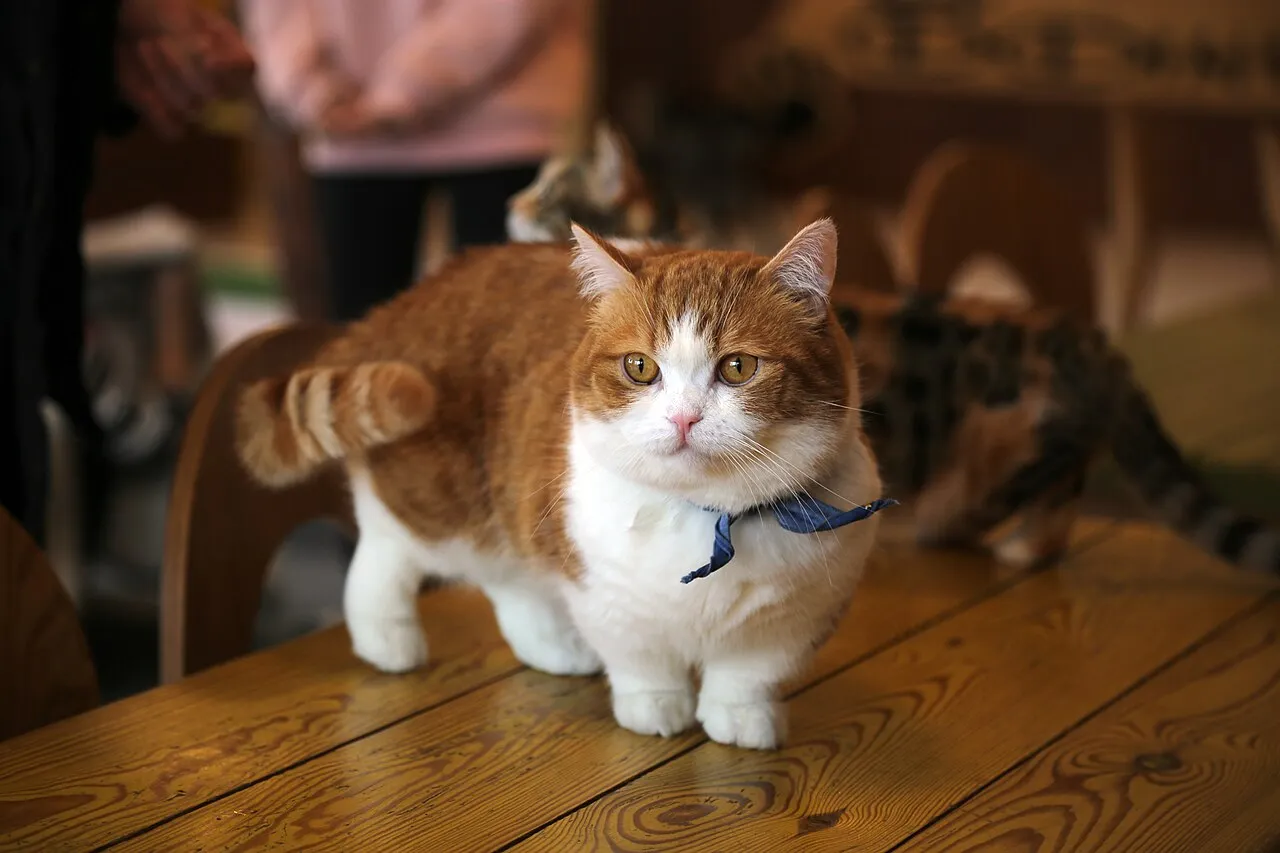
Tasy Hong · CC0
2.1. Blackberry and Toulouse
Short-legged cats were reported here and there in the first half of the twentieth century, including in Europe, but the modern Munchkin starts in Louisiana in 1983. A music teacher, Sandra Hochenedel, rescued a pregnant short-legged female hiding under a truck and named her Blackberry.
One of Blackberry's short-legged sons, Toulouse, went to another home and fathered kittens with local cats, so the short-legged population grew. People following these cats confirmed that the short legs were passed on as a dominant trait, and breed development began.
The breed name comes from the little people of The Wizard of Oz. In English, 'munchkin' is also an affectionate word for a small child.
2.2. The recognition debate
When Munchkins appeared at American cat shows in the early 1990s they attracted fascination and fierce objections in equal measure. TICA accepted the breed into its new-breed development programme in the 1990s and granted full championship status in the early 2000s. The American CFA, Europe's FIFe and Britain's GCCF, among others, do not recognise it, citing among other reasons that the short legs represent a skeletal disorder. Sources differ on exact decision dates, so check registry records if you need them.
The usual breeding practice is to pair a short-legged Munchkin with a normal-legged cat, either a long-legged Munchkin or an approved outcross. Kittens inheriting two copies of the short-leg gene are thought to die early in development, so short-to-short pairings produce smaller litters. That lethality is itself based on limited research and should be treated with some caution.
3. History and popularity in Korea
The Munchkin became widely known in Korea in the mid-to-late 2010s. Clips of short-legged cats scurrying around and photos of them sitting up on their haunches went viral, and pet shop windows filled with kittens labelled 'Munchkin'. Prices varied sharply with leg length and colour, and the shortest legs often commanded the highest prices.
As demand rose, so did crosses sold under catch-all labels such as 'short-leg mix', and cats of doubtful pedigree sold as purebreds. Vets and animal welfare groups have since kept up a steady campaign about the health questions surrounding short-legged breeds, and more people now try to understand the breed before falling for the look.
4. Appearance and breed standard
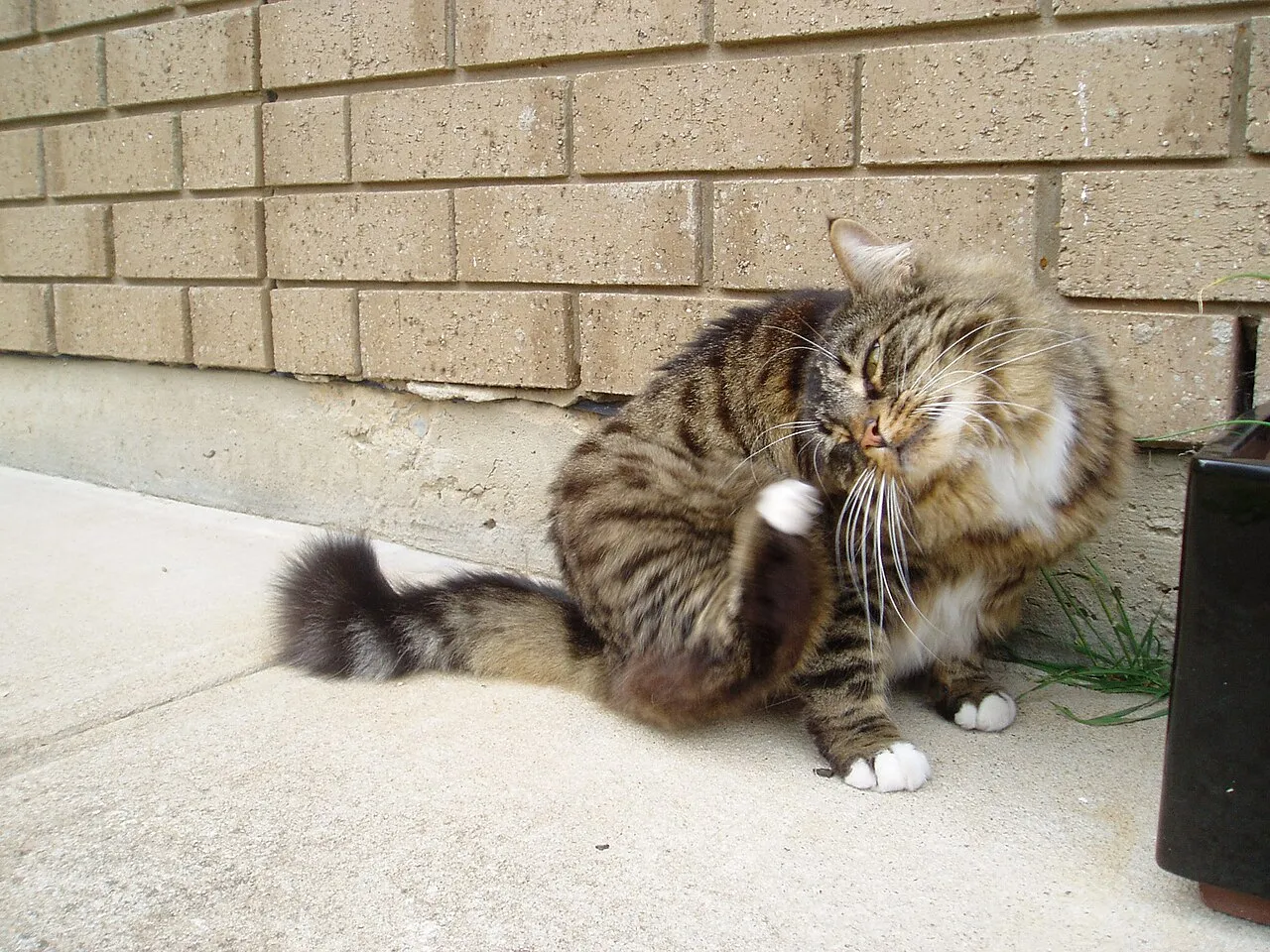
en:User:Pockle · CC BY-SA 3.0
Apart from the short legs, Munchkins vary a great deal, because the breed was built from a wide mix of domestic cats. Head shape, coat colour and coat length all differ from cat to cat.
| Feature | Description |
|---|---|
| Weight | About 2.5–4.5 kg; males slightly larger |
| Legs | About half to two-thirds normal length; hind legs often slightly longer than front |
| Body | Normal length, with a back that rises slightly towards the rear |
| Head | Modified wedge with walnut-shaped eyes |
| Coat | Short and plush, or semi-long and silky |
| Colours | Almost any colour or pattern |
Sellers sometimes use informal labels such as 'standard', 'super short' or 'rug hugger' for leg length, but these are marketing terms rather than official categories. Litters also include long-legged kittens, known as non-standard Munchkins. Lacking the short-leg gene, they are free of any skeletal effects it might have.
Several other short-legged cats have been made by crossing the Munchkin with other breeds: the Minuet (formerly called Napoleon) with Persians, the Bambino with Sphynxes and the Lambkin with Selkirk Rexes. These cats may also inherit the health problems of the partner breed.
5. Temperament
Munchkins are known as curious, energetic cats. Short legs don't make them slow: they race along low to the ground and corner sharply, prompting comparisons with ferrets. Their reputation for carrying off small shiny objects and stashing them under the sofa has earned them the nickname 'magpie cats'.
The pose that made them famous is sitting up on the hind legs with front paws raised to survey the room, like a meerkat or kangaroo. Their low centre of gravity lets many hold it for quite a while.
Most are people-friendly and get on with other cats and calm dogs. Because the breed's ancestry is so mixed, however, individual personalities vary a lot. The parents' temperament and the conditions a kitten is raised in matter greatly, so meet the parents if you can.
6. Who it suits and who it doesn't
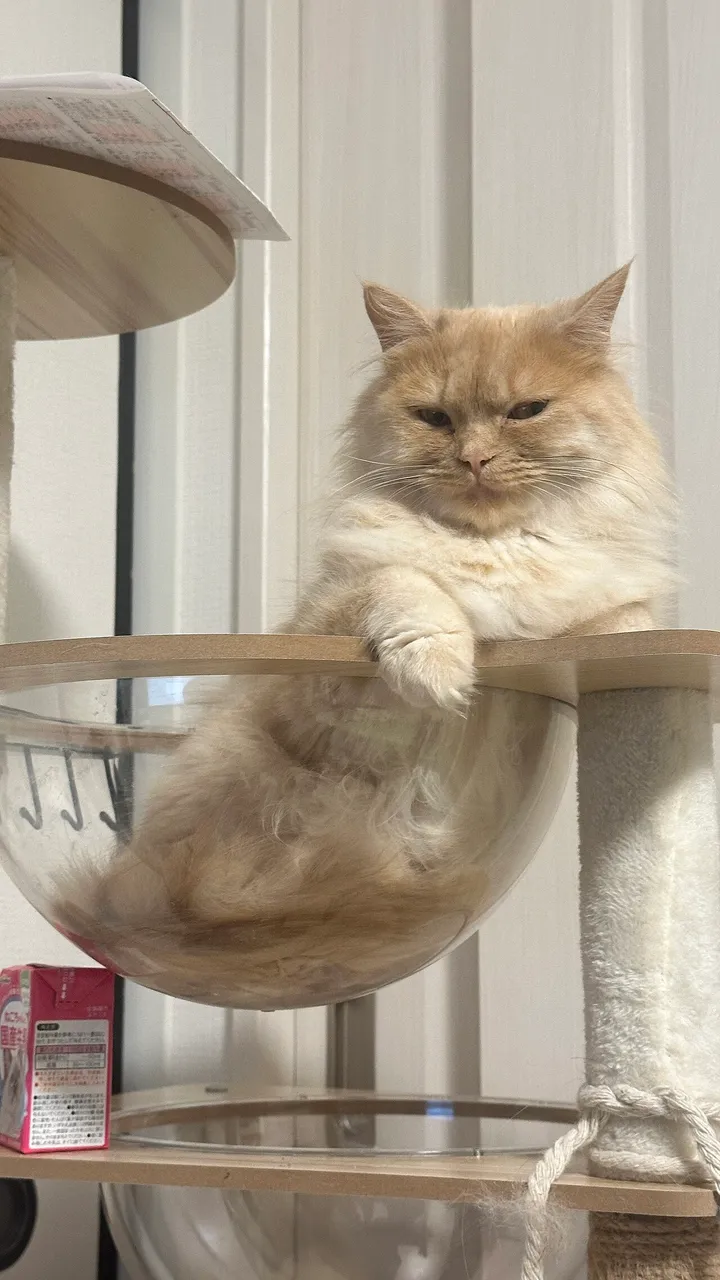
Venezsian1573 · CC0
- Suits: people who enjoy floor-level play and want a playful, inquisitive cat
- Suits: owners willing to fit staircase cat trees and pet steps around the home
- Suits: anyone who will manage weight carefully and keep an eye on the spine and joints
- Doesn't suit: people who want the shortest legs possible
- Doesn't suit: anyone who remains uneasy about the welfare debate
- Doesn't suit: those hoping for a cat that bounds onto wardrobes and bookcases
If it's the lively personality rather than the legs that appeals, a long-legged Munchkin from the same lines or an outgoing adult shelter cat could be just as good a match.
7. Exercise and play
Munchkins are energetic and need plenty of daily play. Their limited ability to jump vertically means games and furnishings should focus on the horizontal and the low.
- Ground chases: zigzag a wand toy across the floor or roll balls for them to pursue.
- Tunnels and hideaways: many love squeezing into low, enclosed spaces.
- Staircase cat trees: steps of about 20–30 cm or a ramp design are safest.
- Brain games: puzzle feeders, hidden treats and simple clicker training go down well.
- Avoid: putting them on high furniture to jump down, and games that send them leaping into the air.
Aim for two or three sessions of 10–15 minutes a day. Because they zip through low gaps, check for spaces behind and under furniture where a cat could get stuck.
8. Coat and hygiene
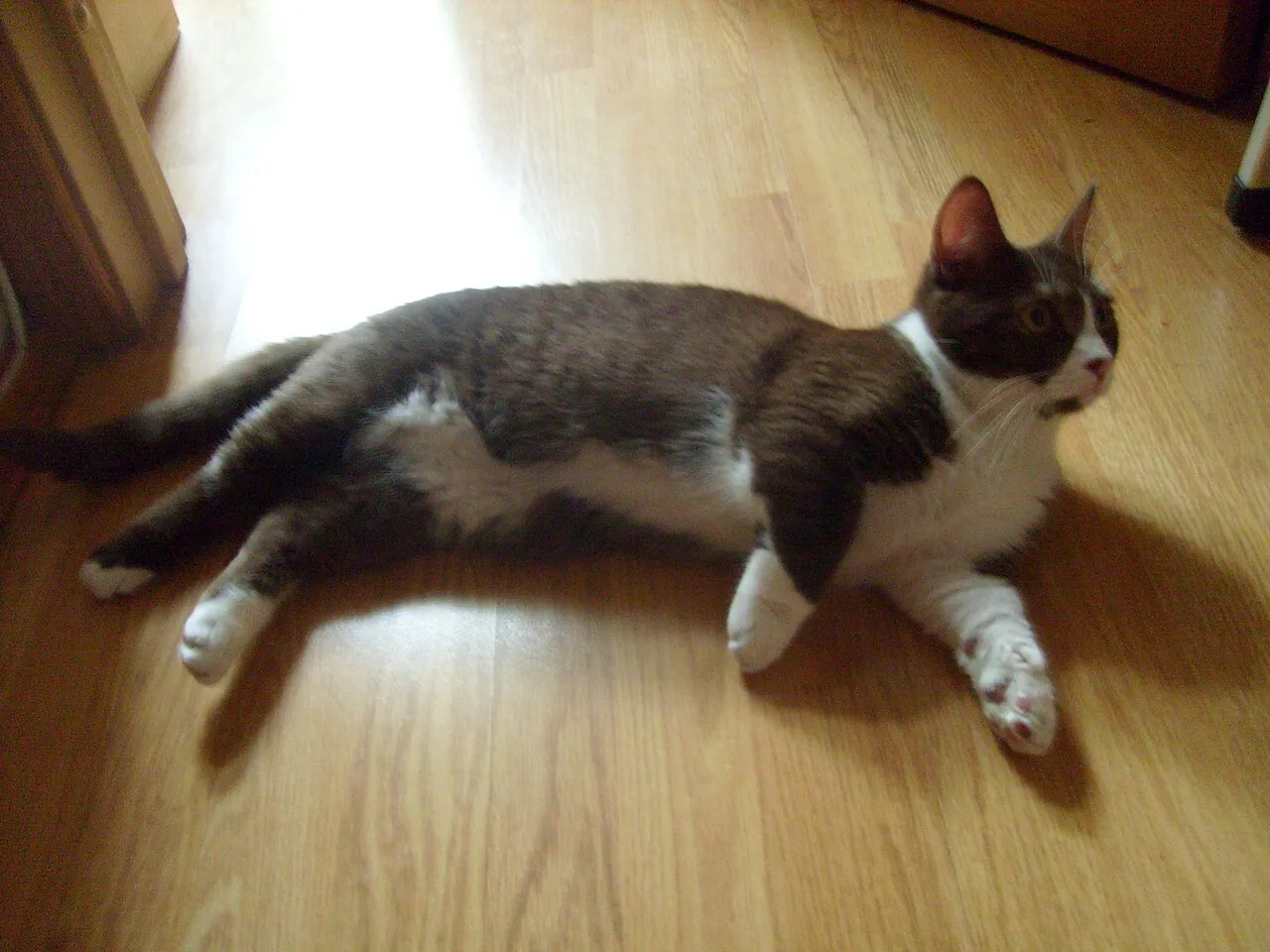
Sasha Krotov (talk) · CC BY 3.0
Brush shorthaired Munchkins once or twice a week and longhaired ones at least three times. Long belly, rear and inner-leg fur brushes the floor and tangles easily.
Short legs can make it a little awkward to twist round and groom the rear and lower back. A messy bottom or clumping fur along the back is a sign the cat needs help. For longhaired cats, a hygiene trim around the rear can make life easier.
With their bellies close to the ground, litter and dust cling readily to the underside, so a low-dust or larger-grain litter can help. Trim claws every two to three weeks and check ears and teeth weekly, as for any cat.
9. Diet and weight
Munchkins are small, so even a little weight gain is a big percentage increase. Given the load on short legs and the spine, obesity is something this breed especially needs to avoid.
| Item | Guideline |
|---|---|
| Daily energy (neutered 3.5 kg adult) | About 170–220 kcal |
| Meals | Two to four measured meals |
| Treats | Under 10% of calories |
| Body check | Ribs easy to feel; a visible waist from above |
| Weigh-ins | Monthly |
They are lively, but energy needs fall after neutering. Rather than feeding generously because the cat is active, adjust portions by body condition score. Floor-loving cats also hoover up spilled kibble, so keep the feeding area tidy.
10. Inherited disease and health
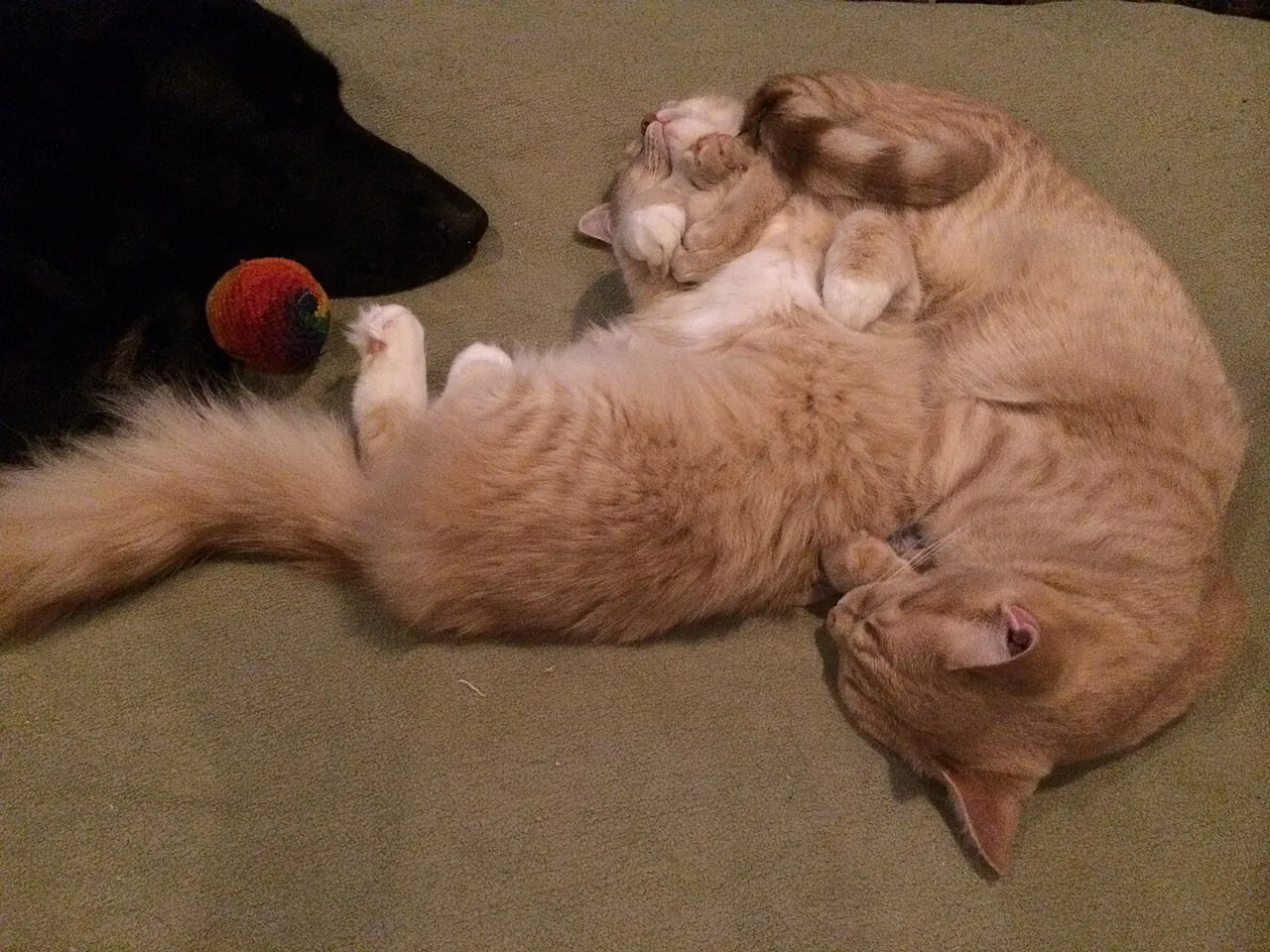
Opinion on Munchkin health is split between those who say the breed is no different from other cats apart from leg length and those who see problems rooted in a skeletal disorder. The breed is young and large long-term studies are lacking, so firm conclusions are hard to draw. What follows is for understanding only; diagnosis belongs with a vet.
10.1. Achondroplasia and joints
A Munchkin's short legs result from cartilage at the growth plates of the long bones failing to grow normally. In people and dogs, related forms of dwarfism can come with arthritis and spinal problems, so concern persists that Munchkins may face similar issues. Others point out that severe disc disease of the kind seen in Dachshunds has not been widely reported in the breed.
- Signs to watch: reluctance to climb steps or sofas, a stiff gait, front legs bowing outward more over time, pain on handling
- Tests: physical exam and X-rays of limbs and spine
- Management: weight control, non-slip floors, a low-level home, and feline pain relief or joint supplements where needed
10.2. Lordosis and pectus excavatum
Lordosis is an excessive downward curve of the spine behind the shoulders, and pectus excavatum is a sunken breastbone that flattens the chest. Severe cases can compress the heart and lungs and make breathing difficult. Some claim both are especially common in Munchkins, but they occur in other cats too and data on a breed link are thin. When choosing a kitten, check that the back doesn't dip sharply and that breathing looks easy, and ask your vet to examine chest and spine at the first visit.
10.3. Problems from crossbreeding
Because Munchkins are crossed with many breeds, inherited diseases can come in from the other side. Persian or Exotic crosses bring a risk of polycystic kidney disease and flat-faced breathing problems, while British Shorthair or Ragdoll ancestry raises hypertrophic cardiomyopathy. Crosses with the Scottish Fold, which combine two cartilage-related traits, are strongly opposed by many vets. Always find out which breeds the parents are and which DNA tests they have had.
11. Life course and lifespan
Munchkin lifespans are usually given as around 12–15 years, which on current information is broadly similar to other cats.
| Stage | Age | Care focus |
|---|---|---|
| Kitten | 0–6 months | Leg length is clear within weeks; check back line and breathing |
| Adolescent | 6 months–2 years | Neutering; the most energetic phase |
| Adult | 2–8 years | Keep lean, yearly check-ups, watch the gait |
| Mature | 8–11 years | Consider imaging to check the joints |
| Senior | 12+ years | Pain management; keep litter and water close to resting spots |
In old age, short legs make litter box lips and steps harder to manage. Switch to very low-entry boxes, non-slip mats and low beds.
12. Costs
Rough Korean prices; they vary by clinic, region and the individual cat.
| Item | Rough cost | Notes |
|---|---|---|
| Purchase price | Hundreds of thousands to several million won | Varies hugely with leg length, coat and colour |
| Starter equipment | 300,000–600,000 won | Staircase cat tree, pet steps, low litter box |
| Vaccines and neutering | 300,000–700,000 won | Varies by clinic and sex |
| Food, litter, supplies | 50,000–110,000 won a month | Small cats eat relatively little |
| Annual check-up | 100,000–400,000 won | Plus X-rays if needed |
| Joint care | Possibly tens of thousands of won extra a month | If supplements or pain relief are needed |
Food bills are modest for such a small cat, but it is wise to set money aside in case joint or spinal problems develop.
13. Before you get one
- Parent pairing: check that one parent has normal legs, and avoid sellers who repeatedly mate short-legged cats together.
- Outcross breed: ask which breed the other parent is and whether it has been tested for that breed's problems, such as PKD or HCM.
- The kitten's body: make sure the back doesn't dip severely, the chest isn't flat and breathing is easy.
- Pricing by leg length: charging more for shorter legs suggests breeding for looks over health.
- Age and seller: kittens under two months may not be sold in Korea; confirm the seller's animal sales registration and see where the kittens are raised.
- Papers and contract: get pedigree papers from a recognised registry and a contract that spells out refunds or compensation if illness appears.
- Consider rescue: short-legged cats are surrendered too, so check municipal shelters and rescue groups.
14. In popular culture
The Munchkin was a media story from the start. When it appeared at American shows in the early 1990s, newspapers and TV programmes treated the 'short-legged cat' as a curiosity, and the arguments for and against spread with the coverage.
From the 2010s, Munchkin accounts became big hits on social media and video platforms; clips of short legs chasing toys and meerkat-style poses reliably draw views. Reports from Japan described the breed sitting near the top of pet shop popularity lists for a time. Rounded, short-legged cats also turn up in character merchandise, though some voices warn that such trends shouldn't fuel careless breeding.
15. Trivia
- A Munchkin's short legs look similar to those of Dachshunds or Corgis, but the genes and mechanisms involved may differ.
- Munchkins are also famous for lying on their backs with stubby legs pointing at the ceiling.
- Breeds based on short-legged cats are sometimes lumped together as 'dwarf cats', and naming varies so much between registries that it is easy to get confused.
- They still have the feline righting reflex, but short legs may absorb less of the impact when landing from a height.
- Plenty of kittens from Munchkin litters have ordinary legs, and they share the same personality and charm.
Health notes are general information. If something seems wrong, contact a vet who treats this species.
🍽️ Can my dog or cat eat this? →
FAQ
Can Munchkins jump at all?
Most can hop onto a low chair or sofa, but leaping a metre or more like other cats is hard for them. Steps and ramps prevent strain and falls.
Do Munchkins have shorter lives?
Reported lifespans of around 12–15 years are similar to other cats, but the breed is young and long-term health data are limited, so steady weight and joint care matter.
Why don't some registries recognise the Munchkin?
Because the short legs result from abnormal cartilage development, some registries consider breeding for the trait a welfare problem. Others accept the breed, judging the health impact to be modest, so opinion remains divided.
Photo credits
Photos are freely licensed images from Wikimedia Commons. Authors and licenses are listed below.
- Munchkin cat 2 (cropped).jpg — Tasy Hong · CC0
- Munchkin cat 2.jpg — Tasy Hong · CC0
- Munchkin cat grooming.jpg — en:User:Pockle · CC BY-SA 3.0
- A Munchkin cat in a transparent bowl.jpg — Venezsian1573 · CC0
- Munchkin cat.jpg — Sasha Krotov (talk) · CC BY 3.0
- Munchkin cats.jpg — Doug McCaughan from Knoxville, TN, USA · CC BY-SA 2.0