TailVille
At a glance
Rough ranges for supplies, food and electricity in Korea (USD is approximate). Purchase or adoption fees are not included.
Calm households that want a gentle companion and are prepared to invest in joint care and regular vet checks.
Anyone choosing purely on looks, or who could not afford long-term treatment for arthritis.
1. Overview
The Scottish Fold is a cat breed defined by ears whose cartilage bends forward and down, so they sit flat against the head like a cap. The folded ears make the head look even rounder, which is why the breed is so often compared to an owl or a teddy bear. Like every domestic cat it is Felis catus, and it comes in both short and long coats; some registries call the longhaired version the Highland Fold or Longhair Fold.
The breed's signature feature and its biggest problem share a single source. The genetic change that folds the ears does not act on ear cartilage alone: it disturbs cartilage and bone development throughout the body and can cause a painful joint disease called osteochondrodysplasia. That makes the Fold one of the most debated cat breeds from a welfare point of view.
In South Korea the Fold became one of the most popular pedigree cats during the pet boom of the 2010s and was a fixture of pet shop windows. This article leaves general cat topics to the main cat article and focuses on what is specific to the Fold: its history, appearance, temperament, inherited disease and what to check before bringing one home.
2. Name and origin
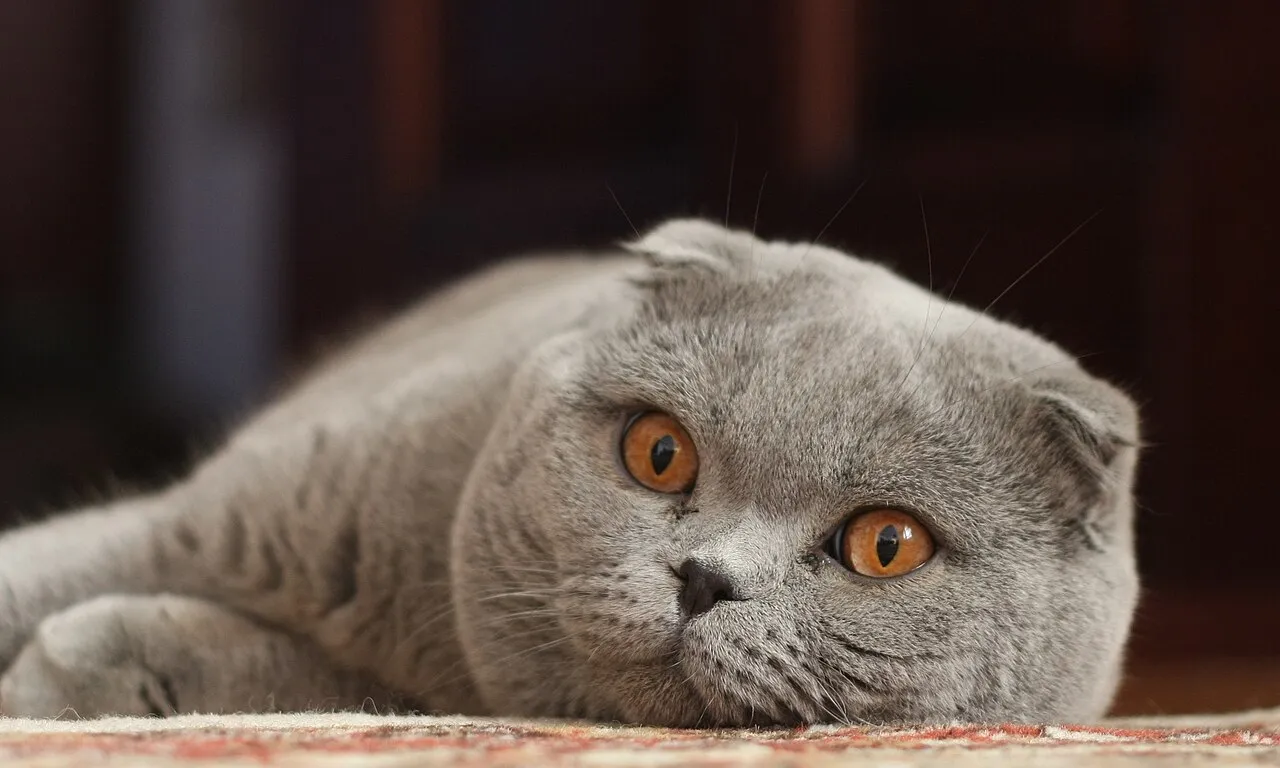
Mihai Matei · CC BY-SA 3.0
2.1. It all started with Susie
The breed's story begins in 1961 on a farm in Perthshire, eastern Scotland. A local shepherd, William Ross, noticed a white female cat with oddly folded ears on a neighbouring farm. Her name was Susie. When Susie produced folded-ear kittens of her own, Ross and his wife acquired one and began breeding.
With help from geneticists, they established that the trait is inherited as a dominant: a kitten needs only one copy of the gene from one parent to have folded ears. The cats were at first nicknamed 'lops', after lop-eared rabbits, before the name Scottish Fold, combining homeland and hallmark, stuck.
2.2. Registries and a split verdict
Early breeding took place in Britain, but the Governing Council of the Cat Fancy (GCCF), the UK's main registry, stopped registering Folds in the early 1970s, reportedly over concerns about ear problems, deafness and, as it later became clear, skeletal disease. As a result, most of the breed's development happened in the United States.
There, Folds were crossed with British Shorthairs, American Shorthairs and Exotics, which produced today's round, sturdy look. The American CFA and the international TICA recognise the breed, while others, including Europe's FIFe and Britain's GCCF, do not. Sources give slightly different dates for each registry's decisions, so check official registry material if you need exact years.
In 2016 researchers linked the fold to a variant in the TRPV4 gene, which plays a role in the healthy growth of cartilage cells. That finding strengthened the view that it is unrealistic to expect a cat to have folded ears and perfectly normal cartilage everywhere else.
3. History and popularity in Korea
There is no clear record of when the first Scottish Folds reached Korea, but the breed name began appearing regularly in the pedigree kitten market in the late 2000s. In the 2010s, photos and videos of round faces and quirky sitting poses spread across social media and demand soared; for a time the Fold was one of the pedigree cats most commonly seen in pet shops.
Popularity brought problems: fold-to-fold matings to produce more folded kittens, and volume breeding without health screening, were both criticised. More recently, vets and animal welfare groups have publicised the breed's joint disease, and prospective owners are increasingly aware of the pain that can hide behind the cute look.
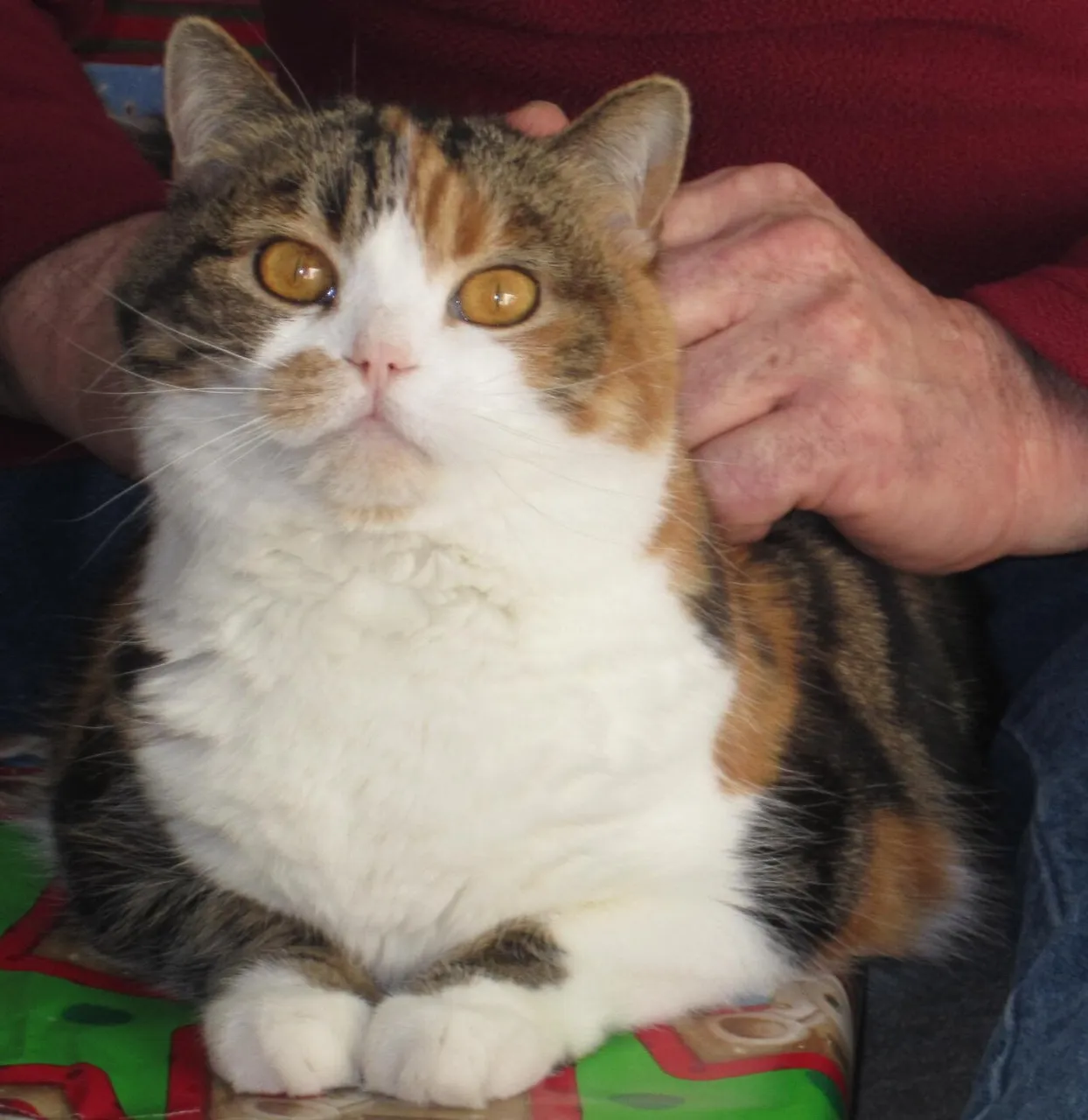
In Korea, straight-eared littermates are often sold as 'Straights' at lower prices. From a health standpoint, though, it is the straight-eared cats that are free of the fold gene and its cartilage effects.
4. Appearance and breed standard
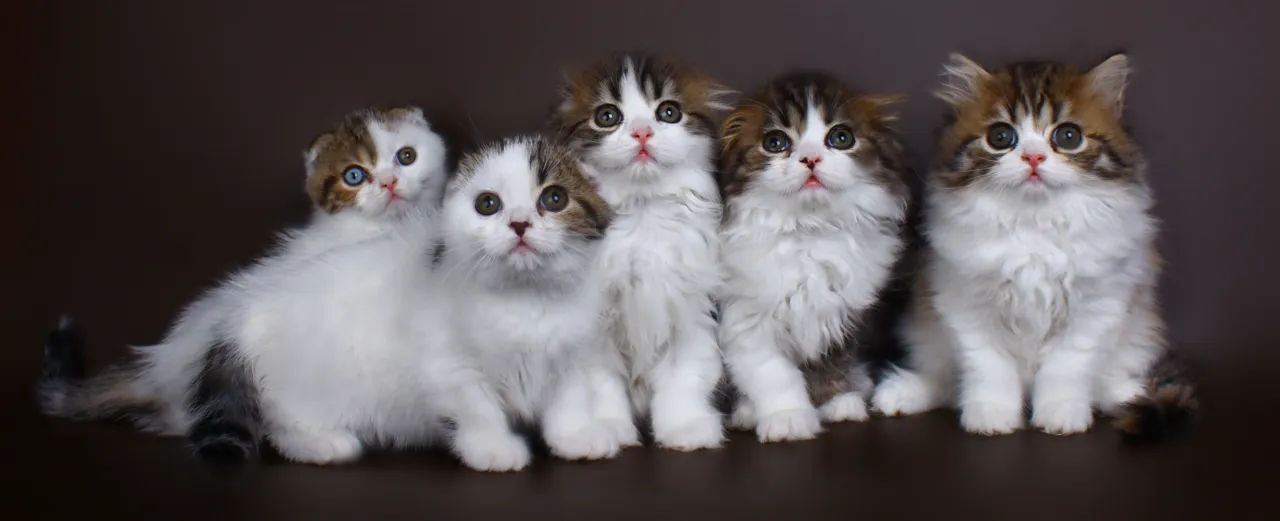
RN3DLL · CC BY-SA 3.0
The Scottish Fold is a medium-sized cat with a rounded, well-padded body. Roundness is the theme of the standard: round head, round eyes, round cheeks and round paws. The ears are small with rounded tips and are often described as single, double or triple folds depending on how tightly they bend. Shows have traditionally favoured the tight triple fold that hugs the skull, but there is no evidence that a tighter fold is healthier.
| Feature | Description |
|---|---|
| Weight | Males about 4–6 kg, females about 3–4.5 kg |
| Build | Medium, rounded and solid; short to medium legs |
| Head | Round, with a short neck and full cheeks |
| Ears | Small, folded forward and down (degree varies) |
| Eyes | Large and round; colour matches the coat |
| Tail | Medium to long and should be flexible (a short, stiff tail is a warning sign) |
| Coat | Short and dense, or long (Highland Fold) |
| Colours | Almost every colour and pattern |
All kittens are born with straight ears, and folding begins at around three to four weeks, so before then nobody can say for certain which kittens will be Folds. Tail flexibility is an important point in the standard: a short, thick tail that resists bending can indicate significant cartilage disease.
Colours range widely, from white, blue and cream to silver and brown tabby, calico and bicolour. Blue, cream and silver are especially common in Korea.
5. Temperament
Folds are generally described as relaxed, affectionate cats. They like to be in whatever room their people are in, yet tend to keep quiet company rather than demanding attention like a dog. Many have small voices and make short, soft sounds.
They usually adapt calmly to visitors and new surroundings and often do well with children. Remember, though, that these are breed averages: there are boisterous, mischievous Folds and timid ones too.
No discussion of the breed is complete without its famous postures. Sitting on the rump with hind legs stretched forward, sometimes called the 'Buddha sit', draws plenty of affectionate comments online. Vets point out that it can also be a way of taking pressure off uncomfortable hind-leg or tail joints. A posture alone does not prove disease, but if it becomes more frequent, or appears alongside reluctance to jump, a joint assessment is worthwhile.
Be careful, too, about reading inactivity purely as personality. Cats in pain move less and become quieter, so owners need to learn to tell a calm cat from one that is sore.
6. Who it suits and who it doesn't
- Suits: people who want a calm, quiet companion and can budget for regular check-ups, including joint X-rays
- Suits: owners willing to swap tall cat trees for steps and ramps and to keep the cat lean for life
- Suits: families with children who can be taught to handle the cat gently
- Doesn't suit: anyone choosing mainly on the strength of folded ears
- Doesn't suit: people who could not afford long-term pain management, supplements and repeat imaging
- Doesn't suit: anyone planning to breed casually; the genetics demand great care and breeding is banned in some countries
If you love the temperament but worry about health, consider a straight-eared cat from the same lines, a British Shorthair of similar build, or an adult cat from a shelter.
7. Exercise and play
Folds are moderately active and generally prefer floor-level fun to scaling heights. Play is best designed with joints in mind.
- Drag wand toys along the ground for the cat to stalk, and cut down on games that encourage high leaps.
- Two short sessions of 10–15 minutes are kinder to joints than one long, intense one.
- Choose staircase-style cat trees with low steps, and add pet stairs to sofas and beds.
- Snuffle mats and puzzle feeders add activity through brainwork rather than impact.
- Slippery floors strain joints; lay rugs or mats in play areas.
Even a Fold with established arthritis should not be kept completely still, as inactivity weakens supporting muscles. Work with your vet to control pain while maintaining gentle, regular movement.
8. Coat and hygiene
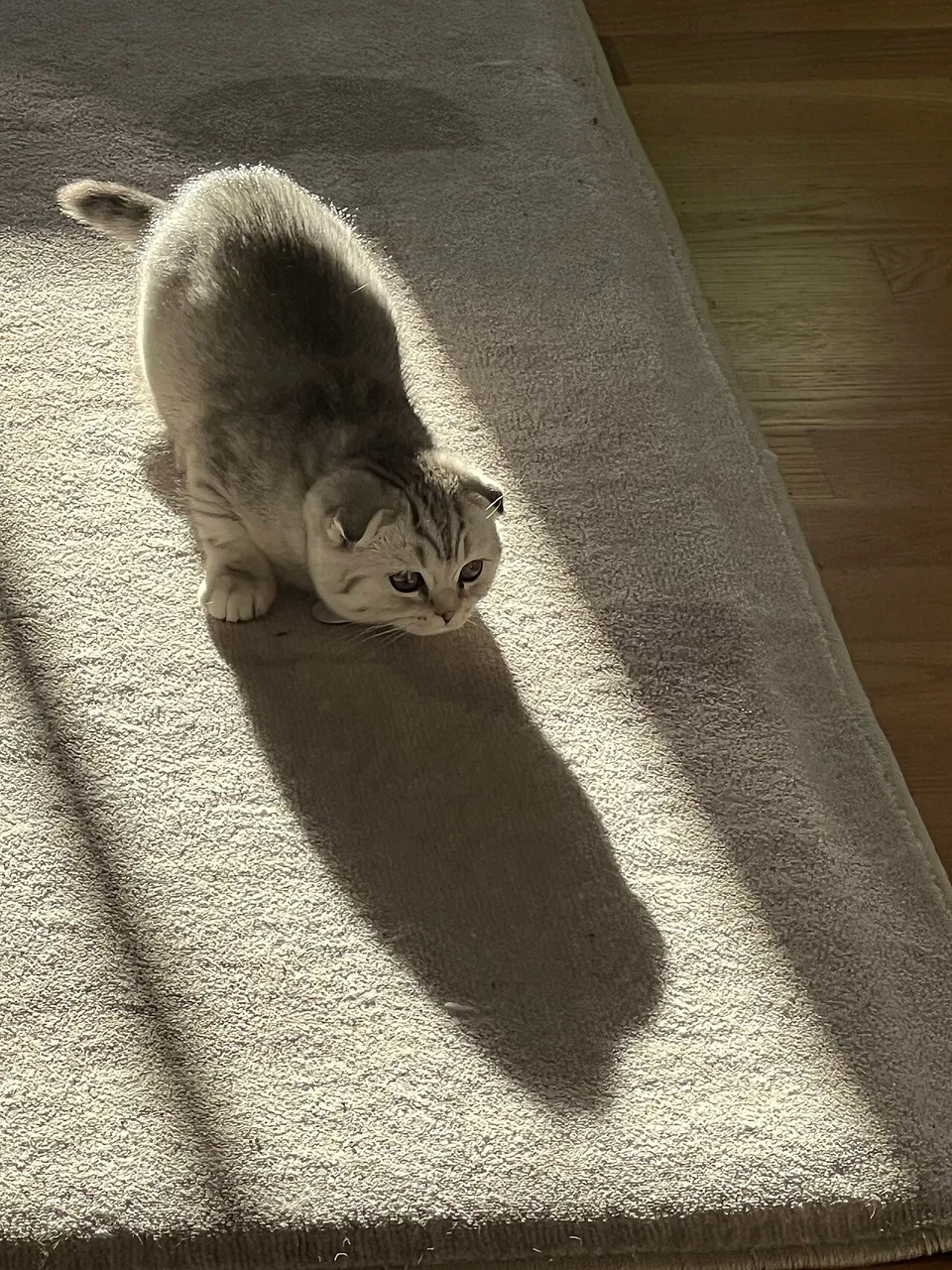
Victor Grigas · CC BY-SA 4.0
Shorthaired Folds have a dense, soft coat that needs brushing only once or twice a week, more during the spring and autumn moults. Longhaired Highland Folds mat easily around the rear and armpits and do best with combing at least three times a week.
A Fold with sore joints may find it hard to twist round and groom its back and hindquarters. Soiled fur around the bottom, or a greasy, clumped coat along the spine, can mean the cat is struggling to self-groom, so help out with brushing and spot cleaning.
Folded ears get little airflow, so wax build-up, ear mites and infections can go unnoticed. Once a week, gently lift each ear and check for odour or discoloured debris. Clean only the visible outer part, with cotton wool and a cat ear cleaner, and only when needed. Never force the ear flat open or push cotton buds into the canal.
Trim claws every two to three weeks. Less active cats wear their claws down less, and overgrown claws can curl into the pads.
9. Diet and weight
For a Scottish Fold, weight control is joint care. On a small cat, an extra kilo can mean close to a fifth more body weight bearing down on already vulnerable joints.
| Item | Guideline |
|---|---|
| Daily energy (neutered 4 kg adult) | About 180–230 kcal, adjusted for activity |
| Meals | Two to four measured meals; avoid free-feeding |
| Water | Mix in wet food; aim for roughly 40–60 ml per kg body weight per day |
| Treats | Under 10% of daily calories |
| Weigh-ins | Once a month, recorded |
There is some evidence that omega-3 fatty acids (EPA and DHA) help reduce joint inflammation, and joint-support prescription diets are available. Opinions differ on glucosamine and chondroitin, so choose supplements with your vet.
As arthritis reduces activity, energy needs drop too, and an unchanged food bowl quickly leads to weight gain. Get into the habit of recalculating portions whenever activity changes.
10. Inherited disease and health
The information below is for understanding only; diagnosis and treatment must come from a vet.
10.1. Osteochondrodysplasia
Osteochondrodysplasia is a developmental disorder in which cartilage and bone fail to grow normally, leading to deformed, painful joints. In Folds it is caused by the same variant that folds the ears. Cats with two copies, the result of fold-to-fold matings, develop severe disease at a young age. Repeated studies have found that cats with only one copy can also develop cartilage changes, though usually less severe.
- Cause: a dominant variant in TRPV4, a gene involved in cartilage development
- Areas affected: hocks (ankles), toes, tail and front-leg joints
- Signs: reluctance to jump, stiff or stilted gait, lameness, a short and thickened tail, resentment of tail handling, firm swellings around the ankles, reduced activity
- Diagnosis: physical examination plus X-rays of the tail, limbs and feet to show bone deformity and abnormal new bone
- Management: there is no cure, so the aim is comfort. Weight control, feline-licensed anti-inflammatory pain relief with kidney monitoring, omega-3s and home adaptations are the basics; other options for severe cases can be discussed with your vet.
Signs may appear in kittens of a few months or develop gradually over years. Because cats mask pain so well, periodic imaging is useful even when nothing obvious is wrong.
10.2. Other conditions to watch
- Hypertrophic cardiomyopathy (HCM): thickening of the heart muscle, a concern partly because of British Shorthair and other outcross ancestry. It is diagnosed by echocardiography; rapid breathing or sudden hind-leg paralysis is an emergency.
- Polycystic kidney disease (PKD): inherited kidney cysts that may come down through Persian and Exotic outcrosses; DNA testing and ultrasound can detect it.
- Ear infections and mites: easily missed under folded ear flaps.
- Obesity and lower urinary tract disease: linked to a sedentary lifestyle.
When buying, ask for the parents' PKD DNA results and heart screening records. After adoption, plan at least yearly check-ups covering joints, heart and kidneys.
11. Life course and lifespan
A typical Scottish Fold lifespan is often quoted as around 11–14 years, but quality of life depends heavily on how far joint disease progresses and how well it is managed.
| Stage | Age | What to know |
|---|---|---|
| Newborn | 0–4 weeks | All ears straight; folding starts at three to four weeks |
| Kitten | 1–6 months | Socialisation; start watching tail flexibility and gait |
| Adolescent | 6 months–2 years | Neutering; a sensible time for baseline joint X-rays |
| Adult | 2–7 years | Keep lean, yearly check-ups, note any joint changes |
| Mature | 7–10 years | Monitor arthritis; add heart and kidney screening |
| Senior | 11+ years | Step up pain management; rearrange life onto one level |
With age it becomes harder to tell 'slowing down' from 'too sore to move'. Hesitating before steps, accidents when climbing into the litter box, or grooming less are all reasons to ask for a pain assessment.
12. Costs
The figures below are rough Korean prices and vary a great deal by region, clinic and the individual cat's health.
| Item | Rough cost | Notes |
|---|---|---|
| Purchase price | Hundreds of thousands to several million won | Depends on pedigree, colour and ear type |
| Starter equipment | 300,000–700,000 won | Including low cat tree, pet stairs, low-entry litter box |
| Vaccines and neutering | 300,000–700,000 won | Varies by clinic and sex |
| Joint X-rays | Tens of thousands to over 100,000 won per visit | Depends on how many areas are imaged |
| Heart scan | 100,000 to several hundred thousand won | HCM screening |
| Food, litter, supplies | 60,000–120,000 won a month | More with a high share of wet food |
| Joint supplements or diets | Extra 10,000–50,000 won a month | If recommended |
| Chronic pain management | Extra tens of thousands to over 100,000 won a month | Medication and regular blood tests |
On top of normal cat costs, budget separately for joint imaging and pain relief. If you take out pet insurance, read the policy carefully: some plans exclude hereditary or congenital conditions.
13. Before you get one
- Meet the parents: one parent must be straight-eared. If both are Folds, walk away.
- Health paperwork: ask for the parents' PKD DNA results and heart screening, plus the kitten's vaccination record and vet check.
- Feel the tail and watch the gait: with the seller's permission, gently flex the kitten's tail to check it isn't stiff, and watch it walk.
- Age: selling kittens under two months is prohibited in Korea, and many experts suggest twelve weeks or older for good socialisation. Be suspicious of very young kittens sold as 'guaranteed Folds'.
- The seller: confirm they hold a registered animal sales licence and avoid anyone who won't show you the parents or where kittens are raised. Kittens from mass-breeding facilities often lack socialisation and health care.
- Contract: check that the sales contract covers what happens if illness appears, including refunds.
- Consider rescue: plenty of Folds end up in shelters and foster homes, unsold from pet shops or surrendered because of joint disease. Breed rescues and municipal shelters are worth a look.
If you are thinking of breeding, never mate two folded-ear cats, and understand that even fold-to-straight litters can develop joint disease. Some countries restrict breeding the breed altogether.
14. In popular culture
The Scottish Fold has been a particular star of the social media era. Two of the cats owned by singer Taylor Swift are widely reported to be Scottish Folds, and their frequent appearances in interviews, adverts and posts gave the breed huge visibility. Maru, the box-loving Japanese internet cat, is also often described as being of Scottish Fold lineage.
In Korea the round face and quirky sitting poses make Folds a favourite model for cat characters, emoji stickers and merchandise. At the same time, critics note that each time a celebrity's Fold goes viral, demand and careless breeding tend to follow, and some veterinary organisations have urged advertisers to stop using folded-ear cats in their imagery.
15. Trivia
- Folded ears still have working muscles, so Folds can swivel them towards sounds and flatten them when annoyed, though the signals are subtler than in other cats and easy to misread.
- The tightness of the fold is said to vary a little with age, season, heat cycles and stress.
- Straight-eared Folds are called Scottish Straights, and some registries record them under a separate name or keep them mainly for breeding.
- Crosses with the short-legged Munchkin do appear on the market; vets are particularly uneasy about them because they stack two cartilage-related traits.
- Because the fold is a visible marker of a cartilage disorder, the breed has also attracted interest from researchers studying skeletal disease.
Health notes are general information. If something seems wrong, contact a vet who treats this species.
🍽️ Can my dog or cat eat this? →
FAQ
Do all Scottish Folds have joint pain?
Severity and onset vary a lot. Some live comfortably for years, but any cat carrying the fold gene can develop cartilage changes. Regular X-rays, weight control and early pain management make the biggest difference.
Are there Scottish Folds with straight ears?
Yes. Litters usually include straight-eared kittens, often called Scottish Straights. They do not carry the fold gene, so they avoid its cartilage effects while sharing a similar temperament.
Do folded ears need extra cleaning?
Folded ears get less airflow, so wax builds up more easily. Check weekly for odour or dark debris and clean gently with a cat ear cleaner only when needed, never pushing cotton buds deep into the canal.
Photo credits
Photos are freely licensed images from Wikimedia Commons. Authors and licenses are listed below.
- Scottish Fold - CFF cat show Heinola 2008-05-03 IMG 7882.JPG — Heikki Siltala · CC BY 3.0
- Adult Scottish Fold (cropped).jpg — Mihai Matei · CC BY-SA 3.0
- Scottish Kitten.png — RN3DLL · CC BY-SA 3.0
- Straight-eared Scottish Fold.jpg — Caroline Gaston · CC BY-SA 3.0
- Scottish fold cat named Oreo.jpg — Victor Grigas · CC BY-SA 4.0