TailVille
At a glance
Rough ranges for supplies, food and electricity in Korea (USD is approximate). Purchase or adoption fees are not included.
People who want a calm, handleable larger lizard and first-time reptile keepers willing to maintain proper equipment.
Anyone without room for a large enclosure, or who doesn't want to handle insects and snails as food.
1. Overview
Blue-tongued skink is the name for lizards in the genus Tiliqua from Australia, New Guinea and eastern Indonesia. They are chunky lizards, 40–60 cm long and 300–800 g in weight, with short legs, a long body and a big, broad head. Their signature feature is the vivid blue tongue, flashed with a wide gape to startle anything that threatens them.
Among reptiles they are notably relaxed and tolerant of handling, which makes them popular with people who want a lizard they can actually hold. As omnivores they accept a flexible diet, and with the right equipment these sturdy animals can live fifteen to twenty years or more. Keepers usually just call them blue-tongues or blueys.
Adult size means you need an enclosure at least 120 cm long, a strong basking lamp and UVB lighting from day one, and humidity needs differ between species and localities. This article covers classification, history, anatomy, species and localities, behaviour, housing, diet, health, breeding, costs, pre-purchase checks and laws.
2. Name and classification
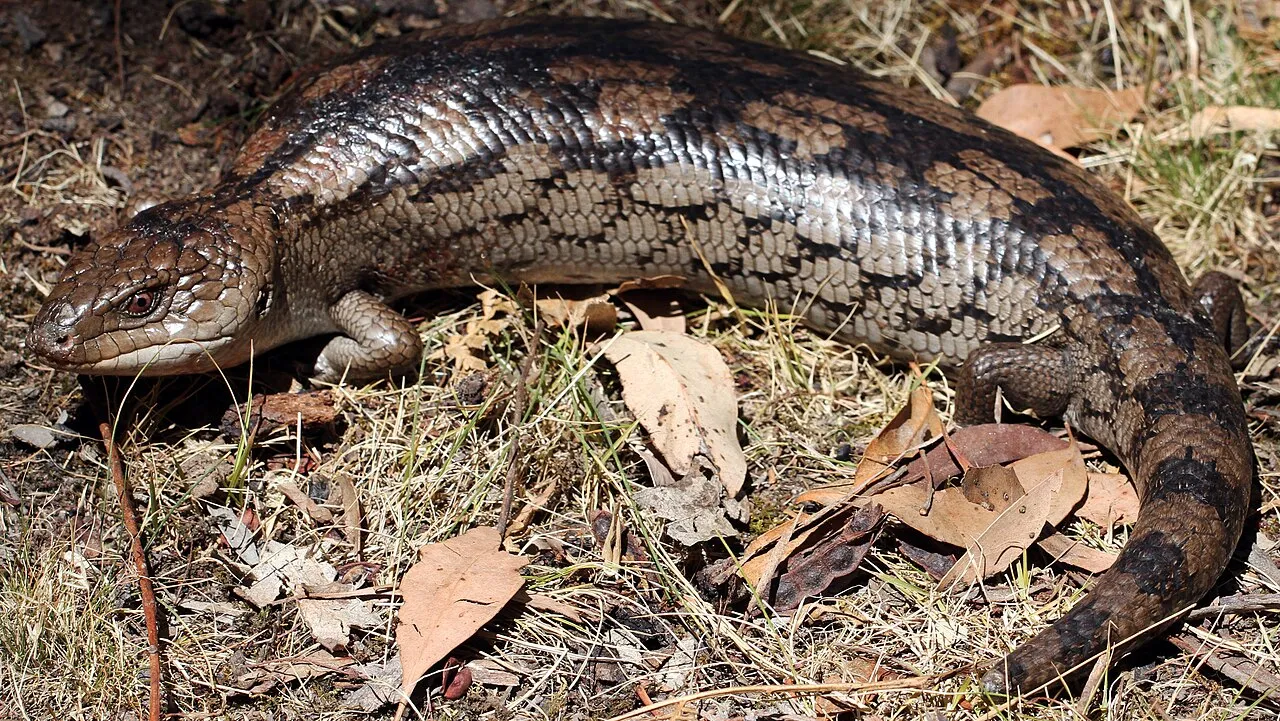
Matt from Melbourne, Australia · CC BY 2.0
2.1. Scientific classification
Blue-tongues are skinks, family Scincidae, within the squamate reptiles. Skinks are a huge family of mostly smooth, glossy-scaled lizards with short legs and cylindrical bodies; Korea's own native skinks belong here too. Tiliqua contains some of the largest members of the family.
The origin of the name Tiliqua is not clearly documented, with suggestions that it comes from an Indigenous or other regional word for a lizard. In English they are blue-tongued skinks, blue-tongues, blueys or BTS for short.
2.2. Main species
| Species | Scientific name | Range | Notes |
|---|---|---|---|
| Northern blue-tongue | T. scincoides intermedia | Northern Australia | Largest and calmest, orange flanks, most popular pet |
| Eastern blue-tongue | T. s. scincoides | Eastern Australia | Grey-brown bands, copes with cooler climates |
| Indonesian blue-tongues | T. gigas and others | Indonesia, New Guinea | Many localities such as Merauke, Halmahera and Kei |
| Blotched blue-tongue | T. nigrolutea | South-eastern Australia, Tasmania | Large blotches, cool climate |
| Centralian blue-tongue | T. multifasciata | Arid central Australia | Many narrow bands, dry habitat |
| Shingleback | T. rugosa | Southern Australia | Pine-cone scales, stumpy tail, very expensive |
| Pygmy blue-tongue | T. adelaidensis | South Australia | Small, endangered in the wild, not a pet |
Northerns and Indonesian localities dominate the trade. Species and subspecies boundaries are treated slightly differently by different researchers.
3. History
In Australia, blue-tongues are familiar garden lizards, found even in suburban backyards. They have long been known in Aboriginal cultures, and after European settlement they became valued as snail-eating garden allies. Many Australians are still delighted to find one living in their yard.
Australia has strictly banned the commercial export of its native wildlife since the 1960s. Northern and eastern blue-tongues kept in Europe and America therefore descend from a small number of animals that left legally or before the ban, bred in captivity over many generations. Indonesian and New Guinean species, by contrast, have been exported in large numbers as wild-caught animals, and some still are.
Blue-tongues reached Korea as the reptile hobby grew in the 2000s, alongside leopard geckos and bearded dragons. Cheaper Indonesian animals arrived first, but northerns later became far more popular for their gentle temperament and vivid colours. Korean keepers now breed them locally, including selectively bred colour morphs.
4. Body
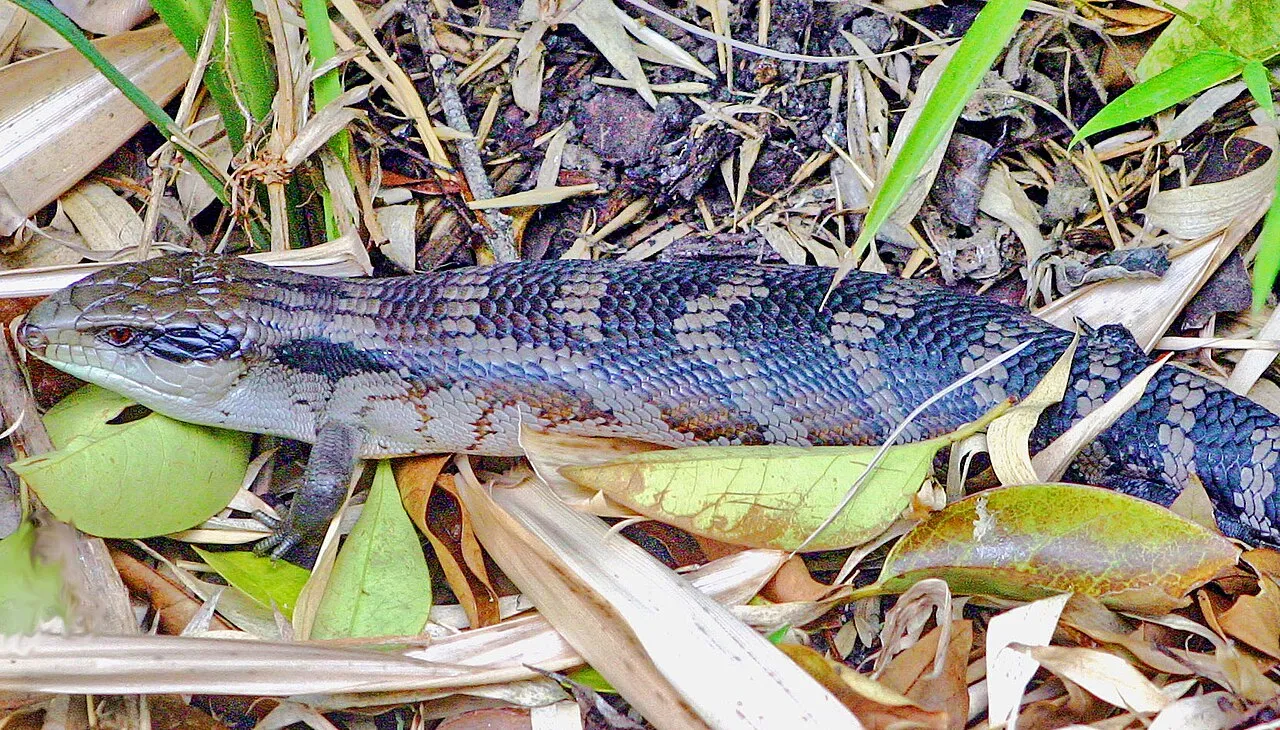
No machine-readable author provided. Malcolm Morley~commonswiki assumed (based on copyright claims). · CC BY 2.5
4.1. Body and scales
A blue-tongue's body is long and heavy like a thick sausage, with very short legs. It is covered in smooth scales backed by small bony plates called osteoderms, so it feels firmer than it looks. The head is broad and roughly triangular, and the jaws are strong enough to crush snail shells.
The tail is shorter than the body and tapers to a point. Like many lizards they can drop the tail in an emergency, but the regrown tail is shorter and differently patterned. Adults measure 40–60 cm including the tail and weigh from 300 g to more than 800 g depending on species and individual.
4.2. The blue tongue and senses
The tongue ranges from deep cobalt to violet-blue. When threatened, the skink flattens and inflates its body, hisses and gapes, suddenly revealing the blue tongue against a pink mouth. Research suggests the tongue strongly reflects ultraviolet light, making it even more striking to predators such as birds that can see UV.
The tongue also collects scent particles from the air and delivers them to the Jacobson's organ in the roof of the mouth, helping the skink locate food and read its surroundings. Eyesight is moderate and tuned to movement.
4.3. Sexing
Blue-tongues are very hard to sex by appearance. Males tend to have larger, broader heads and shorter bodies, females longer bodies, but individuals vary widely. Hemipene probing or popping is possible but should be done by an experienced keeper or vet, and the surest proof is breeding behaviour or a female giving birth. Sex is often listed as a best guess at sale.
5. Localities and morphs
Beyond species, blue-tongues come in localities that differ in colour, pattern, size and temperament. Indonesian animals are usually named after their island or region.
| Name | Group | Notes | Humidity |
|---|---|---|---|
| Northern | Australian | Grey-brown bands, orange flanks, large and calm | 40–60% |
| Eastern | Australian | Grey-brown bands, more muted colour | 40–60% |
| Merauke | Indonesian (southern New Guinea) | Grows large and long, silvery grey | 60–80% |
| Halmahera | Indonesian (Maluku) | Bold pattern, large | 60–80% |
| Kei Island | Indonesian | Smaller, black-and-white contrast, rare | 60–80% |
| Tanimbar | Indonesian | Small, bright, relatively docile | 60–80% |
| Irian Jaya | New Guinea | Large, variable pattern, debated taxonomy | 60–80% |
Decades of captive breeding of Australian blue-tongues have produced colour morphs such as hypo, albino, caramel and white lines, and some morphs sell for very high prices. Health issues have been reported in some lines, so ask sellers about lineage and health history before buying a morph.
6. Behaviour
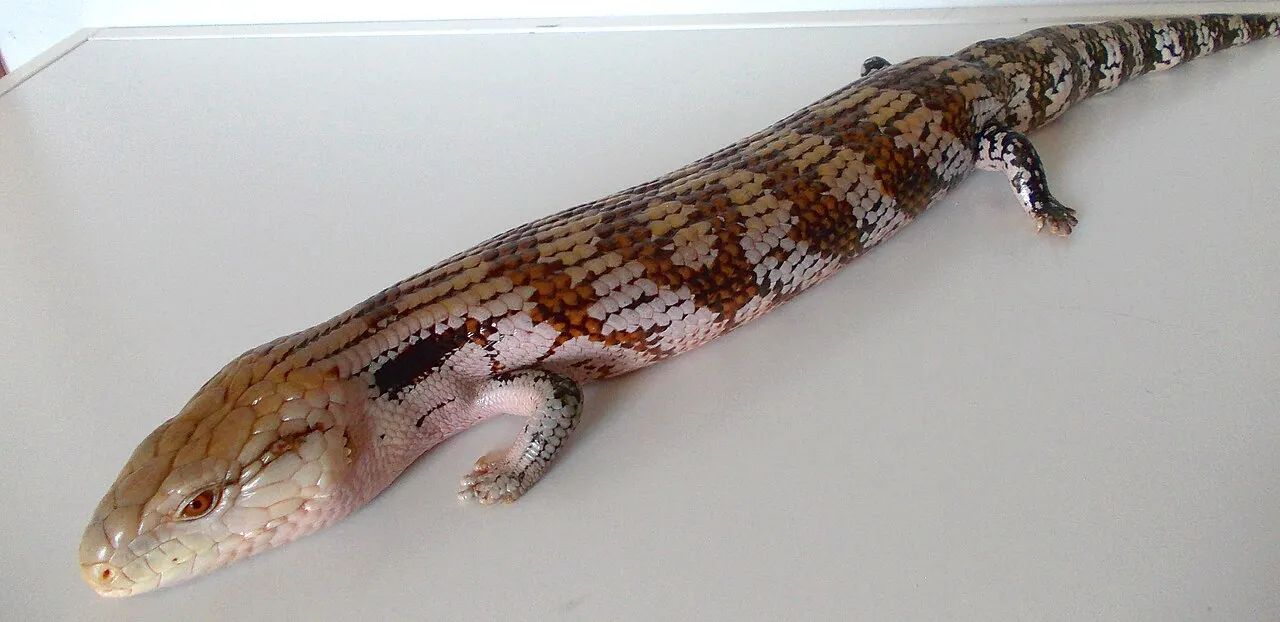
Maria Jokinen · CC BY-SA 3.0
6.1. In the wild
Wild blue-tongues live in woodland edges, grassland, scrub and suburban gardens. In the morning they leave their shelter to bask, then wander slowly in search of snails, insects, fallen fruit, flowers and carrion. Too short-legged to outrun danger, they rely on the puffed-up, tongue-flashing threat display.
They are mostly solitary, seeking partners only in the breeding season. In cooler parts of southern Australia they spend winter largely inactive in a refuge, a period of dormancy called brumation.
6.2. Behaviour at home and what it means
| Behaviour | Meaning |
|---|---|
| Flattened under the basking lamp | Warming up, normal |
| Burrowing under substrate | Resting, regulating temperature, feeling secure |
| Wandering with frequent tongue flicks | Exploring, searching for food |
| Puffing up, hissing, showing the tongue | Feels threatened; back off |
| Constant scratching at the walls | Too little space, temperature problems, breeding season or escape attempts |
| Hiding and eating little in winter | Seasonal brumation tendency |
| Gaping for long periods | Normal cooling when hot, or a possible respiratory problem |
Once used to handling, blue-tongues sit calmly on a hand exploring the room. Approach from the side rather than swooping down from above, which can feel like a bird attack, and scoop the lizard up with support under its body. Food smells on your hands may get your fingers mistaken for dinner.
7. Life stages
Blue-tongues give birth to live young rather than laying eggs. In captivity they typically live fifteen to twenty years, with some records beyond that.
| Stage | Age | Notes |
|---|---|---|
| Newborn | 0–1 month | 10–15 cm, independent from birth, starts eating after first shed |
| Juvenile | 1–12 months | Rapid growth, daily feeding, often nervous |
| Sub-adult | 1–2 years | Growth slows, temperament settles |
| Adult | From 2–3 years | Able to breed, full size |
| Senior | After 12–15 years | Less active, weight changes, possible joint problems |
Juveniles are often jumpy and hissy for the first few months but usually calm down with gentle, regular handling. Older skinks are prone to obesity and kidney problems, so weigh them regularly and arrange a yearly check-up with an exotic vet.
8. Housing
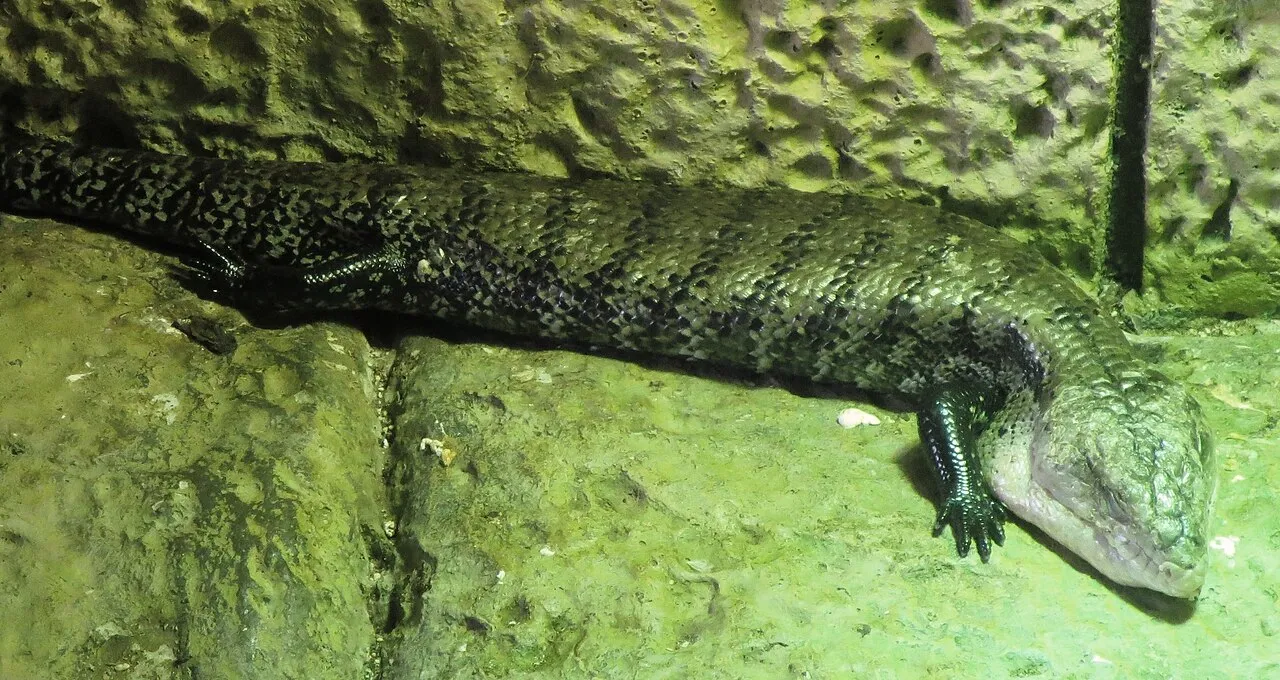
8.1. Enclosure size and substrate
As ground-dwellers, blue-tongues need floor space more than height. One adult needs at least a 120 × 60 × 60 cm enclosure, ideally 150 × 75 cm or larger. Juveniles can start smaller, but they approach adult size within a year, so buying the big enclosure first is usually cheaper.
Provide at least 10 cm of diggable substrate. Australian species do well on a soil-sand mix or aspen; Indonesian species need moisture-holding cypress mulch, coconut fibre or soil mixes. Loose fine sand on its own risks impaction if swallowed with food.
8.2. Temperature, humidity and lighting
| Parameter | Australian species | Indonesian species |
|---|---|---|
| Basking spot | 35–40°C | 33–38°C |
| Warm side | 29–32°C | 29–32°C |
| Cool side | 24–27°C | 24–28°C |
| Night | Can drop to 20–22°C | 22–24°C |
| Humidity | 40–60% | 60–80% |
| UVB | 10–12 hours a day | 10–12 hours a day |
Create the basking spot with a halogen or dedicated basking lamp on a thermostat, and check surface temperatures with an infrared thermometer. Use a UVB tube or LED fixture covering at least half the enclosure length, and replace it on the manufacturer's schedule, usually every 6–12 months, because UV output fades while visible light continues.
Too little humidity gives Indonesian species stuck sheds and respiratory trouble, while constantly damp conditions cause skin and respiratory infections in Australian species. Manage humidity by keeping the lower substrate layer moist and adjusting ventilation.
8.3. Equipment checklist
- Front-opening enclosure at least 120 cm long
- Basking lamp with thermostat, UVB fixture with reflector
- At least two digital thermo-hygrometers and an infrared thermometer
- 10 cm or more of substrate
- One hide on the warm side and one on the cool side
- Heavy, shallow water bowl large enough to climb into
- Flat stones or slate for basking and claw wear
- Food dish, calcium and vitamin supplements, mister
Blue-tongues are strong and readily tip over light décor and water bowls. Fix rocks and wood firmly, setting them on the enclosure floor before adding substrate so a burrowing lizard cannot be crushed. Housing them together is not recommended; adults can fight badly and lose toes or tails.
9. Diet
Blue-tongues are omnivores. For adults, a common guideline is 50–60% vegetables and greens, 30–40% animal protein and about 10% fruit and flowers. Growing juveniles can have a little more protein.
| Group | Examples | Notes |
|---|---|---|
| Greens and vegetables | Bok choy, kale, collards, mustard greens, dandelion, squash, courgette, green beans | Base of the diet, chop and mix |
| Protein | Crickets, dubia roaches, superworms, silkworms, farmed snails, boiled egg, cooked chicken | Dust insects with calcium |
| Prepared diets | Blue-tongue diets, quality wet foods | Partial use only; watch the fat |
| Fruit and flowers | Blueberry, mango, papaya, fig, hibiscus and dandelion flowers | Small amounts as treats |
| Age | Feeding frequency |
|---|---|
| Newborn to 6 months | Daily |
| 6 months to 1 year | Every other day |
| Adult | 2–3 times a week |
Dog and cat food were once used as staples, but they are high in fat and protein and can lead to obesity and strain on the liver and kidneys, so use them only as a minor part. Dust with calcium at every meal and a multivitamin about once a week. Avocado, onion, garlic, rhubarb and fireflies are toxic, and wild snails and insects may carry pesticides or parasites.
Obesity is extremely common. If the tail base becomes thicker than the body or skin folds bulge between the legs, cut back portions and frequency.
10. Health
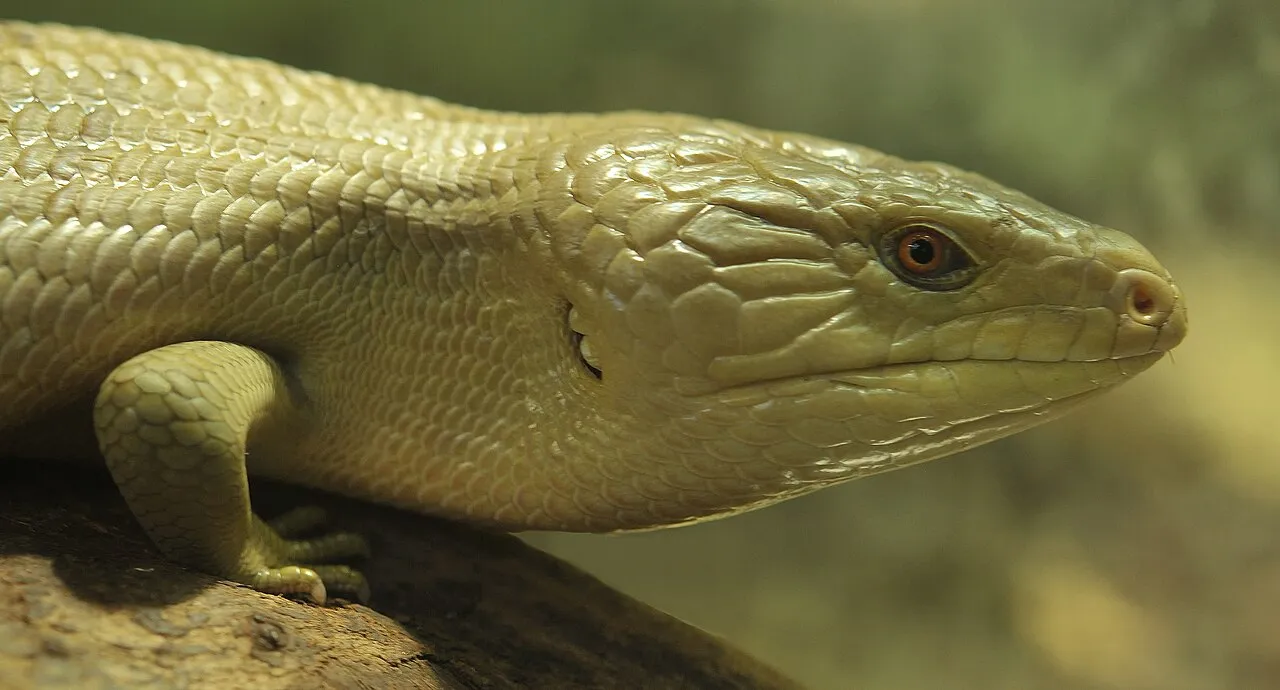
Michael Gäbler · CC BY-SA 3.0
Blue-tongues are tough, but most illness starts with husbandry problems involving temperature, humidity, UVB or diet.
| Disease | Cause | Signs | Prevention and response |
|---|---|---|---|
| Metabolic bone disease | Lack of UVB, calcium or vitamin D3 | Bent limbs, tremors, soft jaw, lethargy | Replace UVB on schedule, supplement calcium, see a vet |
| Respiratory infection | Low temperature, too wet or too dry | Nasal discharge, wheezing, open-mouth breathing | Correct conditions, exotic vet |
| Retained shed | Low humidity | Skin stuck on toes or tail tip, constricting | Raise humidity, lukewarm soaks |
| Obesity and fatty liver | Overfeeding, fatty foods | Thick tail base, inactivity | Reduce portions, more vegetables |
| Parasites | Wild-caught origin, contaminated food | Diarrhoea, weight loss, poor appetite | Faecal test, deworming |
| Mouth rot (stomatitis) | Injury, bacterial infection | Swelling, pus, refusing food | Prompt veterinary care |
| Impaction | Swallowed sand or substrate, low temperature | No droppings, bloated belly, lethargy | Use a food dish, keep temperatures correct |
See an exotic vet for swelling or pus around the mouth, noisy breathing, steady weight loss, several days without droppings plus a swollen belly, or difficulty using the legs. Reduced appetite in winter is common, but a weight loss of more than about 10% warrants a check.
Reptiles can carry salmonella. Wash your hands after handling or cleaning, and don't wash equipment in the kitchen sink.
11. Breeding
Blue-tongues are viviparous: the young develop inside the mother and are born alive. Australian species tend to mate in spring after a winter cool-down, so breeders often gradually lower temperatures and day length in winter to induce brumation. During mating the male bites the female's neck or flank hard to hold her, which can leave wounds, and incompatible animals may fight seriously, so introductions should be short and supervised.
Gestation lasts roughly three to five months. Litters are typically five to fifteen, and large northern females can produce close to twenty. The young are independent from birth and receive no parental care. They break free of their membranes, shed for the first time within days and then begin eating. Mothers may attack or eat their young, so separate them promptly and raise them individually.
Breeding is not a decision to take lightly. A litter of a dozen needs a dozen setups, lights and food, and every animal needs a responsible home. In Korea, the law is moving toward requiring licences for selling wild animals, so check the rules before selling any babies.
12. Costs
Purchase prices vary with species, locality and morph. Common Indonesian animals start in the low hundreds of thousands of won, northerns cost more, and rare morphs or shinglebacks can reach millions. The table below shows rough keeping costs excluding the animal.
| Item | Estimated cost (KRW) | Notes |
|---|---|---|
| 120–150 cm enclosure | 200,000–500,000 | Custom builds cost more |
| Basking lamp and thermostat | 50,000–120,000 | |
| UVB fixture and lamp | 50,000–120,000 | Replace every 6–12 months |
| Thermo-hygrometers, infrared thermometer | 20,000–50,000 | |
| Substrate, hides, water bowl, stones | 50,000–120,000 | |
| First check-up and faecal test | 50,000–100,000 | Varies by clinic |
| Total setup | About 500,000–1,000,000 | |
| Monthly food (vegetables, insects, diet) | 20,000–40,000 | |
| Monthly electricity | 15,000–30,000 | Higher in winter |
| Monthly substrate and supplements | 5,000–10,000 | |
| Monthly total | About 40,000–80,000 | |
| Yearly UVB replacement | 30,000–80,000 | |
| Yearly check-up | 50,000–150,000 |
Longer treatments for respiratory infections or mouth rot can run to hundreds of thousands of won. Few clinics see reptiles, so find one near you in advance and keep an emergency fund.
13. Before you get one
- Do you have space and power outlets for an enclosure at least 120 cm long?
- Are you comfortable handling insects, snails and frozen foods?
- Can you commit to fifteen to twenty years of care?
- Is there a vet nearby who treats reptiles?
When buying, ask for the exact species and locality, whether the animal is captive-bred or wild-caught, its hatch or birth date and feeding history. Mostly captive-bred species like northerns tend to settle easily, while wild-caught Indonesian animals may struggle with parasites, dehydration and stress.
A healthy skink has clear, bright eyes, clean nostrils and mouth, and a well-rounded body and tail base. It flicks its tongue with interest and feels strong when lifted. Avoid animals with visible ribs or hips, stuck shed on the toes or open-mouth breathing.
Keep handling to a minimum for the first week or two while the skink settles in, and don't panic if it refuses the first few meals. If you keep other reptiles, quarantine newcomers in a separate room for at least a month or two.
14. Laws
The blue-tongued skinks common in the pet trade are not listed under CITES. Australia bans the commercial export of its wildlife, however, so Australian species in the trade should be captive-bred abroad, and Indonesia is reported to manage wildlife collection and export through quotas. Be suspicious of sellers who cannot explain an animal's origin or claim it is wild-caught from Australia.
In Korea, amendments to the wildlife act are phasing in licensing for wildlife sellers and importers and a system specifying which species may be imported and sold. Which list blue-tongues fall under and what private rehoming requires may change, so check with the Ministry of Environment or a regional environmental office. Elsewhere, rules range from none to permits for any exotic reptile, so look up local regulations.
Never release a blue-tongue outdoors. It is unlikely to survive cold winters and could harm local ecosystems if it did. If you can no longer care for one, contact the breeder, a reptile club or a rescue organisation.
15. Blue-tongues in culture
In Australia, blue-tongues are friendly garden neighbours that appear often in picture books and nature documentaries. They feature in some Aboriginal stories, and community campaigns encourage gardeners to avoid snail bait to protect them.
Online, photos of blue-tongues poking out their tongues and videos of them waddling along are perennial favourites. Their chubby bodies and stubby legs earn nicknames like sausage or loaf, and their threat display tends to strike viewers as more adorable than scary. At Korean reptile expos and petting zoos, they are often the lizard children get to touch.
16. Trivia
- Research suggests the blue tongue reflects ultraviolet light, with the back of the tongue especially bright, maximising its startle effect.
- Shinglebacks are known to reunite with the same partner year after year, a rare example of long-term pair bonds among lizards.
- Some scientists think the hissing, puffed-up display with its broad head mimics a venomous snake.
- In Australian gardens, blue-tongues are natural pest control, eating plenty of snails and slugs.
- The pygmy blue-tongue was believed extinct for decades until it was rediscovered in the 1990s, famously after one was found inside a dead snake.
- Blue-tongues store fat in their tails, so the thickness of the tail base is a handy guide to body condition.
Health notes are general information. If something seems wrong, contact a vet who treats this species.
FAQ
Is the tongue really blue?
Yes, a deep cobalt or violet blue. Flashing it suddenly is a warning display meant to startle predators.
How do northern and Indonesian blue-tongues differ?
Northerns come from drier northern Australia and need 40–60% humidity; Indonesian forms come from tropical islands and need 60–80%. Captive-bred northerns also tend to be the calmest.
My skink barely eats in winter. Is that OK?
Seasonal appetite dips are common. If weight stays stable and behaviour is normal, monitor; if it drops more than about 10%, see a vet.
Photo credits
Photos are freely licensed images from Wikimedia Commons. Authors and licenses are listed below.
- Tiliqua scincoides scincoides.jpg — JJ Harrison (https://www.jjharrison.com.au/) · CC BY-SA 3.0
- Blotched Blue Tongue (Tiliqua nigrolutea) (8485228336) (cropped).jpg — Matt from Melbourne, Australia · CC BY 2.0
- Eastern blue tongued lizard.jpg — No machine-readable author provided. Malcolm Morley~commonswiki assumed (based on copyright claims). · CC BY 2.5
- Irianjayansinikieliskinkki (cropped).jpeg — Maria Jokinen · CC BY-SA 3.0
- Tiliqua gigas Giant blue-tounged skink LoroParque IMG 6870.JPG — Bjoertvedt · CC BY-SA 4.0
- Tiliqua scincoides (White, 1790).jpg — Michael Gäbler · CC BY-SA 3.0