TailVille
At a glance
Rough ranges for supplies, food and electricity in Korea (USD is approximate). Purchase or adoption fees are not included.
Keepers with floor space and outdoor access who want a calm, long-lived companion and can plan for its care beyond their own lifetime.
Anyone hoping to keep it in a small tank, or who cannot plan for several decades of care.
1. Overview
Tortoises are the land-dwelling members of the turtle family: animals that walk, graze and dig rather than swim. They have thick, column-like legs without webbing and, in most species, a high domed shell. The species most often kept are small Mediterranean and Central Asian tortoises such as Hermann's, Russian (Horsfield's), Greek (spur-thighed) and marginated tortoises, with red-footed, leopard and sulcata tortoises popular among keepers who have more room.
At heart, tortoises are grazing herbivores. In the wild they wander slowly through the warmest part of the day, nibbling fibrous weeds, leaves and flowers, then retreat to burrows or dense shrubs when it gets too hot or cold. That lifestyle explains their needs in captivity: a large floor area, strong ultraviolet light and a high-fibre, low-protein diet.
Owners often talk about personality. Tortoises investigate anything new, learn routines, recognise the people who feed them and stubbornly defend favourite basking spots and sleeping corners. Above all, they are long-lived. Hermann's and Russians commonly reach 40 to 60 years, and giant species can outlive several generations of keepers. Taking one on is a decision that may need a plan for after your own lifetime.
2. Name and classification
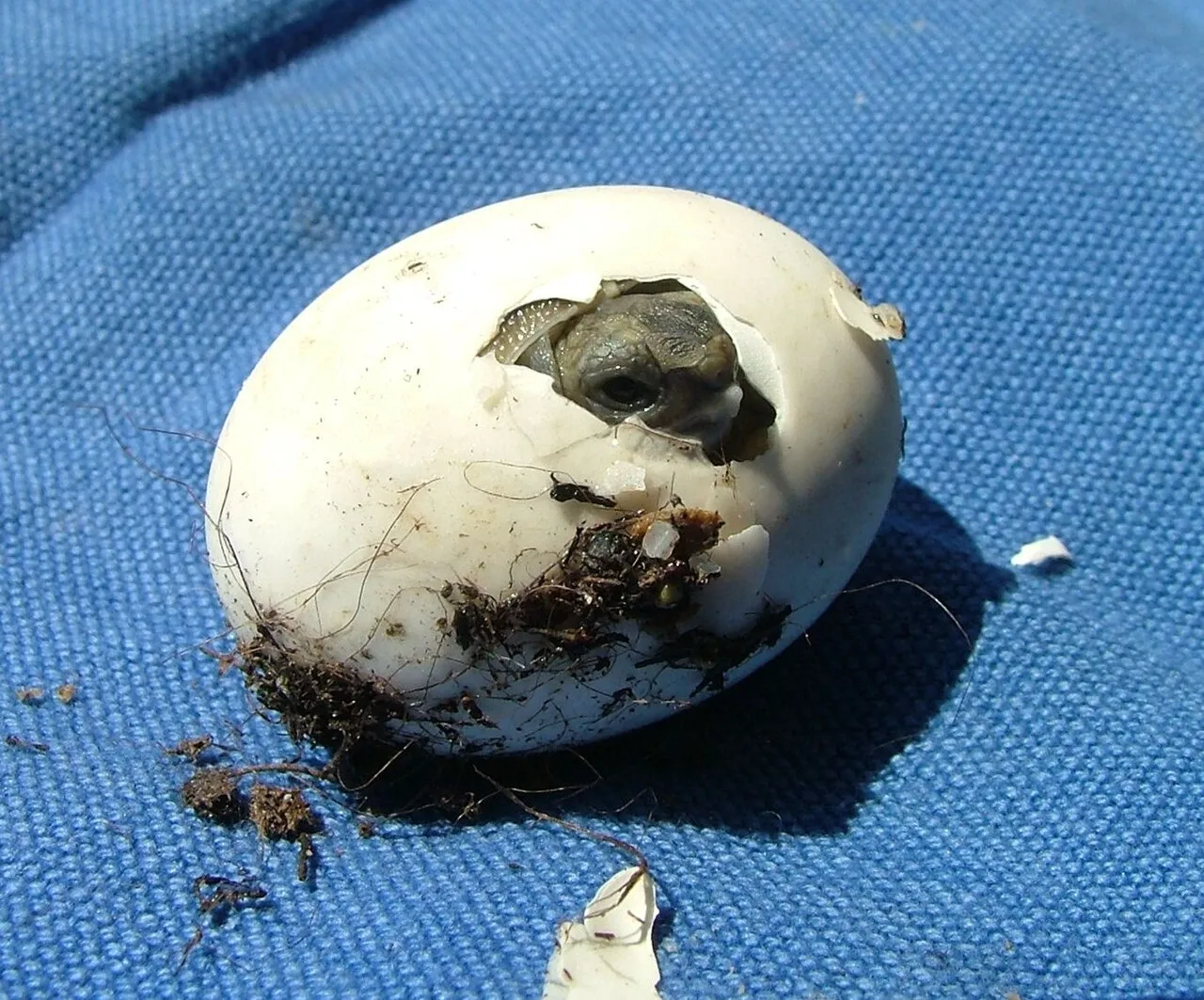
Massimo Lazzari · CC BY-SA 3.0
2.1. Names
English is unusual in having a separate everyday word for land turtles. The origin of 'tortoise' is uncertain; it is usually traced to Medieval Latin tortuca, but what lies behind that form is debated. Many languages, Korean included, simply say 'land turtle'.
The main Mediterranean genus, Testudo, is the classical Latin word for tortoise. Roman soldiers used the same word for the formation in which they locked shields overhead and at the sides, because it resembled a shell. Hermann's tortoise honours the eighteenth-century French naturalist Jean Hermann, and Horsfield's tortoise the American naturalist Thomas Horsfield. The trade name 'Russian tortoise' comes from the huge numbers exported from former Soviet territories in Central Asia.
2.2. Taxonomy and relatives
Tortoises form the family Testudinidae within the hidden-necked turtles. Around fifty living species are recognised, found on every continent except Antarctica and Australia and on many oceanic islands.
- Testudo: Hermann's, Greek or spur-thighed, marginated and Egyptian tortoises around the Mediterranean
- Horsfield's tortoise, placed in Testudo by some authors and in its own genus Agrionemys by others
- Chelonoidis: South American red-footed and yellow-footed tortoises and the Galápagos giants
- Centrochelys: the African spurred tortoise, or sulcata, of the Sahel
- Stigmochelys: the leopard tortoise of eastern and southern Africa
- Geochelone: the Indian and Burmese star tortoises
- Aldabrachelys: the Aldabra giant tortoise of the Seychelles
Box turtles spend much of their time on land and are often mistaken for tortoises, but they are pond turtles (Emydidae) with quite different needs, including higher humidity and more animal protein.
3. History
People have kept tortoises for a very long time. Ancient Greek and Roman writers mention them in gardens, and Mediterranean islanders ate them. During the age of sail, crews loaded giant tortoises from the Galápagos and Indian Ocean islands into their holds as living larders, because the animals survived months without food or water. That harvest wiped out several island populations entirely.
The mass pet trade arrived in the twentieth century. For decades, Britain and other European countries imported spur-thighed and Hermann's tortoises collected in North Africa and the Balkans by the hundreds of thousands each year. Most died within a few years, often during badly managed winters. Concern for wild populations led to CITES controls and, from the 1980s, strict European Union regulation, after which captive-bred animals gradually replaced wild-caught ones.
In Korea, tortoise keeping grew from the 2000s as reptile clubs and specialist shops spread. Early buyers often chose sulcatas, cheap and tiny as hatchlings but destined to weigh tens of kilograms. As keepers learned the hard way, small species such as Hermann's and Russians became the standard choice for beginners.
4. Body and anatomy
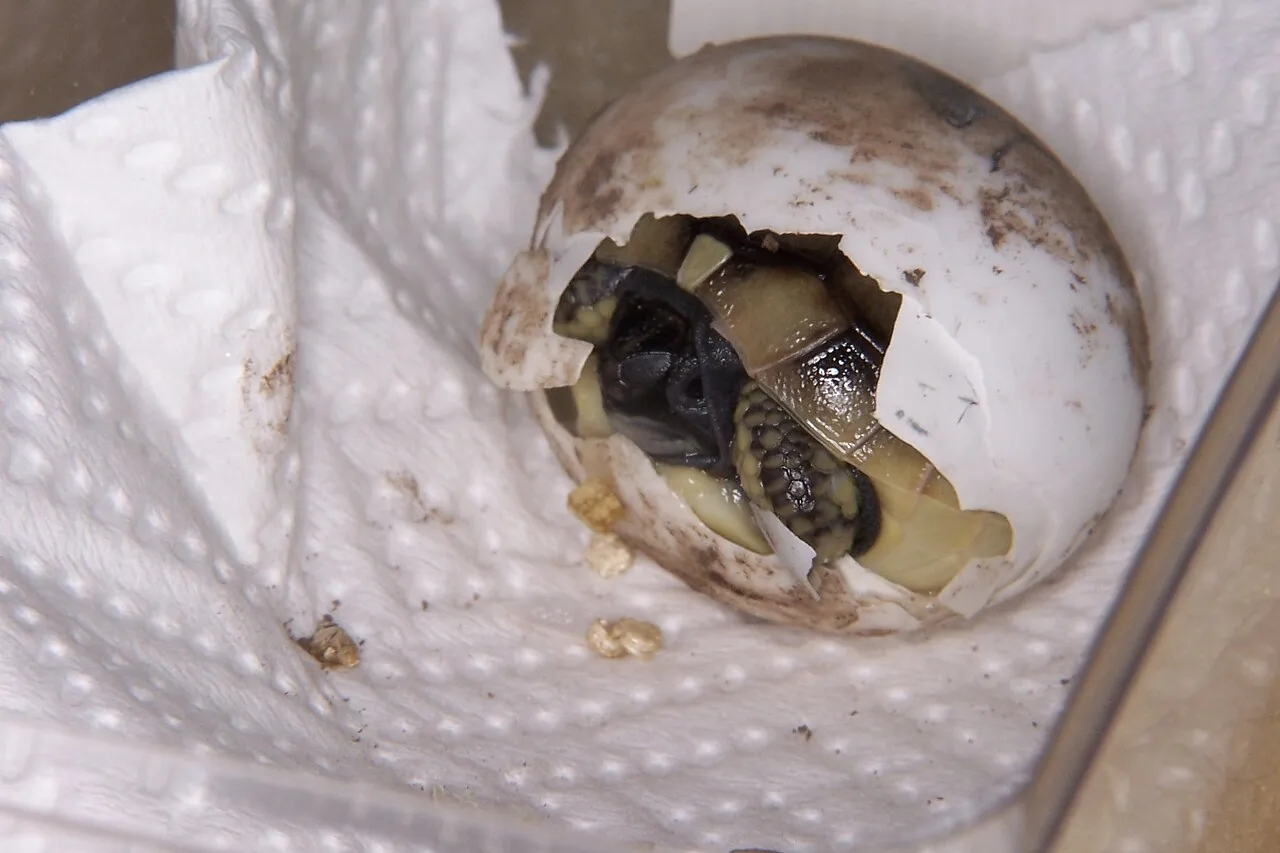
Berthold Werner · Public domain
4.1. Shell and limbs
A tortoise shell is high and heavily built to survive bites, falls and the weight of the animal tumbling down slopes. The central row of scutes are the vertebrals, those on either side the costals, and those around the rim the marginals. The marginal above the tail, the supracaudal, is usually split in two in Hermann's tortoises and single in Greek tortoises, one of the quick ways to tell them apart.
The forelegs are flattened and armoured with thick scales, serving as both shovels and shields when the tortoise withdraws. Russians have only four claws on each front foot, while other Testudo have five. Greek tortoises carry small conical spurs on the backs of their thighs, hence 'spur-thighed', and Hermann's have a horny spike at the tip of the tail. The beak grows continuously and needs coarse food and rough surfaces to keep it worn to length.
4.2. Senses
Tortoises find food by smell and colour. Before eating, they often lower the head and sniff closely. They are strongly drawn to red, yellow and orange, probably because flowers are a rich food in the wild, and that attraction can lead them to swallow red plastic or small toys left lying around.
Hearing is limited compared with ours, but they are sensitive to ground vibration and will notice your footsteps from across the room. The shell is supplied with nerves, so they feel touch and scratching on it. Some individuals clearly enjoy a gentle shell scratch and push upwards against your hand; others withdraw, and it is best to follow each animal's lead.
4.3. Sexing
Clear differences usually appear only once the shell reaches about 10–12 cm.
- Tail: males have a long, thick tail tucked sideways, with the vent partway along it; females have a short, stubby tail.
- Plastron: males have a concave rear plastron that helps them stay mounted during mating.
- Anal notch: the V-shaped gap at the back of the plastron is wider in males.
- Size and shape: in Testudo, females are usually larger and rounder.
Incubation temperature determines sex in many tortoises, so captive-hatched batches can be heavily skewed towards one sex.
5. Species kept as pets
These are the species most often seen in the pet trade. Sizes are typical adult ranges.
| Species | Origin | Adult size | Notes |
|---|---|---|---|
| Hermann's tortoise | Southern Europe | 13–20 cm, 0.7–1.5 kg | Placid, classic beginner species |
| Russian (Horsfield's) tortoise | Central Asia | 13–20 cm, 0.7–1.5 kg | Four front claws, expert digger |
| Greek (spur-thighed) tortoise | North Africa, western Asia | 15–25 cm | Many subspecies with different climate needs |
| Marginated tortoise | Southern Greece | 25–35 cm | Flared rear shell rim |
| Red-footed tortoise | South America | 25–35 cm | Humid forest species, eats some fruit |
| Leopard tortoise | Eastern and southern Africa | 40–60 cm, 15–20 kg+ | Needs a large enclosure |
| Sulcata | African Sahel | 60–80 cm, 40–100 kg | Third-largest tortoise, needs a big outdoor space |
| Indian star tortoise | India, Sri Lanka | 15–30 cm | Moved to CITES Appendix I in 2019 |
For most people, Hermann's or a Russian is the right starting point: at around a kilogram and a half fully grown, they can live in an indoor tortoise table with outdoor time in summer. Sulcatas and leopards are endearing as hatchlings but become too heavy for one person to lift within a decade, and they dig and bulldoze with real force. Red-foots come from humid forest and need 70% humidity or more and some animal protein; keeping them like Mediterranean species causes problems.
6. Behaviour
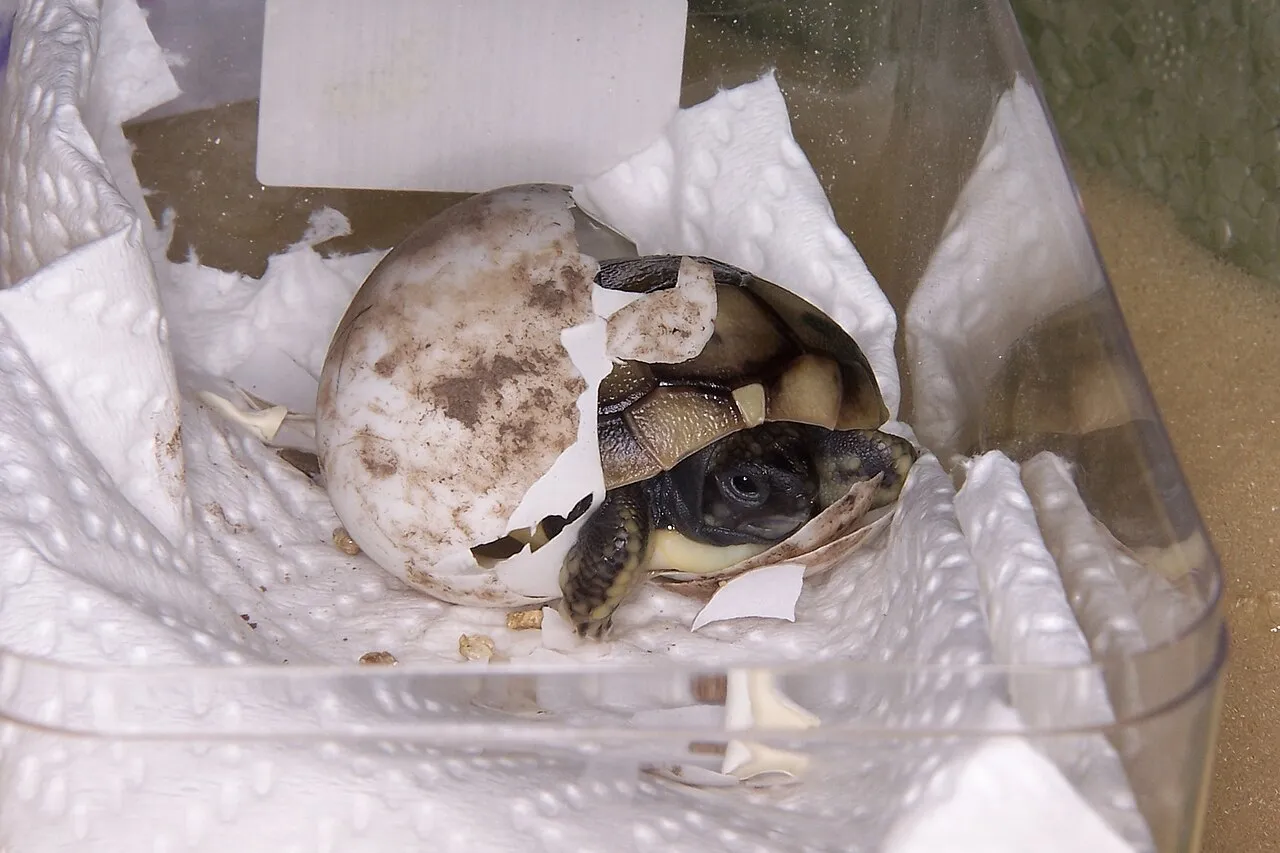
Berthold Werner · Public domain
6.1. In the wild
Hermann's tortoises live in Mediterranean scrub, field margins and stony hillsides. They warm up in early sunshine, forage through the morning, shelter from midday heat under bushes and spend the winter buried in leaf litter and soil.
Russian tortoises face harsher conditions. Their Central Asian steppes are scorching and dry in summer and far below freezing in winter, so they may be fully active for only three or four months in spring, when plants are green. The rest of the year they shelter in burrows that can extend a metre or two, alternating summer dormancy and winter hibernation. That history explains why captive Russians dig so persistently. Both species roam surprisingly widely and may walk hundreds of metres in a day.
6.2. At home and reading the signs
A pet tortoise usually emerges from its hide when the lights come on, heads straight for the basking lamp and spreads its legs to warm up. Once at temperature it forages, digs in corners or patrols the edges, and by evening it returns to the same sleeping spot. A sudden break in that rhythm is worth investigating.
- Pacing the walls and pushing at them: often a sign that the enclosure is too small, the temperature gradient is wrong, a male is in breeding mode, or the tortoise does not understand transparent glass.
- Never leaving the basking spot: the rest of the enclosure may be too cold.
- Staying in the hide: low temperatures or illness, or in late autumn the natural urge to hibernate.
- A male ramming another tortoise's shell and biting its legs: courtship or dominance. Male Testudo can be relentless and cause real injuries.
- Stretching the neck with the mouth open: sometimes just a yawn, but frequent repeats suggest a respiratory problem.
Tortoises are largely solitary and do not need company. If you keep more than one, separate males, keep one male with several females at most, or house animals individually.
7. Life stages
Tortoises live as long as people, sometimes longer. A rough outline for Hermann's and Russian tortoises:
| Stage | Age | Size | Notes |
|---|---|---|---|
| Egg | 55–90 days to hatch | 3–4 cm | Temperature affects sex and duration |
| Hatchling | 0–1 year | 3–6 cm | Very vulnerable to dehydration |
| Juvenile | 1–5 years | 6–12 cm | Fast growth; shell shape is set now |
| Subadult | 5–10 years | 12–16 cm | Maturity begins |
| Adult | 10–40 years | 13–20 cm | Breeding age, slow growth |
| Senior | 40+ years | Stable | Lower activity and appetite |
Small Testudo commonly live 40 to 60 years and sometimes beyond. Sulcatas and leopards also pass 50, and the Galápagos and Aldabra giants can exceed a century.
The juvenile years shape the shell for life. Too much protein or overly dry conditions during this fast-growth phase can fix scutes into permanent raised pyramids. In old age, beaks and nails may grow unevenly and liver and kidney function decline, making recovery after hibernation slower. The older the tortoise, the more important a pre-hibernation health check becomes.
8. Housing
8.1. Enclosure
For a tortoise, ground space is what counts; height is almost irrelevant. An adult Hermann's or Russian needs at least 120 × 60 cm and ideally 150 × 90 cm or more, with another 30–50% added for each extra animal. Open-topped wooden tortoise tables are the usual choice; large plastic tubs and indoor pens also work. Glass tanks are expensive for their footprint, poorly ventilated and confusing to tortoises, which keep trying to walk through the walls.
A substrate of fertiliser-free topsoil mixed with coir, at least 10 cm deep and 15 cm or more for Russians, satisfies the urge to dig and holds humidity. Furnish the enclosure with a hide large enough for the whole body, a wide shallow water dish, a flat stone or slate that helps wear down nails and beak, and some gentle slopes and obstacles for exercise.
From spring to autumn, an outdoor pen on warm days is ideal. Make walls at least twice the shell length high and sink them 20–30 cm into the ground to stop digging escapes. Magpies, crows, cats and dogs all take an interest in tortoises, so consider a mesh cover. Shade and water must always be available.
8.2. Temperature, humidity and light
| Zone | Temperature | Notes |
|---|---|---|
| Basking surface | 32–35°C | Check with an infrared thermometer |
| Middle | 26–28°C | |
| Cool end | 22–26°C | |
| Night | 18–20°C | Do not let it drop below about 15°C |
Build a gradient from a hot end to a cool end so the tortoise can regulate its own temperature. Hang the basking lamp about 25–35 cm above the shell, and use a ceramic heater or heat panel, which give no light, to hold the night minimum if needed. Heat mats under the whole floor leave no escape from heat and are best avoided.
UVB is a lifeline for tortoises, which rely on basking even more than aquatic species. A T5 10–12% tube covering at least half the enclosure length, on for 12–14 hours a day, is the usual set-up; some keepers use metal halide or mercury vapour lamps that supply heat and UVB together. Mediterranean and steppe species are comfortable at 40–60% ambient humidity, but hatchlings and juveniles need a damp microclimate in the substrate under their hide to prevent dehydration and pyramiding.
8.3. Shopping list
- Tortoise table or other large floor-based enclosure
- Soil and coir substrate, enough for 10–15 cm depth
- Basking lamp with ceramic socket and reflector
- UVB tube (T5 10–12%) or a metal halide lamp
- Ceramic heater and thermostat for nights, if needed
- One or two hides
- Wide, shallow water dish and a tub for soaking
- Digital thermometer-hygrometer and an infrared thermometer
- Light timer
- Flat stone or slate, which doubles as a feeding plate
- Plain calcium powder and a D3 supplement
- Kitchen scale for regular weighing
- Outdoor pen with shade, optional but valuable
9. Diet
Mediterranean and steppe tortoises, including Hermann's, Russian, Greek and marginated, evolved to eat plants that are high in fibre and low in protein and sugar. Think wild weeds rather than supermarket salad.
- Weeds: dandelion leaves and flowers, plantain, clover, sow thistle, yarrow, shepherd's purse, chickweed, mallow and hollyhock leaves
- Flowers: hibiscus, nasturtium and unsprayed rose petals
- Shop-bought greens: chicory, endive, romaine, rocket and small amounts of kale
- Hay: timothy or meadow hay mixed in adds fibre, especially in winter
Feed adults once a day, about a shell-sized portion, with one fasting day a week if you like. Feed hatchlings and juveniles daily without overdoing it. Dust plain calcium two or three times a week, and give indoor-only tortoises a D3 supplement about weekly. When picking weeds, avoid roadsides, dog-walking routes and anywhere that may have been sprayed.
Foods to limit or avoid:
- Fruit: the sugar upsets gut flora and can encourage parasite overgrowth. Mediterranean species need little or none; red-footed and other forest species are the exception.
- Protein: dog and cat food, meat, tofu and beans contribute to pyramiding and kidney damage.
- Grains and processed food: bread, rice, biscuits and cereal.
- High-oxalate or goitrogenic greens: spinach, chard and large amounts of cabbage-family vegetables interfere with calcium uptake and thyroid function.
- Toxic garden plants: daffodils, tulips, azaleas and rhododendrons, lily of the valley, foxglove and oleander should be kept well away from outdoor pens.
10. Health
Tortoises hide illness for a long time, and by the time symptoms are obvious the problem is often advanced. Weighing your tortoise every month and keeping a record is the simplest, most effective health tool you have.
- Pyramiding: individual scutes grow upwards into raised cones. Excess protein, very rapid growth, low humidity and inadequate calcium or UVB are all implicated. The deformity is permanent, so prevention is everything.
- Metabolic bone disease: a shell that flexes under gentle pressure and legs too weak to lift the body.
- Respiratory infection: runny or bubbly nose, mouth breathing from blocked nostrils and puffy eyes, often linked to cold, very dry or persistently damp conditions.
- Intestinal parasites: roundworms and flagellates are common. Faecal tests after purchase and before and after hibernation are sensible.
- Overgrown beak and nails: caused by soft food and soft surfaces, sometimes severe enough to stop the tortoise eating.
- Bladder stones: associated with chronic dehydration and high-protein diets, diagnosed by X-ray.
- Hibernation problems: rapid weight loss, half-waking in a too-warm spot, or post-hibernation anorexia, where a tortoise still refuses food two weeks after waking.
- Herpesvirus: a serious contagious disease among Testudo, with yellow plaques in the mouth and refusal to eat. Quarantine new arrivals for several months before introducing them.
Go to a reptile vet straight away for yellow or white plaques in the mouth, persistent mouth breathing with discharge, a week or more without eating outside hibernation, any shell injury or animal attack, tissue protruding from the vent, or a hibernating tortoise that loses more than about 10% of its starting weight or passes urine.
10.1. Hibernation
Wild Hermann's, Russian and Greek tortoises hibernate. In captivity, some keepers hibernate their tortoises and others keep them warm and active all winter. Both are valid, but hibernation must be done properly.
- Health check: four to six weeks beforehand, have a vet check weight, faeces and general condition. Thin, sick or very young tortoises are usually kept awake.
- Fasting: stop feeding two to three weeks before, so food does not rot in the gut, keep the tortoise well hydrated with soaks and lower temperatures gradually.
- Temperature: a stable 4–6°C is the target. Warmer, and the tortoise burns through reserves; near freezing, it risks frost damage and blindness. Many experienced keepers use a dedicated, thermostat-monitored fridge for exactly this reason.
- Monitoring: weigh every week or two. A loss of roughly 1% of body weight per month is commonly treated as normal; anything faster means waking the tortoise.
- Duration: eight to twelve weeks is a sensible starting point for adults, and a first hibernation should be shorter.
- Waking: bring it up to room temperature gradually, give a warm soak and switch on its lights. It should drink within a week and eat within two.
For a first hibernation, get help from an experienced keeper or vet. If in doubt, keeping the tortoise awake for its first winter with you is the safer choice.
11. Breeding
Hermann's and Russian tortoises usually mature at about eight to twelve years, or around 12–15 cm of shell. Mating happens mainly in spring after hibernation. The male pursues the female, rams her shell and nips at her legs, then mounts with his mouth open, often making high-pitched squeaks. Because this is stressful for the female, many keepers introduce the pair only for short supervised periods.
A few weeks later, the female digs a flask-shaped nest in warm, sunny soil with her hind legs and lays roughly two to eight eggs, sometimes producing two or three clutches a season. Eggs are moved without being turned to an incubator with vermiculite or perlite and kept at around 30–32°C, hatching in about two months, with warmer temperatures generally producing more females.
Breeding brings legal obligations. Under CITES-based national rules, captive-bred offspring may need to be registered or documented before they can be sold or given away. And finding homes for animals that will live half a century is not easy. If you plan to breed, check the paperwork with your wildlife authority first and think about where every hatchling will go.
12. Costs
These are rough Korean figures for one Hermann's or Russian tortoise in an indoor tortoise table. Animal prices vary hugely by species, paperwork and seller.
| Item | Typical cost | Notes |
|---|---|---|
| Hermann's or Russian hatchling | 200,000–600,000 won | Confirm CITES documents |
| Tortoise table (about 150 × 90 cm) | 100,000–300,000 won | Cheaper if you build it |
| Substrate | 20,000–50,000 won | |
| Basking lamp, socket, reflector | 30,000–60,000 won | |
| UVB tube and reflector | 50,000–100,000 won | Metal halide costs more |
| Ceramic heater and thermostat | 30,000–70,000 won | For winter nights |
| Hides, dishes, gauges | 30,000–60,000 won | |
| Setup total | about 400,000–900,000 won | Including the tortoise |
| Item | Monthly | Notes |
|---|---|---|
| Greens, hay, supplements | 10,000–30,000 won | Less in summer with foraged weeds |
| Electricity | 10,000–30,000 won | Higher in winter |
| Monthly total | about 30,000–60,000 won |
Add an annual UVB replacement, fresh substrate, a check-up and faecal tests, and expect around 500,000–800,000 won a year. Surgery for bladder stones or a shell fracture can cost several hundred thousand won or more. For giant species, outdoor enclosures and heated winter housing can run into millions.
13. Before you get one
- Lifespan: can you commit to 40–60 years, and name someone who will take over if you cannot?
- Space: can you provide at least 120 × 60 cm of floor space plus a sunny balcony or garden?
- Paperwork: will the seller supply CITES-related documents such as a copy of the import permit or proof of captive breeding? Undocumented animals can cause trouble when rehoming or moving abroad.
- Adult size: how heavy will this species become? For a sulcata, do you have a lifetime home for an animal weighing tens of kilograms?
- Winter: will you hibernate the tortoise or keep it awake, and do you have the equipment and knowledge for either?
- Vet: is there an exotic-animal vet nearby who treats tortoises?
- Other pets: dogs may chew on tortoises as if they were toys, so separate spaces are essential.
A healthy tortoise feels heavy for its size, has clear eyes and clean nostrils, and pushes strongly with its legs when held. Check that the scutes are smooth without pyramiding and that the mouth and vent are clean. A juvenile of 5 cm or more often copes with a new home better than a fresh hatchling.
14. Laws
Almost every tortoise species is listed under CITES, the Convention on International Trade in Endangered Species. Most pet species, including Hermann's, Russian, Greek, red-footed, sulcata and leopard tortoises, are on Appendix II, while critically threatened species such as the Egyptian, radiated and Indian star tortoises are on Appendix I.
CITES itself regulates international trade, but most countries turn it into domestic law with their own duties: permits for import, registration of animals, documentation for sale or transfer, and sometimes rules on breeding. The European Union, for example, places several Testudo species in its strictest category, which requires certificates for commercial use, and other countries have their own systems.
Before buying, find out:
- which appendix and national category the species falls under
- what paperwork you must receive and whether there is a registration deadline
- what you must do if your tortoise breeds
- whether death or transfer of the animal must be reported
Trading without documents can bring fines or prosecution, and bringing a tortoise home from holiday without permits is illegal almost everywhere. Releasing a pet tortoise is never acceptable. Rules change regularly, so check with your national wildlife or CITES authority rather than relying on old forum posts.
15. Tortoises in culture
The best-known tortoise story is Aesop's 'The Tortoise and the Hare', in which steady plodding beats arrogant speed. Zeno of Elea's paradox of Achilles and the tortoise, which argues that the fast runner can never overtake a slower one with a head start, is still used to introduce ideas about infinity and limits.
- In Kung Fu Panda, Master Oogway is an ancient tortoise who embodies patience and wisdom.
- In Michael Ende's novel Momo, the tortoise Cassiopeia can see half an hour into the future and guides the heroine to the source of time.
- In Pokémon, Turtwig, Grotle and Torterra are grass-type tortoises that eventually carry a tree on their shells.
- Legend says the playwright Aeschylus was killed when an eagle dropped a tortoise on his head. The story may be invented, but bearded vultures really do drop tortoises onto rocks to crack them.
- Lonesome George, the last known Pinta Island tortoise, became a global symbol of extinction before his death in 2012.
In East Asia, tortoises symbolise long life. In ancient China, diviners heated tortoise plastrons and read the cracks; the inscriptions on these 'oracle bones' are among the earliest known Chinese writing.
16. Trivia
- Jonathan, a Seychelles giant tortoise living on St Helena in the South Atlantic, is thought to have hatched around 1832 and is widely described as the oldest known living land animal.
- When Lonesome George died in 2012, the Pinta Island tortoise was declared functionally extinct.
- Charles Darwin heard that Galápagos islanders could tell which island a tortoise came from by its shell. Dome-shaped shells occur on islands with low vegetation, while saddle-backed shells, which let the neck stretch upward, evolved on arid islands where food grows higher.
- In 1968 the Soviet probe Zond 5 carried two Russian tortoises around the Moon and back, making them among the first animals to travel there.
- Because the ribs are fused to the shell, tortoises cannot breathe by moving them. Muscles around the limbs and neck pump air in and out instead, which is why you may see the legs twitch rhythmically as they breathe.
- An upturned tortoise rights itself by levering with its neck and legs. On a flat, slippery floor it may fail, which is one reason enclosures should have some uneven ground.
Health notes are general information. If something seems wrong, contact a vet who treats this species.
FAQ
Do tortoises need water to swim in?
No, and deep water can drown them. A shallow dish they can step into and regular warm soaks are all they need.
Must my tortoise hibernate in winter?
Wild Hermann’s and Russians hibernate, but in captivity it is optional. If you skip it, simply keep heat and lighting at normal levels all winter.
My tortoise’s shell is getting lumpy.
That is probably pyramiding, linked to rich food, very dry conditions and too little calcium or UVB. Review diet and humidity and talk to a reptile vet.
Further reading
- 🗳️ Should pet tortoises be hibernated?
- 📋 Before You Get a Pet: An Honest Checklist
- 🦎 Finding an Exotic Pet Vet and Planning Checkups
Photo credits
Photos are freely licensed images from Wikimedia Commons. Authors and licenses are listed below.
- Tortue d'Hermann 2026.jpg — Delta3051 · CC BY-SA 4.0
- T. h. hermanni neonata 3.jpg — Massimo Lazzari · CC BY-SA 3.0
- Testudo hermanni BW 1.JPG — Berthold Werner · Public domain
- Testudo hermanni BW 2.JPG — Berthold Werner · Public domain