TailVille
At a glance
Rough ranges for supplies, food and electricity in Korea (USD is approximate). Purchase or adoption fees are not included.
People with a house and yard who want a highly intelligent, trainable companion for many years.
Apartment dwellers, anyone expecting a pig that stays small, or people who are out all day.
1. Overview
'Mini pig' is the name given to small breeds and crossbreeds of domestic pig kept as companions. It is not a single breed but an umbrella covering the Vietnamese pot-bellied pig, Göttingen minipig, kunekune, Juliana and countless mixes. Pigs are clever and affectionate, come when called and can be trained, which is why they are sometimes promoted as the next pet after cats and dogs.
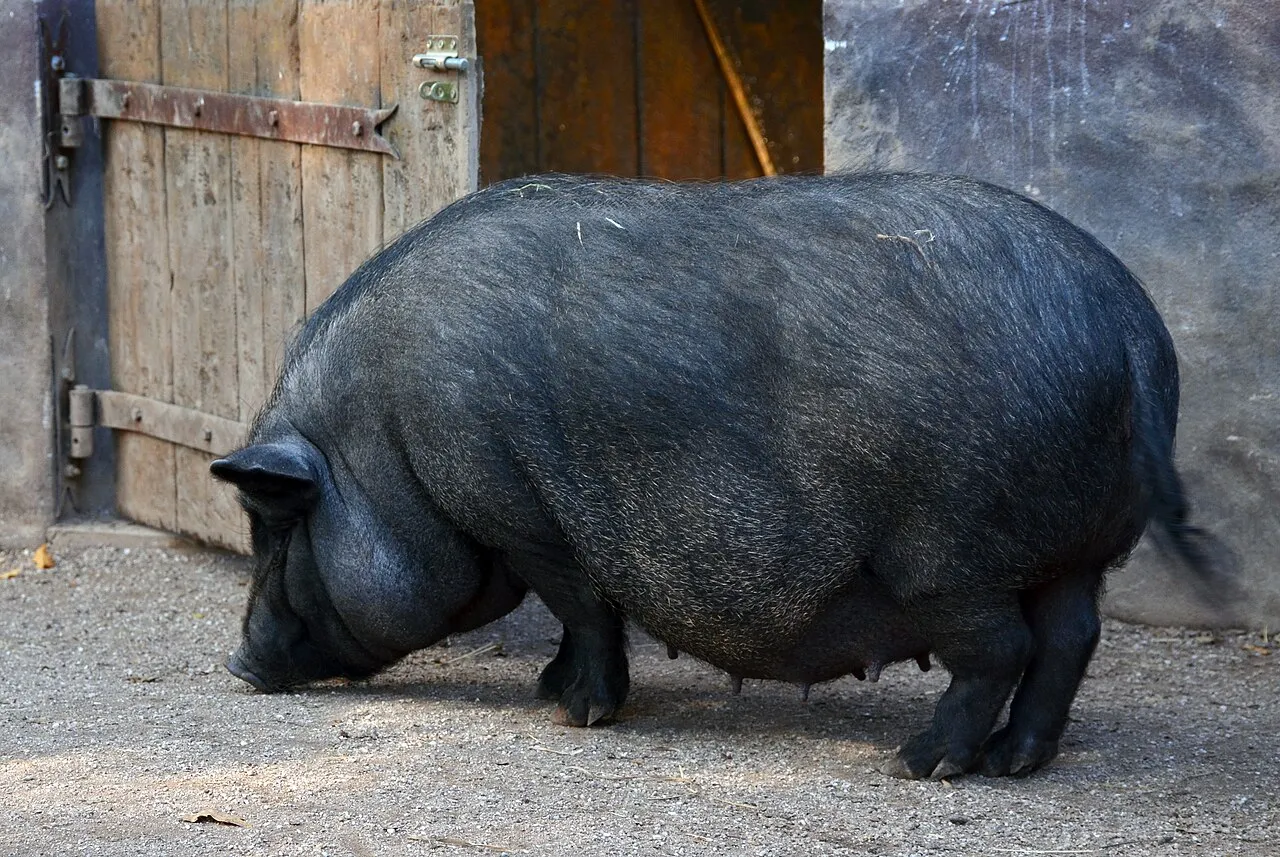
The first thing anyone considering a mini pig needs to know is that 'mini' does not mean small. It means small compared with farm pigs, which can exceed 200–300 kg. Adult mini pigs usually weigh 30–70 kg and some pass 100 kg. Adverts for 'teacup' or 'micro' pigs that supposedly stay tiny for life are, with very few exceptions, misleading. Around the world, pigs bought as piglets are surrendered in large numbers when they outgrow their homes.
Legally a mini pig is still a pig, which can bring livestock disease rules into play, and very few vets will treat one. This article gives an honest picture of mini pigs: their history, real adult size, temperament, housing, diet, health care, costs and the regulations to check before taking one on.
2. Name and classification
2.1. Scientific name
All domestic pigs, mini pigs included, descend from the wild boar (Sus scrofa) and are written as Sus scrofa domesticus or Sus domesticus. Pigs are even-toed ungulates, related to cattle, sheep and goats, and walk on two main toes of each foot. 'Mini pig' is a description of size and purpose, not a biological category.
2.2. What the labels mean
You will see miniature pig, pot-bellied pig, teacup pig, micro pig and nano pig. 'Teacup', 'micro' and 'nano' are marketing words rather than recognised breed standards. In biomedical research, 'minipig' refers to specific lines such as the Göttingen, bred for laboratory use.
3. History
3.1. From livestock to companion
Pigs were domesticated roughly 9,000–10,000 years ago, independently in south-west Asia and China. For most of history they were meat animals, but small, sway-backed village pigs were kept in parts of Asia, the Vietnamese pot-bellied pig being the best-known example.
In the mid-twentieth century, small pig lines were developed for medical research, notably the Göttingen minipig bred at the University of Göttingen in Germany, alongside several American lines. In the 1980s pot-bellied pigs were imported into Canada and the United States and became a pet craze. When the fashion faded, many pigs were abandoned, and dedicated pig sanctuaries sprang up to take them.
3.2. Mini pigs in Korea
In Korea mini pigs gained attention from the 2000s through variety shows and celebrity pets, and interest grew with social media in the 2010s. Reports soon followed of grown pigs being given up by apartment owners and of welfare problems at animal cafés. After African swine fever reached Korea in 2019, it became clear that pet pigs could also fall under disease-control measures, adding legal uncertainty to pig keeping.
4. Physical characteristics
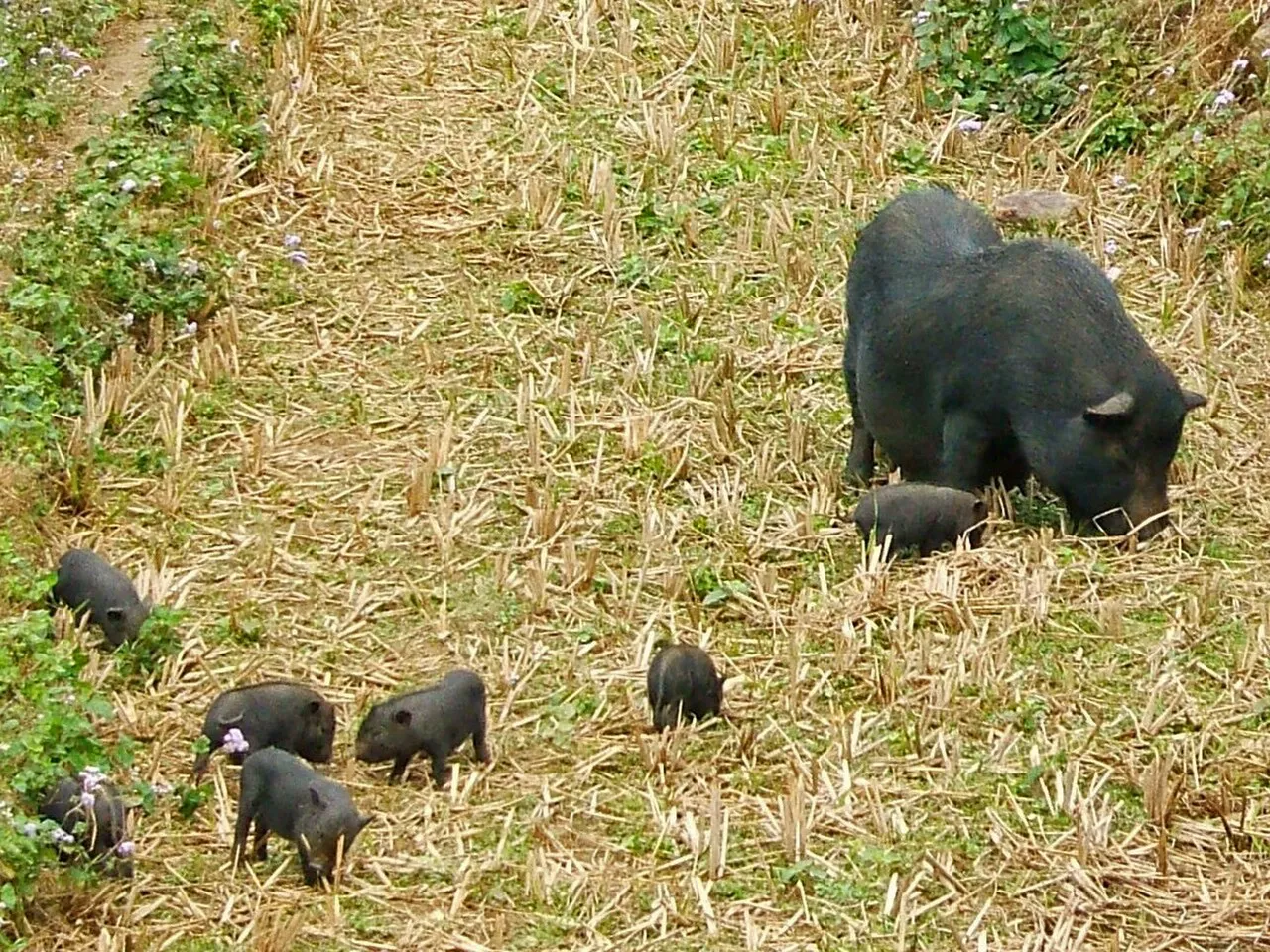
4.1. Real adult size
| Type | Shoulder height | Adult weight | Notes |
|---|---|---|---|
| Farm pig | 80–100 cm or more | 200–300 kg or more | For comparison |
| Vietnamese pot-bellied | 40–60 cm | 45–90 kg or more | Commonest pet type |
| Kunekune | 50–60 cm | 60–100 kg or more | New Zealand breed, gentle |
| Göttingen minipig | about 40–50 cm | around 35–45 kg | Mainly laboratory use |
| Juliana | 35–45 cm | around 20–40 kg | Smaller, but very variable |
| 'Teacup' as sold | varies | most exceed 30 kg | Not a breed standard |
These are rough ranges and individuals vary hugely. Pigs keep growing for three to five years, so size at one year is no guide to final size. Seeing both parents, at a verifiable adult age, is the most realistic check; some sellers reportedly show young breeding animals or misstate their ages.
4.2. Body and senses
Pigs have almost no functional sweat glands and cool off by wallowing in mud or water. The snout ends in a tough disc of cartilage used for rooting, and the sense of smell is superb, good enough to find food underground, while eyesight is comparatively poor. The coat is coarse and sparse, often shed heavily once or twice a year, and the skin tends to be dry and flaky.
Males grow tusks that keep lengthening and can become sharp; females have smaller ones. Each foot has two main toes and two small dewclaws, and hooves overgrow if not worn down on hard ground.
4.3. Sexes
Males are identified by the testes and a sheath opening on the belly, females by the vulva beneath the tail. Intact boars develop a strong odour, aggression and mounting after puberty, so neutering is considered essential for pets. Unspayed females can become moody and noisy in heat.
5. Breeds and types
| Breed or type | Origin | Notes |
|---|---|---|
| Vietnamese pot-bellied pig | Vietnam | Sway back, round belly, usually black; foundation of the pet mini pig |
| Göttingen minipig | Germany | Bred for medical research, often white |
| Kunekune | New Zealand | Hairy, with wattles under the jaw; placid grazer |
| Juliana | Europe | Often spotted, longer-legged, selected for small size |
| Ossabaw Island hog | United States | Small feral-derived island pig |
| Mixed 'mini pigs' | Everywhere | Unpredictable adult size |
Most mini pigs sold today are mixes of uncertain ancestry. The parents' size and health and the seller's honesty matter more than any breed label.
6. Behaviour
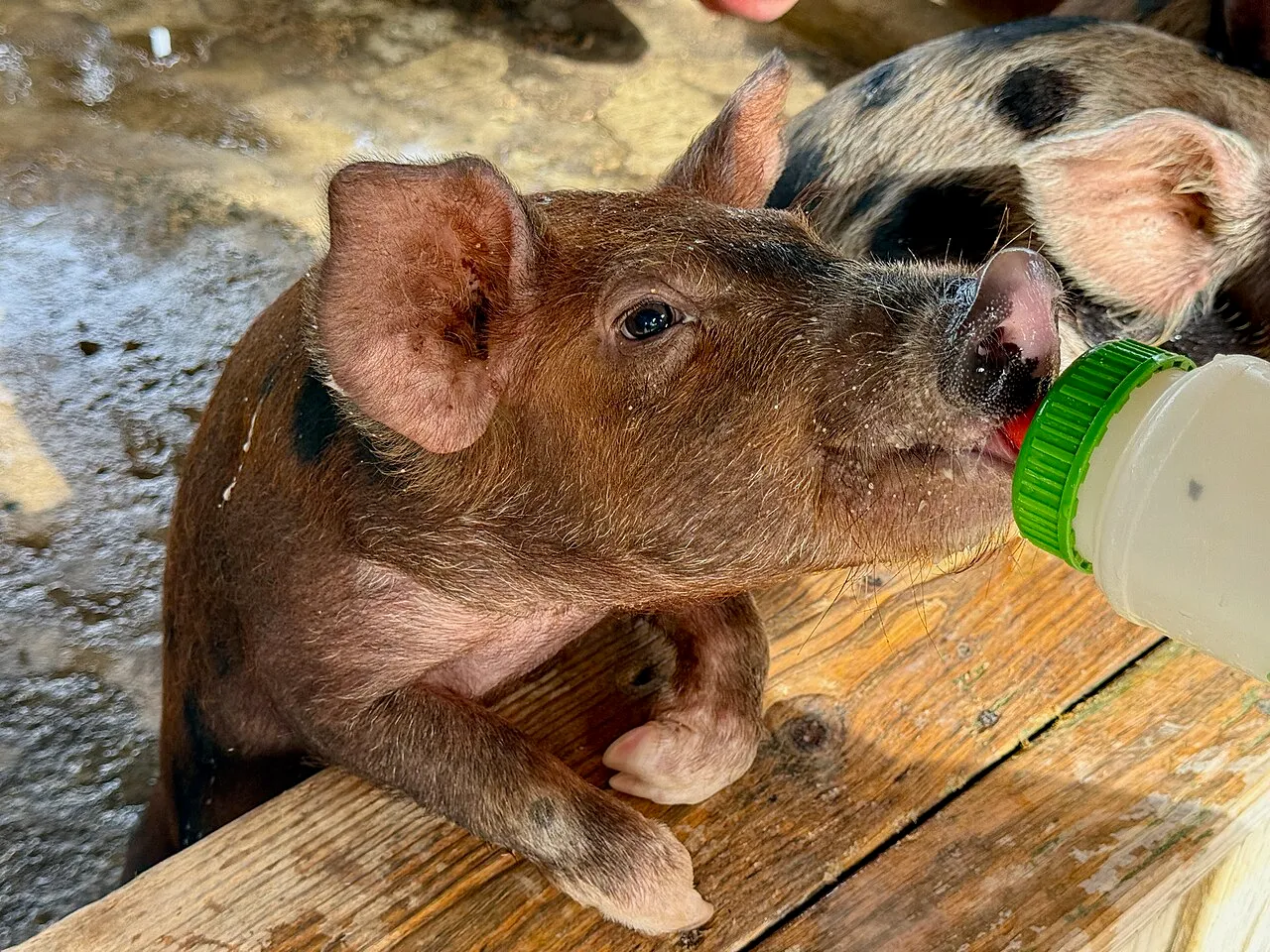
Oleg Yunakov · CC BY-SA 4.0
6.1. Natural behaviour
Pigs are social herd animals with a clear pecking order. They spend much of the day rooting with their snouts for roots, grass, grubs and fallen fruit, which is foraging, play and stress relief rolled into one. They are fastidious about keeping their bed separate from their toilet and wallow in mud to keep cool.
6.2. At home
A pet pig treats its family as its herd and will test where it stands. It may shove or head-butt children and other pets it sees as lower-ranking, so consistent rules and reward-based training from day one matter. Pigs are obsessed with food, often learn to open fridges and cupboards, and may scream at deafening volume when denied something they want.
Without somewhere to root, indoor pigs dig up carpets, flooring, sofas and wallpaper. Blanket piles, ball pits, snuffle mats and boxes with hidden food give that instinct an outlet.
6.3. Reading the signals
- Soft, short grunts: contentment and conversation
- Long, piercing squeals: fear, anger or demanding something
- Foaming at the mouth with jaw clacking: arousal or preparing to fight, especially in males
- Swinging the head sideways: a threat or dominance challenge
- Flopping over to expose the belly: relaxed and trusting, often asking for a rub
- Tail wagging: happy or excited
- Persistent nudging with the snout: demanding food or attention, or testing rank
7. Life stages
| Stage | Age | What happens |
|---|---|---|
| Piglet | 0–8 weeks | Nursing, weaned at about 6–8 weeks |
| Young pig | 2 months to 1 year | Rapid growth; key time for training and socialisation |
| Adolescent | about 6 months to 2 years | Puberty, testing boundaries |
| Still growing | about 2–5 years | Height and weight keep increasing |
| Adult | from about 5 years | Growth stops, body shape settles |
| Senior | from about 10 years | Arthritis, failing eyesight, less activity |
Mini pigs typically live 12–18 years and some approach 20, as long as or longer than many dogs. Arthritis is common in old age, so non-slip floors, a low bed and a healthy weight are important.
8. Housing
8.1. Indoor and outdoor space
Pigs can live indoors, but meeting their instincts realistically requires a yard where they can root and graze. Fencing must be strong and dig-proof, since pigs tunnel under or shove through weak barriers. An outdoor shelter should keep out rain, wind and sun and be bedded with straw or hay.
Indoors, lay non-slip mats over smooth floors to protect joints, and keep the pig on one level because stairs are difficult for them. A large bed or box piled with blankets lets the pig burrow in to sleep.
8.2. Temperature
Pigs cannot sweat effectively and overheat quickly. Above about 27–28°C provide shade, a paddling pool and a muddy wallow; light-skinned pigs can sunburn, and some owners use a vet-approved sunscreen. In winter an insulated, draught-free shelter with deep straw is needed outdoors, while indoor pigs are comfortable at normal room temperature.
8.3. Equipment checklist
- Securely fenced yard or outdoor area
- Outdoor shelter with straw or hay
- Indoor bed and plenty of blankets
- Non-slip floor mats
- Heavy, tip-proof food and water bowls
- Large litter tray and absorbent bedding
- Snuffle mat, puzzle feeders and balls
- Harness and lead for walk training
- Paddling pool for summer
- Brush and skin moisturiser
- Child locks for fridge and cupboards
- A large crate or vehicle space for transport
9. Diet
9.1. Staple food and amounts
The staple should be a dedicated mini-pig pellet. Commercial hog feed is formulated to fatten pigs for slaughter and is far too rich for a pet. A common starting point is about 1–2% of body weight per day, split into two meals and adjusted with your vet for age, activity and body condition.
| Item | Guideline | Notes |
|---|---|---|
| Mini-pig pellets | about 1–2% of body weight daily | Two meals |
| Vegetables | Similar to or slightly less than pellets | Leafy greens, cucumber, squash, carrot |
| Fruit | Small amounts | Useful as training rewards |
| Grass | Free grazing | Unsprayed areas only |
| Water | Always available | Heavy bowl |
Never underfeed a pig to keep it small. Starvation diets stunt bones and organs, cause chronic illness and shorten life.
9.2. Foods to avoid
- Chocolate, coffee, caffeinated drinks and alcohol
- Salty or fatty human food and snacks
- Ham, sausage and other processed or leftover meat
- Kitchen scraps in general, which can spread disease and are often banned as pig feed
- Avocado
- Green or sprouted potatoes
- Raw beans
- Spoiled or mouldy food
Leftovers containing meat are a known route for diseases such as African swine fever, and many countries prohibit or tightly restrict feeding them to pigs.
10. Health and disease
10.1. Common problems
| Problem | Cause | Signs | Prevention |
|---|---|---|---|
| Obesity | Overfeeding, rich feed, little exercise | Fat folds over the eyes, difficulty walking | Portion control, walks and rooting |
| Arthritis and leg problems | Obesity, slippery floors, age | Limping, struggling to rise | Weight control, non-slip floors |
| Overgrown hooves | Not worn down on hard ground | Abnormal gait, pain | Trimming every few months |
| Overgrown tusks | Natural growth in males | Injuries to people or pets | Regular tusk trims |
| Dry, flaky skin | Dry air, diet | Scaling, itching | Moisturiser, balanced diet |
| Parasites | Mites, mange, worms | Itching, hair loss, weight loss | Routine deworming and checks |
| Heatstroke | Heat, no shade | Heavy breathing, lethargy | Shade and water |
| Reproductive disease | Unspayed females | Uterine tumours | Discuss spaying |
Pigs tend to hide illness, so watch for subtle changes in appetite, droppings and gait.
10.2. Neutering, vaccines and finding a vet
Unless you plan to breed, neuter males within the first few months and spay females at a suitable age to prevent odour, aggression and reproductive disease. Vaccination and deworming schedules depend on local disease risks, so follow your vet's advice.
The biggest practical hurdle is veterinary care. Most companion-animal clinics have no pig experience, and anaesthesia in pigs is tricky. Find a farm-animal vet or exotic clinic that treats pigs before you bring one home. Refusing food, being unable to stand, laboured breathing or spreading red patches on the skin all need urgent attention.
11. Breeding
Pigs reach puberty within months, and gestation lasts about 114 days, traditionally remembered as three months, three weeks and three days. Mini pig litters are commonly reported at around four to eight piglets. Breeding is easy, which is exactly why it so often leads to surplus pigs and abandonment.
With so many mini pigs already needing homes, breeding at home is not recommended. Every piglet needs space and a home for up to fifteen years or more, and selling or transferring pigs may fall under livestock rules. Breeding very young or closely related animals to produce smaller pigs also causes health problems.
12. Costs
Rough 2026 ranges for Korea; actual costs depend heavily on housing and vet access.
| Item | Estimated cost (KRW) | Notes |
|---|---|---|
| Pig | hundreds of thousands to millions | Varies hugely by seller and line |
| Fencing and outdoor shelter | 500,000–2,000,000 or more | Depends on the yard |
| Indoor gear (mats, bed, bowls, tray) | 200,000–500,000 | |
| Neutering | several hundred thousand or more | By clinic and weight |
| First vet visits and deworming | 100,000–300,000 | |
| Start-up total (excluding pig) | about 1,000,000–3,000,000 | |
| Monthly feed and vegetables | 80,000–150,000 | Adult pig |
| Monthly bedding and supplies | 30,000–80,000 | |
| Hoof and tusk trims | tens of thousands to over 100,000 each | Every few months |
| Emergency care or surgery | hundreds of thousands to millions | Anaesthesia is costly |
Add transport, farm-call fees and the challenge of finding pet-sitting: almost no boarding facilities accept pigs.
13. Before you get one
- See the parents: meet both, and confirm they are genuinely adult, at least three to five years old. A piglet's size guarantees nothing.
- Distrust 'teacup' and 'micro' claims: pigs that stay tiny for life are essentially a myth.
- Housing: you realistically need a house with a yard; check lease or building rules too.
- Local rules: ask your agriculture or council office what is required to keep a pig as a pet.
- Vet: line up a pig-experienced vet before you commit.
- Neighbours: think about screaming and the possibility of complaints.
- Time: can you provide hours of interaction and rooting every day?
- The long view: plan for fifteen years or more, including moves and family changes.
- Consider adoption: sanctuaries and rescuers rehome surrendered mini pigs, and adopting an adult means you know exactly how big it is.
14. Laws and regulations
The legal position of pet pigs is often unclear and differs widely between countries. The following is general guidance only; check with your national agriculture ministry and local authority before buying.
- Livestock status: in many jurisdictions a pig is legally livestock regardless of why it is kept. Owners may need a holding or herd number, must record or license movements, and may be subject to disease surveillance.
- Disease control: outbreaks of diseases such as African swine fever or foot-and-mouth disease can trigger movement bans, testing or, in the worst case, culling orders that may extend to pet pigs.
- Feeding scraps: feeding catering waste or kitchen scraps to pigs is illegal in the EU, the UK and many other places, and Korea restricted food-waste feeding after African swine fever arrived in 2019. Never feed a pet pig leftovers containing meat.
- Zoning: local zoning or council rules may ban livestock, pigs included, in residential areas.
- Animal welfare: cruelty and abandonment laws apply to pet pigs as to other animals.
- Housing: leases and homeowners' association rules frequently forbid pigs.
In Korea specifically, the livestock and animal disease acts treat pigs as livestock, and how they apply to a single pet pig can vary, so ask the livestock department of your city or county office directly.
15. Pigs in culture
Pigs loom large in culture east and west. In Korea, dreaming of a pig is said to bring wealth, prompting many dreamers to buy lottery tickets, and a pig's head traditionally graces ritual offerings. The pig is the last of the twelve zodiac animals, and 'golden pig' years attract particular excitement.
In English-language stories, Wilbur in E. B. White's Charlotte's Web, the film Babe and the cartoon Peppa Pig are beloved, while George Orwell's Animal Farm made pigs a lasting symbol of power corrupted. In the 2010s, celebrity pigs on social media fuelled the mini pig craze; several of the most famous later turned out to have grown much larger than buyers expected.
16. Trivia
- Pigs have been shown in experiments to use a mirror to locate hidden food, a sign of impressive cognitive ability.
- Despite the phrase 'sweating like a pig', pigs barely sweat at all.
- Wallowing is not about dirt: mud cools the body and protects the skin from sun and insects.
- Pigs were traditionally used to hunt truffles in France, but their habit of eating the find helped dogs take over the job.
- Pig organs and skin resemble ours in many ways, so minipig lines are important in medical and transplant research.
- Most pigs learn their names quickly and can pick up simple tricks within weeks.
- Critics point out that photos of 'still tiny' adult mini pigs are often framed to avoid any scale reference such as a person or a piece of furniture.
Health notes are general information. If something seems wrong, contact a vet who treats this species.
FAQ
How big do mini pigs get?
It varies, but most adults weigh 30–70 kg and some pass 100 kg. Pigs keep growing for three to five years, so piglet size tells you very little.
Can I keep a mini pig in an apartment?
We don't recommend it. Their size, rooting instinct and loud screams stress both pig and neighbours, and many buildings prohibit them.
Can pigs be litter-trained?
Yes. Pigs naturally keep their toilet away from their bed, so they learn to use a litter area or a spot outside. Adults need a very large tray.
Photo credits
Photos are freely licensed images from Wikimedia Commons. Authors and licenses are listed below.
- Haengebauchschwein Sus scrofa f. domestica Wildpark Poing-01.jpg — Rufus46 · CC BY-SA 3.0
- Cochon Göttingen Zoo d'Amneville 28092014 03.jpg — Vassil · CC0
- Lon i Sa Pa, cropped.jpg — Viethavvh · Public domain
- Mini pig eating - 4.jpg — Oleg Yunakov · CC BY-SA 4.0