TailVille
1. Overview
Anyone who has seen tiny green lights drifting and blinking above a stream on a summer night tends to remember it. Those lights belong to fireflies, beetles of the family Lampyridae, with more than 2,000 species described worldwide.
Firefly light is produced by a chemical reaction inside the body. It gives off very little heat, so it is often called cold light. It serves as a courtship signal and, in many species, as a warning to predators that the insect tastes bad.
Korea has several species, including Aquatica lateralis, Pyrocoelia rufa and Luciola unmunsana. Once common across the countryside, they have declined sharply because of pesticides, channelised streams and artificial light at night. Firefly habitat around Muju in North Jeolla is protected as a Natural Monument, and the town hosts an annual firefly festival.
Fireflies need clean water, dark nights and plenty of snails to eat, so a place with fireflies is generally a sign of healthy nature.
2. Name and classification
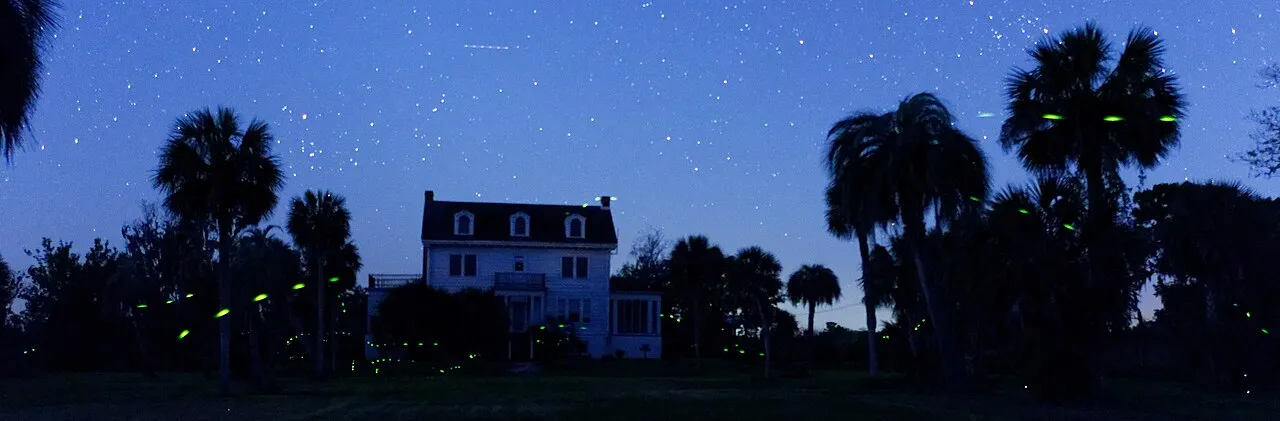
Fireflies are beetles in the family Lampyridae, from the Greek lampein, to shine. Despite being called flies or bugs, they are true beetles with hardened forewings. English speakers use firefly or lightning bug depending on region.
The Korean name banditbul-i combines bandi, the old word for the insect, with bul, fire. Dictionaries distinguish banditbul-i, the insect, from banditbul, its light. An older folk name, gaettong-beolle, literally dung bug, reportedly came from the insects often being seen around damp manure heaps and grassy ditches.
| Name | Scientific name | Adults appear | Larval habitat | Notes |
|---|---|---|---|---|
| Ae-banditbul-i | Aquatica lateralis (formerly Luciola lateralis) | June to July | Water: paddies, streams | About 1 cm, larvae eat freshwater snails |
| Papari-banditbul-i | Luciola unmunsana | May to June | Land | Appears early, flashes quickly |
| Neut-banditbul-i | Pyrocoelia rufa | August to September | Land: grass, woodland edges | Largest Korean species; female nearly wingless |
A few other species have been recorded in Korea. Scientific names have shifted with recent taxonomic work, so sources may differ.
3. Evolution
Fireflies belong to a group of beetles that includes net-winged beetles and is related to click beetles. Bioluminescence is not unique to them: some click beetles and the South American railroad worms glow too. Genetic studies debate whether these groups evolved light independently or inherited it from a shared ancestor.
Many researchers think firefly light began as a warning rather than a courtship signal. Larvae do not mate, yet the larvae of almost every firefly species glow. The likely story is that chemically defended larvae advertised their unpalatability, and adults later co-opted the glow for finding mates.
A firefly relative preserved in Burmese amber roughly 100 million years old appears to have a light organ, suggesting that glowing beetles may have flickered through Cretaceous nights. Estimates of exactly when firefly lineages diverged vary between studies.
4. Range and habitat
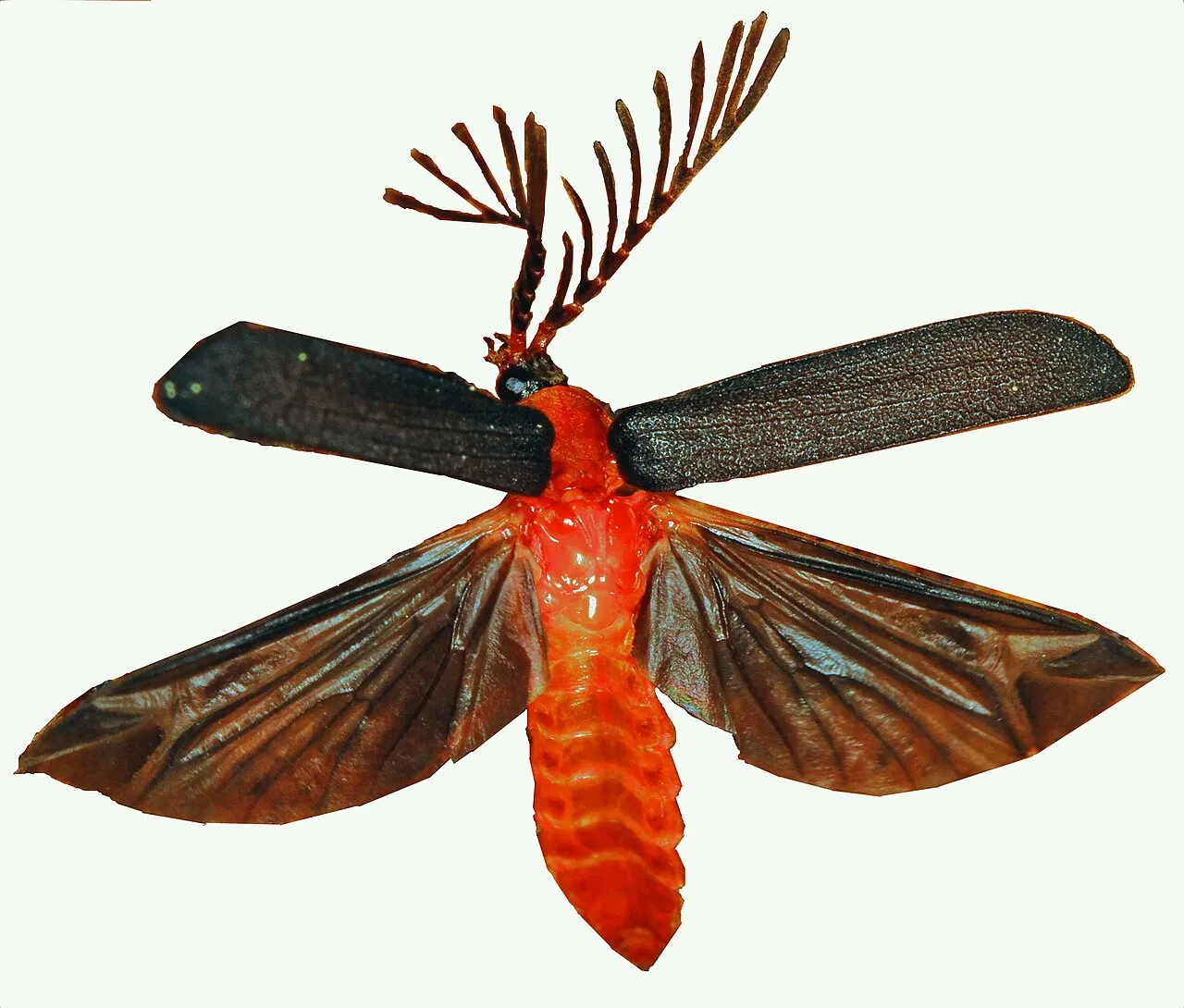
Judy Gallagher · CC BY 2.0
Fireflies live in temperate and tropical regions on every continent except Antarctica, with the greatest diversity in tropical Asia and Central and South America. In arid areas such as the western United States, glowing fireflies are scarce, and many local species are day-active and barely luminous.
Habitats vary widely. Many species' larvae hunt snails and worms in damp leaf litter, moss and grass. Species with aquatic larvae, like Aquatica lateralis, are especially common in Asia and grow up in rice paddies, clear streams and irrigation ditches. In Southeast Asian mangroves, thousands of fireflies gather on riverside trees and flash together.
In Korea, fireflies were once found near paddies and streams in almost every village. Development, channelisation and pesticides have shrunk their habitat, and today they are seen mostly where more natural landscape remains, such as Muju and parts of Yeongyang, Asan and Jeongeup. Some hills and valleys near Seoul still host Pyrocoelia rufa.
Fireflies need:
- Plenty of larval prey such as freshwater snails, land snails and slugs
- Clean water and moist soil and vegetation
- Dark nights with little artificial light
- Earthen banks for pupation; concrete embankments are hostile
5. Body
Fireflies are elongated and flattened, with softer wing covers than most beetles. The head hides beneath a broad shield on the prothorax, so it is barely visible from above. Korea's Aquatica lateralis is about 7 to 10 millimetres long and Pyrocoelia rufa about 15 to 18. Worldwide, species range from around 5 millimetres to 2 or 3 centimetres.
| Part | Notes |
|---|---|
| Head | Hidden under the pronotum; large eyes for spotting light |
| Pronotum | Broad and flat; orange with a black mark in A. lateralis |
| Elytra | Relatively soft, often black |
| Lantern | Underside of the last abdominal segments; often two in males, one in females |
The lantern has a layer of light-producing cells, a white reflective layer behind it that directs light downwards, and fine tracheae that deliver oxygen.
Many species differ strongly between the sexes. The female of Pyrocoelia rufa has vestigial wings and looks larva-like, glowing in the grass while flying males search for her; such females are often called glowworms. Males usually have bigger eyes to spot female signals.
Larvae are flat and segmented with small glowing spots near the tail. Aquatic larvae of A. lateralis have gill-like projections along their sides.
6. Behaviour and ecology
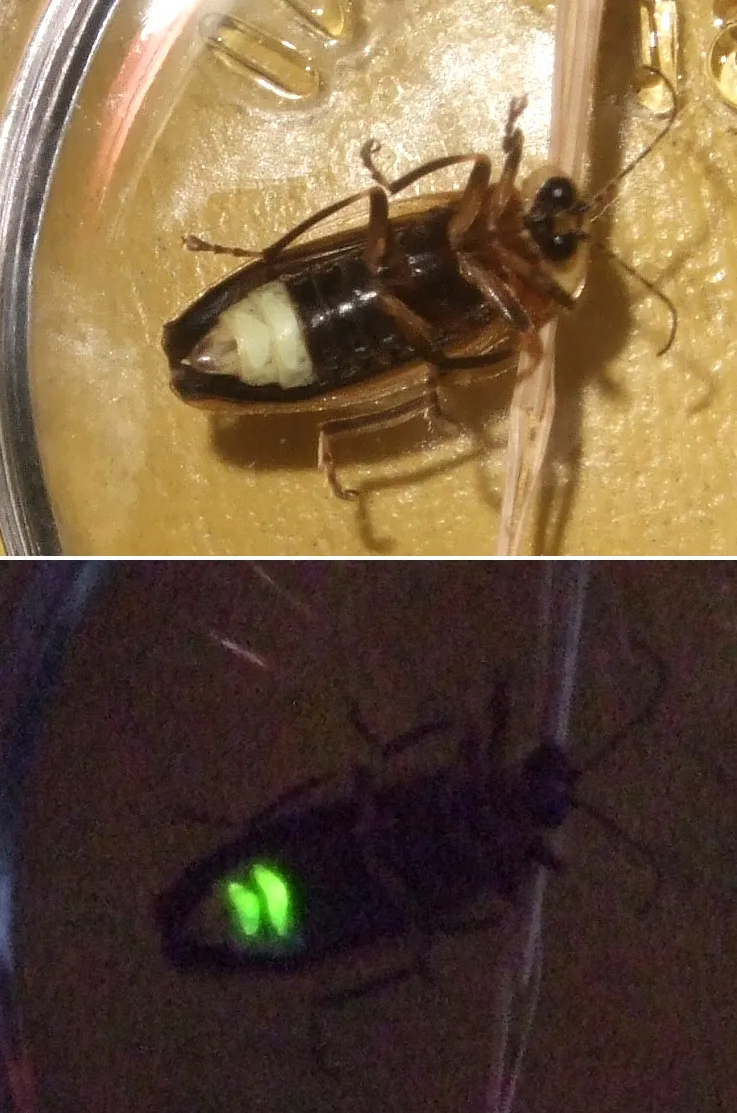
Most of a firefly's life is spent as a larva. The glowing adult stage lasts only one or two weeks. Adults are most active from about half an hour to two hours after sunset and rest under leaves or in shrubs by day.
Flash patterns differ by species. Aquatica lateralis gives short flashes about once a second, Pyrocoelia rufa glows steadily as it drifts slowly, and Luciola unmunsana flickers very rapidly. Fireflies recognise their own kind by flash duration, interval, flight height and flight path.
Some species flash in synchrony. Photinus carolinus in Great Smoky Mountains National Park is famous for whole hillsides blinking on and off together in early summer, and Pteroptyx fireflies in Southeast Asian mangroves make entire trees pulse like Christmas lights. Each insect nudges its rhythm towards its neighbours until the swarm locks into a shared beat.
Larvae hunt at night and spend the winter in water or soil. In spring, mature larvae of A. lateralis crawl out of the water on rainy nights and burrow into banks to pupate.
7. Diet and feeding
Firefly larvae are predators. Their main prey are snails: land-dwelling larvae take snails, slugs and earthworms, while aquatic larvae of Aquatica lateralis eat freshwater snails.
Their hunting method is distinctive. A larva latches onto its prey and bites repeatedly with hollow, sickle-shaped mandibles, injecting digestive and paralysing fluids, then sucks up the liquefied tissue. Larvae can overpower snails several times their size, and several may feed on one victim. Pyrocoelia rufa larvae are thought to track snails by following their slime trails.
Adult diets vary. Many adults eat little or nothing beyond dew and nectar, living on reserves built as larvae. In contrast, females of the American genus Photuris lure and eat males of other firefly species.
This is why the Muju site is protected as habitat for fireflies and their prey, the freshwater snails: without snails, A. lateralis cannot survive.
8. Reproduction and life cycle
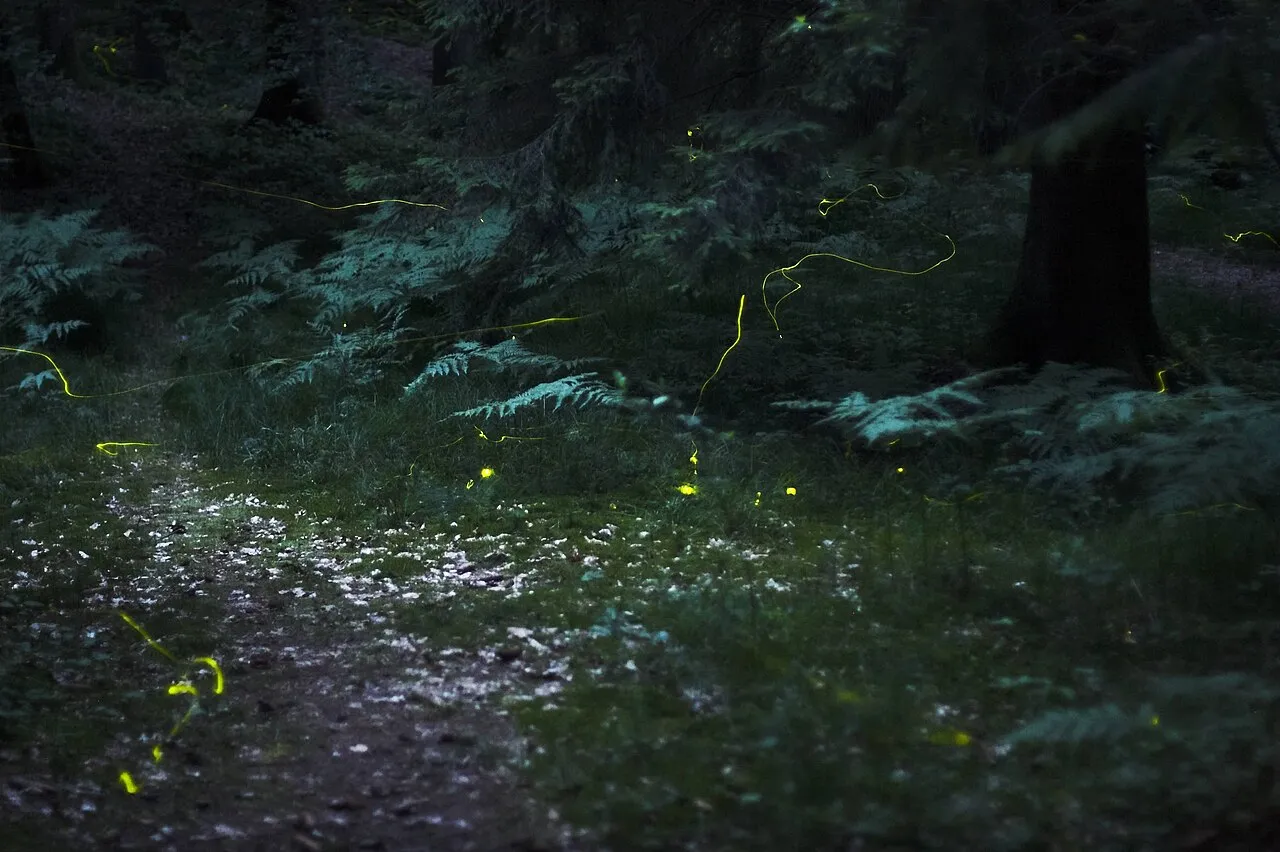
Quit007 · CC BY-SA 3.0
Most firefly light is courtship conversation. In a common pattern, flying males flash a species-specific rhythm and females perched in vegetation answer after a precise delay. The male homes in on the reply, and that delay is a key to telling species apart.
After mating, females lay dozens to hundreds of eggs in moss, damp soil or among roots near water. Aquatica lateralis lays on moss at the water's edge, and hatchlings drop into the water. In some species even the eggs glow faintly.
| Stage | Aquatica lateralis (approx.) | Pyrocoelia rufa (approx.) |
|---|---|---|
| Egg | June to July, 3 to 4 weeks | August to September, about a month |
| Larva | About 9 to 10 months in water, several moults | A year or more on land, sometimes two |
| Pupa | 1 to 2 weeks in soil | 1 to 2 weeks in soil |
| Adult | 1 to 2 weeks | 1 to 2 weeks |
A. lateralis usually completes one generation a year, while larger species such as P. rufa may take one to two years. Adults die soon after breeding.
9. How the light works
Firefly light comes from luciferin reacting with oxygen with the help of the enzyme luciferase. The reaction also requires ATP, the cell's energy currency, and magnesium. It produces a molecule in an excited state that releases energy as light when it relaxes.
Most of the energy emerges as light rather than heat, in contrast to incandescent bulbs that waste most of their electricity as heat. Reported efficiency figures vary with measurement method, but firefly light is clearly among the most efficient in nature. Colours range from yellow-green to green and amber depending on species.
The on-off switch is oxygen. Research suggests nitric oxide plays a role: a nerve signal triggers nitric oxide production, which briefly halts oxygen use by the cells' mitochondria, so oxygen flows to the light reaction and the lantern lights up.
Light can also deceive. Females of the American genus Photuris mimic the reply flashes of other species' females, lure their males and eat them, earning the nickname femme fatale fireflies. Studies suggest they also acquire defensive chemicals from their victims.
10. Predators and survival
Many fireflies contain bitter defensive steroids called lucibufagins, which birds and lizards find repellent. Some species bleed droplets of haemolymph from their leg joints when attacked, a defence called reflex bleeding. Pet lizards have reportedly died after eating fireflies, so they should never be fed to reptiles.
Predators still exist: spiders, frogs, some birds, Photuris fireflies, and fish and aquatic insects that eat aquatic larvae. Fireflies caught in spider webs have been seen to keep glowing, attracting other fireflies into the trap.
Today, however, the greatest threats come from human changes to the environment. Light pollution in particular drowns out courtship signals. Studies show that near streetlights, headlights and lit buildings, fireflies flash less and mate less successfully.
11. Relationship with humans
Fireflies have long been familiar to people. An East Asian idiom about studying by firefly light and snow light comes from the story of Che Yin of the Jin dynasty, who was too poor to buy lamp oil and read by fireflies in a bag, and Sun Kang, who studied by moonlight reflected off snow. It praises perseverance in hardship, though reading by a few fireflies would be quite a feat.
Many Koreans remember childhood summer nights spent catching fireflies and carrying them in pumpkin flowers or jars like lanterns. Now that fireflies are scarce, the courteous thing is to watch without catching.
In Japan, firefly viewing, hotaru-gari, is a classic summer custom, and many places draw visitors for it. In Malaysia and Thailand, boat tours along mangrove rivers show off synchronous fireflies.
Fireflies have also served science. The luciferase gene is widely used as a reporter: inserted into other cells, it reveals with light when a target gene is switched on. Because the luciferin and luciferase reaction needs ATP, it is also used in quick hygiene tests in food plants and hospitals to detect residual living contamination on surfaces. Wild fireflies were once collected in large numbers to make these reagents, but the enzyme is now produced by genetic engineering.
12. Conservation
With so many species, only a small fraction of fireflies have been assessed by the IUCN; most are Not Evaluated. An IUCN firefly specialist group now coordinates assessments, and evaluations of North American fireflies reportedly found some species at risk of extinction. Warnings of declines have come from many parts of the world.
A 2020 survey of firefly experts worldwide ranked these as the main threats:
- Habitat loss: development of paddies and wetlands, concrete channelisation, mangrove clearance
- Light pollution disrupting courtship
- Pesticides harming larvae and their snail prey
- Water pollution and water shortage
- Careless tourism and collecting, including trampling and mass capture
In Korea, no firefly species is itself a legally protected species. Instead, the firefly and freshwater snail habitat around Muju was designated a Natural Monument in 1982 and is managed under the national heritage authority. Critics note that firefly numbers inside the designated area fell as surroundings changed, so Muju County runs restoration projects, and other local governments have created firefly reserves or breeding and restoration programmes.
Individuals can help too: switching off unnecessary outdoor lights, avoiding lawn pesticides and leaving some leaf litter and long grass all make gardens friendlier to fireflies.
13. Captive breeding and viewing
Fireflies are bred and displayed more often in municipal firefly centres, insect research institutes and science museums than in zoos. Aquatica lateralis can be reared indoors on freshwater snails, which makes it useful for restoration.
Captive breeding raises its own concerns:
- Releasing fireflies from other regions can blur local genetic distinctiveness.
- Mass releases of indoor-reared fireflies for festivals are criticised as a substitute for genuine habitat restoration.
- Collecting large numbers of snails as food can burden other streams.
Catching fireflies to keep at home is discouraged. Adults live only a week or two, so a captured firefly dies without breeding and the next generation shrinks. Catching them inside a Natural Monument site may be illegal. When watching, turn off flashlights or cover them with red film, and never use a camera flash.
14. Fireflies in culture
Fireflies often stand for transience, longing and the soul. Japanese tradition links them with the spirits of the dead, and they appear in classical poetry and The Tale of Genji. The 1988 animated film Grave of the Fireflies uses their brief light as a metaphor for two siblings' tragedy in wartime and is known worldwide.
In Korea, a popular 1987 song titled with the folk name gaettong-beolle made that name familiar to generations. Fireflies appear in children's songs and picture books as emblems of summer nights in the countryside, and the word for firefly-and-snow diligence has appeared in school names and graduation songs.
In the West, fireflies evoke summer romance. Disney's The Princess and the Frog features a firefly named Ray, and several US states, including Pennsylvania and Tennessee, have adopted fireflies as state insects.
Fireflies have left their mark on technology too, from bioluminescent assays to research that copies the microstructure of firefly lanterns to make LEDs more efficient. Synchronous flashing is a textbook example of synchronisation in mathematics and engineering.
15. Trivia
- Not all fireflies glow as adults. Many day-active species use pheromones instead of light to find mates.
- Almost all firefly larvae glow, so a faint dot of light on the ground may well be a firefly larva.
- Males of Pyrocoelia rufa keep their light on as they fly, so long-exposure photos show them as long streaks.
- Fireflies avoid rainy, windy or bright moonlit nights. Warm, humid, still and dark nights are best for watching.
- New Zealand's famous cave glowworms are not fireflies at all but the larvae of fungus gnats.
- Different light colours stem from small differences in luciferase structure; researchers have engineered versions that glow closer to red.
- Muju's firefly festival began around 1997 and has become the region's signature event.
Wild animals are not pets. Catching, trading or keeping them is illegal in most places. If you find an injured wild animal, call your local wildlife rescue centre.
FAQ
When and where can I see fireflies in Korea?
Aquatica lateralis appears in June–July and Pyrocoelia rufa in August–September, about one to two hours after sunset. Look along clean, dark rural streams and woodland edges, such as around Muju, on still, humid nights.
Is firefly light hot?
No. Most of the energy becomes light rather than heat, which is why it is called cold light.
Can I catch fireflies and keep them?
Please don't. Adults live only a week or two, so captured fireflies die without breeding, and collecting in protected habitat may be illegal. Just watch, with flashlights and camera flashes off.
Photo credits
Photos are freely licensed images from Wikimedia Commons. Authors and licenses are listed below.
- Photuris lucicrescens.jpg — Bruce Marlin · CC BY-SA 2.5
- Fireflies, Georgia, US.jpg — Jud McCranie · CC BY-SA 4.0
- Firefly - Pterotus obscuripennis, Sierra City, California (cropped).jpg — Judy Gallagher · CC BY 2.0
- Firefly composite.jpg — Emmanuelm (talk) · CC BY 3.0
- GluehwuermchenImWald.jpg — Quit007 · CC BY-SA 3.0