TailVille
1. Overview
The honey bee is a social insect that lives in colonies of tens of thousands, built on a shared economy of nectar and pollen. This article focuses on the Western honey bee (Apis mellifera), the most widely kept bee on Earth, while also introducing Korea's native Eastern honey bee (Apis cerana).
A single worker is barely more than a centimetre long, yet a colony behaves almost like one large organism. One queen lays the eggs, thousands of workers build comb, raise brood and gather food, and drones exist mainly to mate. Biologists often describe such a colony as a superorganism.
The honey bee matters to people less for its honey than for pollination. Apples, pears, strawberries, almonds, blueberries, squash and many other crops benefit from insect pollination, and honey bees are the pollinator farmers can manage and move around. That is why reports of mass colony losses since the 2000s drew so much public attention.
Honey bees have been kept by humans for thousands of years and are best understood as semi-domesticated. In South Korea they are legally classed as livestock, and beekeeping is a regulated form of farming. This article therefore covers both their wild biology and their long partnership with people.
2. Name and classification
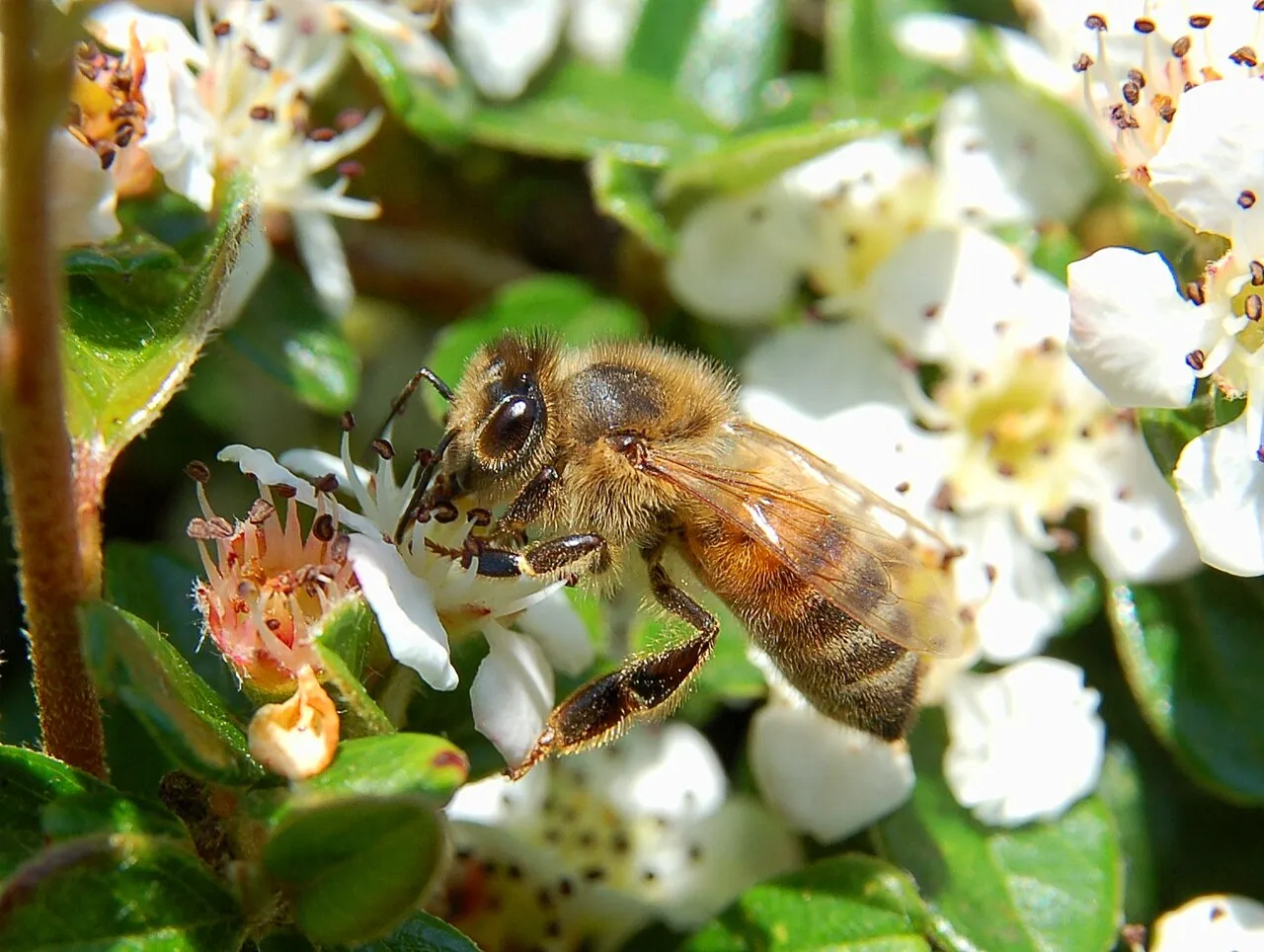
Honey bees belong to the order Hymenoptera, family Apidae and genus Apis. The genus contains roughly eight to twelve species, depending on how strictly they are split. Besides the Western and Eastern honey bees, it includes the giant honey bee (Apis dorsata) and the dwarf honey bee (Apis florea) of southern Asia.
Linnaeus named Apis mellifera in 1758. Apis is Latin for bee, and mellifera means honey-carrying. Since bees make honey rather than simply carry it, Linnaeus later suggested mellifica, honey-making, but the rule of priority kept the original name.
In Korean beekeeping, the Western bee is often called yangbong (foreign bee) and the native bee hanbong (Korean bee) or tobong.
2.1. Main subspecies
As Western honey bees spread across Europe, Africa and western Asia, they diverged into regional subspecies; depending on the authority, more than twenty or thirty are recognised.
| Subspecies | Common name | Origin | Notes |
|---|---|---|---|
| A. m. ligustica | Italian bee | Italy | Yellowish, gentle, prolific; the most widely kept worldwide |
| A. m. carnica | Carniolan bee | Slovenia, Balkans | Greyish, calm, overwinters well |
| A. m. mellifera | European dark bee | Northwest Europe | Dark, cold-hardy, can be nervous |
| A. m. caucasia | Caucasian bee | Caucasus | Long tongue, heavy propolis use |
| A. m. scutellata | African bee | East and southern Africa | Highly defensive, often absconds |
Most Western bees kept in Korea are Italian-type stock or mixed lines.
2.2. The native Eastern honey bee
Korea's native bee is the Eastern honey bee, Apis cerana. It is slightly smaller and darker than the Western bee and forms smaller colonies. It yields less honey but copes relatively well with cold and hornets, and it is known to tolerate Varroa mites far better than Apis mellifera.
From around 2009, Korean native bees were devastated by Thai sacbrood virus, which kills larvae and leaves them shaped like small sacs. Within a few years, most native colonies in the country were reported lost, often cited as roughly ninety percent, though figures vary. Since then, researchers have worked on breeding and distributing more resistant lines.
3. Evolution
Bees are thought to have descended from predatory wasps related to modern sphecoid or crabronid wasps. Their ancestors provisioned their young with paralysed insects, but as flowering plants spread during the Cretaceous, one lineage switched to pollen as its protein source and became the bees. A bee preserved in Burmese amber about 100 million years old supports the idea that bees and flowers rose together.
Fossils of the honey bee genus itself appear much later, in the Cenozoic; European finds suggest Apis existed by roughly 30 million years ago. Where Apis mellifera first arose remains debated. An African origin and a West Asian origin have long been competing ideas, and some genome studies lean towards West Asia, but the question is not fully settled.
Honey bee society is called eusocial: reproductive individuals (queens) and non-reproductive workers divide labour, and generations overlap in one nest. Explaining why workers raise sisters instead of their own offspring helped inspire W. D. Hamilton's kin selection theory, and honey bees remain a classic test case.
4. Range and habitat
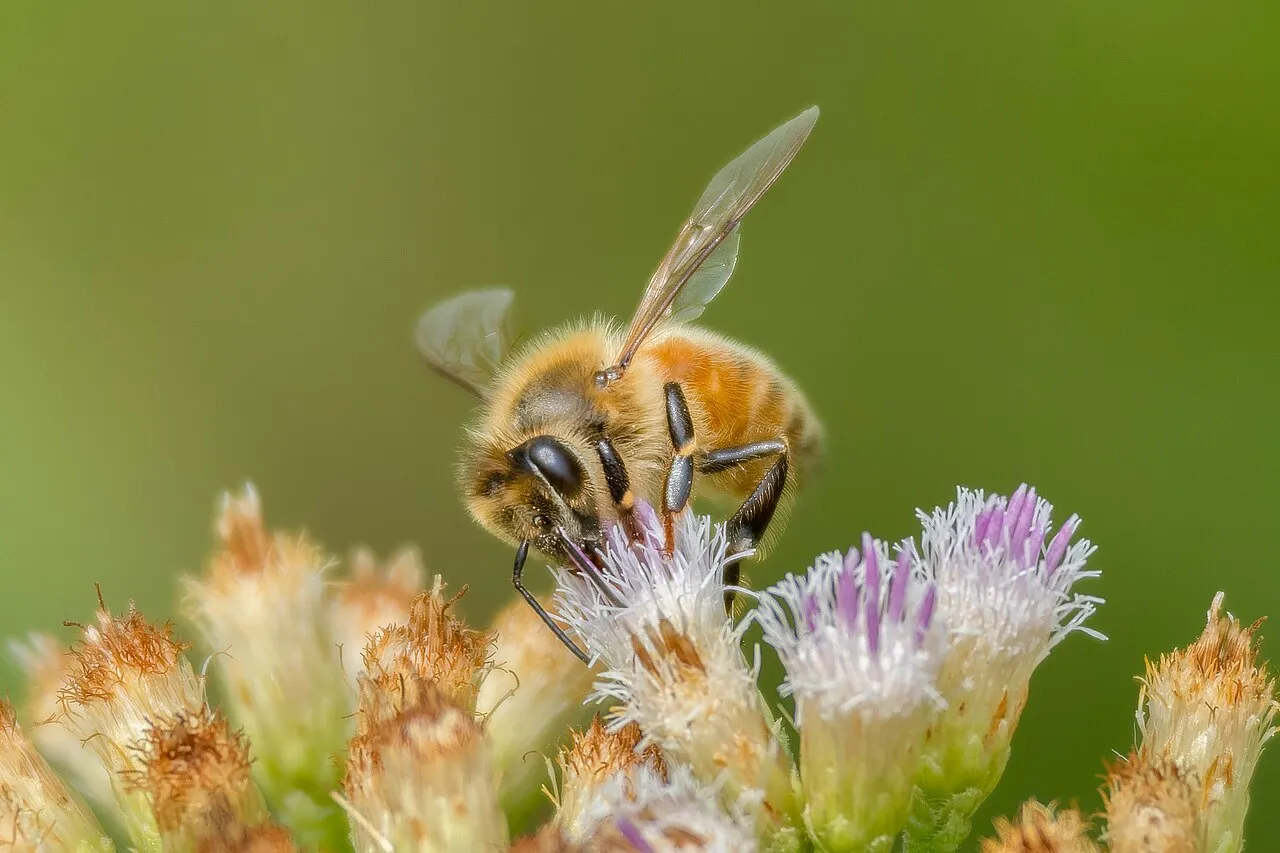
Tisha Mukherjee · CC BY-SA 4.0
The Western honey bee's native range covered Europe, Africa and western Asia. Because people shipped colonies around the world for honey and wax, it now lives on every continent except Antarctica. European settlers brought it to North America in the seventeenth century, and it reached Australia and New Zealand in the nineteenth. Some Native American groups reportedly called it the white man's fly, since its arrival signalled settlers nearby.
Wild colonies nest in dark, sheltered cavities such as hollow trees, rock crevices and wall voids. Inside, several parallel sheets of wax comb hang from the ceiling, packed with hexagonal cells. The species can live almost anywhere flowers bloom, from the tropics to fairly cold regions, but where winters are long, survival depends on stored honey.
The Eastern honey bee ranges from South Asia through East Asia to the Russian Far East. It has lived in Korea for a very long time, while the Western bee is generally said to have arrived in the early twentieth century. Today most managed colonies in Korea are Western bees.
5. Body
A honey bee has the classic insect plan of head, thorax and abdomen. Six legs and four wings attach to the thorax, and tiny hooks called hamuli lock each forewing to its hindwing so they beat as one surface.
| Caste | Length | Weight | Notes |
|---|---|---|---|
| Queen | about 1.8 to 2 cm | around 0.2 g | Long abdomen, smooth sting |
| Worker | about 1.2 to 1.5 cm | around 0.1 g | Pollen baskets and wax glands |
| Drone | about 1.5 to 1.7 cm | around 0.2 g | Huge eyes, no sting |
A worker's hind legs carry pollen baskets, concave patches fringed with hairs where pollen is packed into pellets. Four pairs of wax glands on the underside of the abdomen secrete thin wax flakes. The mouthparts combine a long tongue for sipping nectar with mandibles for shaping wax. Branched hairs all over the body trap pollen, which is why bees are such effective pollinators.
5.1. Senses
A honey bee has five eyes: two large compound eyes and three small ocelli on top of the head. Each compound eye contains thousands of facets and excels at detecting motion. Bees see ultraviolet light, invisible to us, but struggle to distinguish red. Many petals bear ultraviolet patterns that act as runway markings towards the nectar.
The antennae are the main organs of smell and touch, letting bees tell apart floral scents, colony pheromones and intruders, and sense vibration and air currents. Bees can also read the polarisation pattern of the sky, which reveals the sun's position even when it is hidden by cloud.
5.2. The sting
The sting evolved from an egg-laying tube, so only females, the queen and workers, have one. A worker's sting is barbed. In thick mammal skin it lodges firmly, and when the bee pulls away, the sting and venom sac tear from her abdomen and she soon dies. The detached sac keeps pumping venom, so the best response to a sting is to scrape it out quickly with a fingernail or card. When stinging other insects, the sting usually slides free and the worker survives.
The queen's sting is nearly smooth and reusable, but she uses it mainly against rival queens.
6. Behaviour and ecology
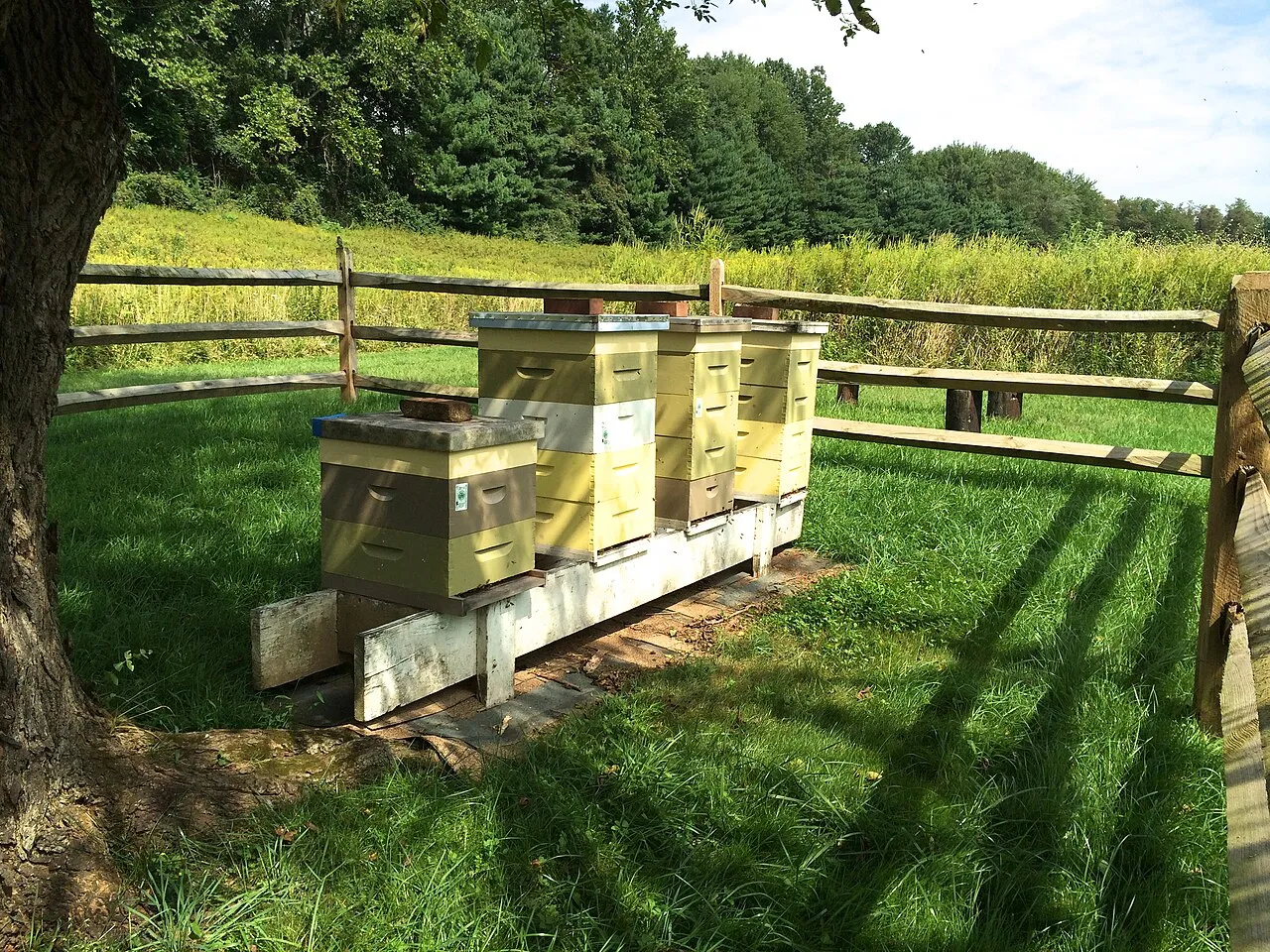
Cohee · CC BY-SA 4.0
A typical colony contains a single queen, thousands to tens of thousands of workers (roughly 20,000 to 60,000 at peak), and, in spring and summer only, hundreds to a few thousand drones.
6.1. Age-based division of labour
Workers change jobs as they age, a pattern called age polyethism. The sequence is flexible and shifts with colony needs.
| Adult age | Main tasks |
|---|---|
| Days 1 to 3 | Cleaning cells, warming brood |
| Days 3 to 12 | Nursing larvae, secreting royal jelly |
| Days 12 to 18 | Wax production and comb building, processing nectar, removing the dead |
| Days 18 to 21 | Guarding the entrance |
| Day 21 onwards | Foraging for nectar, pollen, water and resin |
In effect, the riskiest outdoor work is left to the oldest bees. In summer, many foragers wear out their wings and die within one to three weeks of starting to forage.
6.2. Temperature control and winter
Honey bees hold the brood nest at a remarkably steady 34 to 35 degrees Celsius. When it is cold, workers shiver their flight muscles to generate heat; when it is hot, they bring water to evaporate and fan their wings to drive air through the nest.
Honey bees do not hibernate. In winter they form a tight cluster: outer bees act as insulation while inner bees shiver to produce heat, and individuals rotate between positions. The fuel is honey stored through autumn. Winter workers carry extra body reserves and live for months rather than weeks.
6.3. Swarming
Colonies reproduce by swarming. Once new queens are being reared, the old queen leaves with around half the workers. The swarm hangs as a temporary cluster on a branch while scout bees inspect possible cavities and advertise them by dancing. When enough scouts support one site, the whole swarm flies there, a process now widely cited in studies of collective decision-making. Swarms have no brood or stores to defend and are usually fairly docile, but they should still be left alone.
7. Diet and feeding
Honey bees live on two main foods. Nectar supplies carbohydrate for energy, while pollen supplies protein, fats and vitamins. They also collect water and plant resins, the raw material of propolis.
Honey is not simply stored nectar. A forager carries nectar home in her honey stomach and passes it to house bees, who add enzymes that break sucrose into glucose and fructose as the liquid is handed from mouth to mouth. It is then spread in cells and fanned until its water content drops to roughly 17 to 20 percent, after which the cell is capped with wax. Concentrated and mildly acidic, honey resists microbes and keeps for a very long time.
One worker produces only about a tenth of a teaspoon of honey in her lifetime, and estimates suggest a kilogram of honey requires visits to millions of flowers. Foragers usually work within two or three kilometres of home, but they will fly considerably farther when food is scarce.
Pollen is groomed from the body and packed into the pollen baskets. Mixed with nectar and allowed to ferment in the comb, it becomes bee bread, food for larvae and young workers. Nurse bees eat it and secrete royal jelly from glands in their heads.
8. Reproduction and life cycle
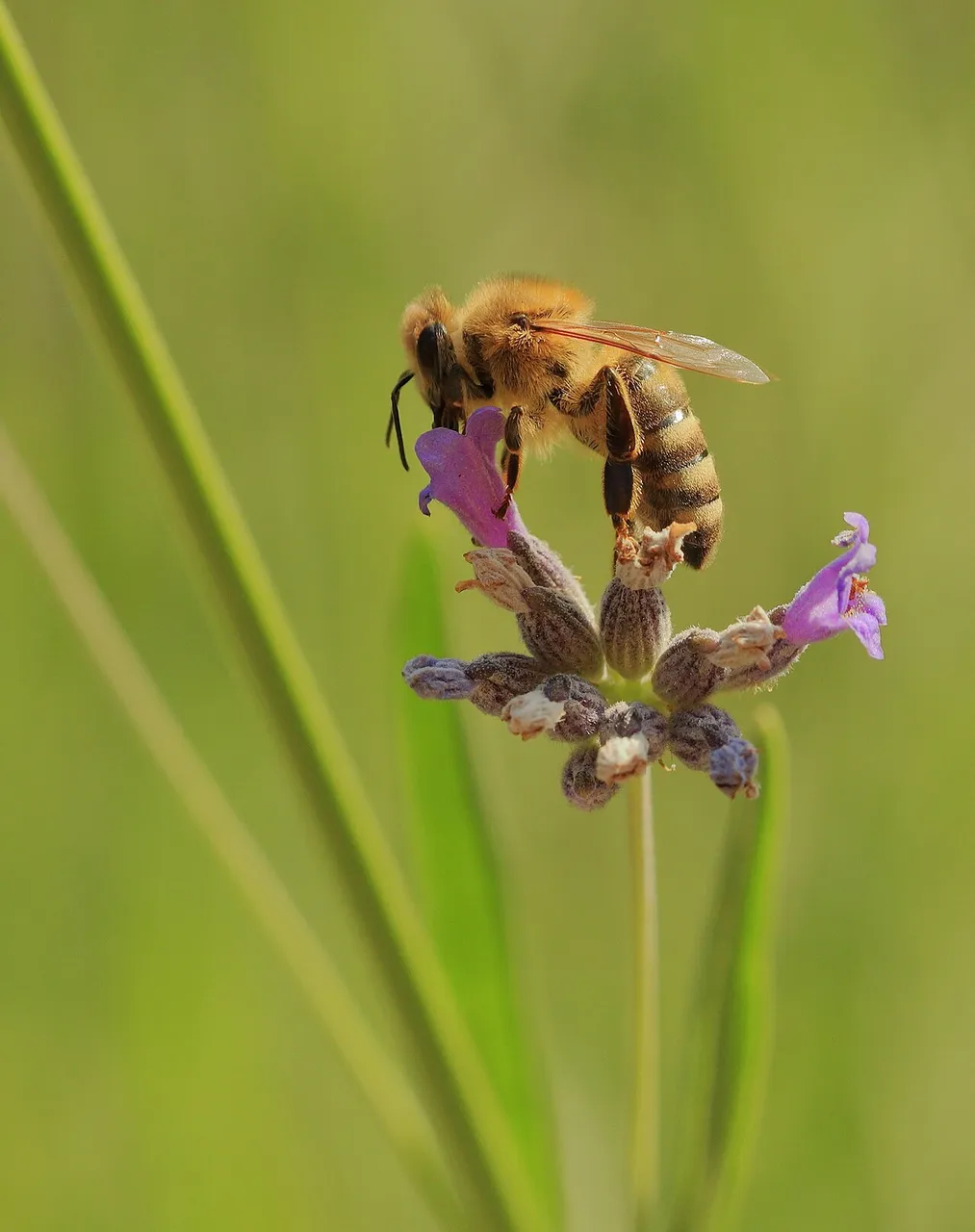
Martin Falbisoner · CC BY-SA 4.0
Honey bees undergo complete metamorphosis: egg, larva, pupa and adult. Whether a female egg becomes a queen or a worker depends on her cell and diet, not her genes.
| Caste | Egg | Larva | Pupa | Egg to adult | Adult lifespan |
|---|---|---|---|---|---|
| Queen | 3 days | about 5 to 6 days | about 7 to 8 days | about 16 days | typically 2 to 3 years, up to about 5 |
| Worker | 3 days | about 6 days | about 12 days | about 21 days | 5 to 6 weeks in summer, months in winter |
| Drone | 3 days | about 6 to 7 days | about 14 to 15 days | about 24 days | a few weeks to two months |
Queens and workers both develop from fertilised eggs. A future queen grows in a large, peanut-shaped queen cell and is fed generous royal jelly throughout, while worker larvae receive it only for the first few days before switching to a mix of honey and pollen. Drones develop from unfertilised eggs, so they have a mother but no father.
A few days after emerging, a virgin queen makes mating flights to drone congregation areas, mating with many drones, commonly ten to twenty. She stores the sperm for the rest of her life. Drones die right after mating, as their genitalia tear away. Back home, a queen in her prime can lay around 1,500 to 2,000 eggs a day.
When flowers fade in autumn, workers expel the drones, so winter colonies contain only the queen and her daughters.
9. Intelligence, communication and special abilities
A honey bee's brain is smaller than a sesame seed and holds on the order of a million neurons, yet its learning abilities are striking.
9.1. The waggle dance
A forager that finds a rich patch dances on the vertical comb to recruit nestmates. For nearby food, within a few tens of metres, she performs a round dance; for distant food, a waggle dance, running straight while waggling her abdomen and then looping back alternately left and right.
The angle of the waggle run relative to vertical encodes the angle between the sun and the food, and the duration of the waggle encodes distance. Because the sun moves, dancers use their internal clock to adjust the angle over time. Austrian ethologist Karl von Frisch shared the 1973 Nobel Prize in Physiology or Medicine partly for decoding this language.
9.2. Pheromones and learning
Honey bee society runs on scent. Queen mandibular pheromone suppresses workers' ovaries and binds the colony together. The alarm pheromone released with a sting smells faintly of bananas and rouses other bees to join the defence, which is why lingering near a stung spot is unwise.
In experiments, bees learn to link colours with shapes, grasp abstract rules such as same versus different, and have even been reported to handle a concept of zero. Some have been trained to distinguish photographs of human faces. Such findings show how much a tiny brain can do and have inspired work in artificial intelligence and robotics.
10. Predators and survival
Many animals hunt honey bees. Bee-eaters and honey buzzards are famous avian specialists, while bears, badgers and Africa's honey badger raid entire nests. Spiders, mantises and dragonflies pick off foragers around flowers.
For Korean beekeepers, hornets are the greatest menace. Giant hornets attack hives in groups and can wipe out the workers in a short time. The invasive yellow-legged hornet (Vespa velutina), first confirmed around Busan in about 2003, has spread rapidly and hovers at hive entrances snatching bees. Eastern honey bees can kill a hornet by engulfing it in a heat ball and shivering until it overheats, but Western bees are poor at this defence.
Some enemies are nearly invisible. The Varroa mite feeds on the fat body of developing and adult bees and spreads viruses. Originally a parasite of the Eastern honey bee, it jumped to the Western bee and became the single biggest threat to beekeeping worldwide. American foulbrood, chalkbrood, Nosema and wax moths add further pressure.
11. Relationship with humans
11.1. From honey hunting to beekeeping
People have robbed wild nests for honey since prehistory. A rock painting in a cave near Valencia, Spain, shows a figure clinging to ropes while gathering honey thousands of years ago. Ancient Egyptian reliefs depict rows of hives and honey processing, evidence of organised beekeeping.
For centuries, hives were skeps of straw or hollow logs, and harvesting meant destroying comb. In the mid-nineteenth century, the American clergyman Lorenzo Langstroth designed a movable-frame hive based on bee space, the gap bees leave open rather than filling with comb. Frames could now be lifted out, inspected and harvested individually. Together with the centrifugal extractor and wax foundation, this launched modern beekeeping.
In Korea, honey use is recorded from the Three Kingdoms period, and in the Joseon dynasty honey was a valued medicine and tribute item. Traditional beekeepers hollowed out logs and set them under eaves or beside rocks.
11.2. What bees give us
Beyond honey, bees supply a range of products.
- Beeswax: used in candles, cosmetics, wood polish, food wraps and crafts such as batik.
- Propolis: resin mixed with saliva and wax, used by bees to seal and disinfect the nest. It is sold as a supplement, though the evidence varies by product.
- Royal jelly and pollen: sold as foods, but people with bee-product allergies should take care.
- Venom: purified for research and some therapies, but it can trigger severe allergic reactions.
Economically, though, pollination dwarfs all of these. Each spring, a large share of the managed colonies in the United States is trucked to California's almond orchards. In Korea, renting hives for greenhouse strawberries, melons and watermelons is routine.
11.3. Stings and safety
Honey bees rarely attack unless defending the nest; a bee working a flower will usually ignore you if left alone. For people with venom allergy, however, a single sting can cause anaphylaxis, with breathing difficulty or widespread hives, which requires emergency care. The so-called killer bees of the Americas, Africanised honey bees, descend from African stock that escaped from a research apiary in Brazil in the 1950s. Their venom is no stronger than other honey bees'; the danger lies in the much larger numbers that pursue an intruder.
12. Conservation
Because humans keep Western honey bees in enormous numbers, the species itself is not considered endangered, and global counts of managed hives have even risen. On the IUCN Red List, the European assessment placed Apis mellifera in Data Deficient because too little is known about truly wild populations. Native wild populations in its original range are, however, losing their distinctiveness through hybridisation with imported stock, disease and habitat loss.
The real concern is the share of colonies lost each year. In 2006 and 2007, beekeepers in the United States reported colony collapse disorder, in which workers vanished leaving the queen and brood behind. Research has since converged on multiple interacting causes rather than a single culprit:
- Varroa mites and the viruses they carry
- Effects of some pesticides, including neonicotinoids, and mite resistance to treatments
- Poor nutrition from monoculture landscapes with few flowers
- Unusual weather and climate-driven shifts in flowering
- Rising pressure from hornets and other predators
South Korea saw large-scale disappearances in the winter of 2021 to 2022, with official surveys estimating losses in the hundreds of thousands of colonies and media reports speaking of billions of bees. Varroa spread and failed control, abnormal temperatures and hornet damage were all cited, and heavy losses were reported again in following winters. Exact figures and the weight of each cause differ between surveys.
Crucially, honey bees are not the only pollinators. Bumblebees, mason and leafcutter bees, hoverflies and butterflies may be declining even more severely, and some studies warn that flooding an area with hives can increase competition with wild bees. Planting diverse flowers and reducing pesticide use help all pollinators.
13. Bees in captivity
Honey bees are closer to farm livestock than zoo animals, so debates about captive bees centre on beekeeping practice.
- Harvesting too much honey and overwintering colonies on sugar syrup alone may leave them undernourished.
- Clipping queens' wings to prevent swarming, artificial insemination and long-distance trucking for pollination are criticised as stressful.
- On the other hand, responsible beekeeping that manages mites and plants forage can support local ecosystems.
Science centres often display glass-walled observation hives that reveal life on the comb. Urban rooftop beekeeping has grown in popularity, but it requires attention to neighbours' safety and to whether there are enough flowers nearby.
Keeping even a single hive is harder than it looks. It demands skills in mite control, overwintering, hornet defence and swarm management, and a neglected hive can spread disease to neighbouring apiaries. In Korea, beekeeping above a certain scale may require registration, so newcomers should take local training courses first.
14. Bees in culture
Bees symbolise industry and community. In ancient Egypt the bee was a royal emblem of Lower Egypt, and one tradition held that bees sprang from the tears of the sun god Ra. Greek myth tells of the infant Zeus raised on honey and goat's milk, and Napoleon chose golden bees rather than lilies as his imperial emblem. The US state of Utah uses the beehive as its symbol and is nicknamed the Beehive State.
In East Asia, honey was a prized medicine. The Korean proverb about a mute who has eaten honey describes someone who cannot speak up, and stirring a beehive describes noisy chaos.
Bees star in countless children's stories. Maya the Bee, from Waldemar Bonsels' German novel, became a widely loved animated series, including in Korea. Winnie the Pooh's love of honey, and the 2007 animated film Bee Movie, in which a young bee sues humanity, are also well known. English idioms such as busy as a bee, the bee's knees and make a beeline all come from bees.
15. Trivia
- Comb is hexagonal because hexagons divide a surface into equal cells with the least wall material. This honeycomb conjecture was proved by mathematician Thomas Hales in 1999.
- Stories often claim edible honey was found in ancient Egyptian tombs. Whatever the details, well-sealed honey certainly keeps for an extraordinarily long time.
- Infants under one year old should never be given honey, because it can contain spores of the botulism bacterium.
- A worker beats her wings more than 200 times a second, producing the familiar buzz, and flies at roughly 25 kilometres per hour when unladen.
- Queens make piping sounds when rivals are present, and a newly emerged queen often seeks out and kills sister queens still in their cells.
- Korea hosts many wild bees besides honey bees, including bumblebees and carpenter bees. A large, furry bee clinging to a flower is probably one of these.
- Honey bees show strong flower constancy, visiting one plant species at a time on a trip, which helps plants receive pollen from their own kind.
Wild animals are not pets. Catching, trading or keeping them is illegal in most places. If you find an injured wild animal, call your local wildlife rescue centre.
FAQ
Are honey bees really disappearing?
The number of managed hives worldwide has not fallen, but the share of colonies lost each winter has risen. Korea reported massive losses in the winter of 2021–22, with Varroa mites, abnormal weather and hornets among the suspected causes.
How does Korea's native bee differ from the Western honey bee?
The native Eastern honey bee is slightly smaller and darker and forms smaller colonies. It makes less honey but copes better with cold, hornets and Varroa mites. Most Korean apiaries keep the more productive Western bee.
What should I do if a bee stings me?
Scrape out the sting quickly with a fingernail or card and apply a cold compress. Breathing difficulty or widespread hives may signal anaphylaxis and need emergency care right away.
Photo credits
Photos are freely licensed images from Wikimedia Commons. Authors and licenses are listed below.
- Apis mellifera Western honey bee.jpg — Andreas Trepte · CC BY-SA 2.5
- Apis mellifera Luc Viatour.jpg — Unknown · CC BY-SA 3.0
- Apis mellifera in Sundarbans National Park May 2025 by Tisha Mukherjee 01.jpg — Tisha Mukherjee · CC BY-SA 4.0
- Bear Branch Nature Center Beehives.JPG — Cohee · CC BY-SA 4.0
- Bee on Lavender Blossom 2.jpg — Martin Falbisoner · CC BY-SA 4.0